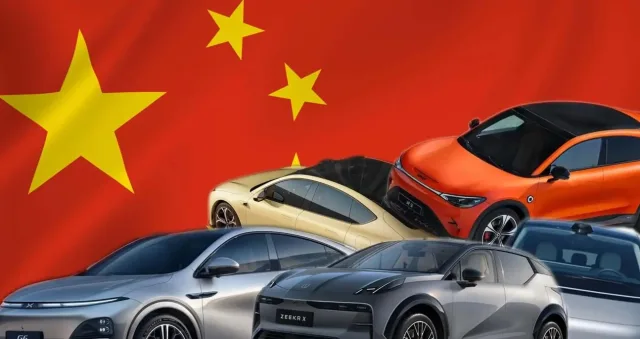
The roadmap that preceded this one (the 2016 and 2020 versions) had already outlined the path to large-scale electrification of transport. The new, third edition, sets even more ambitious goals: it covers not only the "green" transition but also digital technologies, unmanned systems, and "smart" manufacturing.
The strategy states that the peak of carbon emissions in the automotive industry will occur in 2028, and by 2040 their volume should drop by more than 60 percent. The share of transport on new energy sources — electric vehicles, hybrids, and hydrogen fuel cell vehicles — will exceed 80 percent, which practically means total electrification of the fleet.
China is preparing to create a transportation system where intelligent connected vehicles will play the main role, and priorities will be zero accidents and maximum efficiency. The "vehicle-road-cloud" infrastructure will enable the mass deployment of autonomous driving. According to forecasts, by 2040, cars with fourth-level autopilot will become common, and the fifth level will only begin to take its first steps in the market.
As noted by the head of CSAE, Zhang Jinhua, earlier roadmaps focused on the product itself, but now attention is also paid to production processes. He emphasized: development is now pushed forward by both the product and production simultaneously.
The document also states that by 2035, all cars with classic engines must become hybrid. By 2040, vehicles with internal combustion engines — including HEV, PHEV, and EREV — will hold approximately a third of sales, while electric cars will capture over 85 percent of the new car market. Solid-state batteries will appear in small series by 2030, and closer to the middle of the decade, their production will become mass-scale.
A separate item in the strategy is "smart manufacturing": it involves merging research, supply chains, production, and service into a single digital system based on data analytics.
By 2040, China intends to become one of the world's leading automotive hubs — technologically advanced, environmentally friendly, and competitive, with its own innovation base and brands present on the global market.