The service life of a wig depends not only on its quality, but also on the frequency of wearing and, of course, storage conditions. If you want to profitably purchase a new model, a promo code “parik” will help you save. But the time to replace a wig is determined not by the calendar, but by specific signs of wear. Let's consider the factors that affect the durability of the accessory in more detail.
Wig material: a decisive factor in lifespan
Wigs are natural and synthetic, and each category has its own average service life. Natural hair in a wig can last up to 12 – 18 months with active use, and with careful care – up to two years.
Synthetic models have a shorter lifespan – from 4 to 9 months with regular wear. At the same time, heat-resistant fiber retains its shape and appearance somewhat longer than classic synthetic, and is suitable for styling. In addition to the fiber itself, the base of the wig (tulle, monofilament, silk top) plays an important role, because its wear also affects the suitability of the product. If the base stretches, deforms, or loses its grip, the wig starts to fit worse, and this also signals the need for replacement.
How to understand that it's time to change your wig
Even a high-quality wig is not eternal. There are signs that should not be ignored. These are the following:
the hair has begun to tangle or break, especially in the lower part;
loss of shine, even after cleaning or moisturizing;
hair falls out in clumps, or bald spots have appeared on the parting;
the base has lost elasticity or become coarser;
the color of the product begins to look dull;
it is impossible to restore the styling, the wig holds only one shape, and attempts to change it spoil the appearance.
If you notice that the wig has lost volume at the root, this is also a sign that it's time to update it. Such changes do not happen instantly, but gradually. It is important not to wait for the moment when the accessory looks outright untidy. If you wear a wig daily, wear will begin to show already after 6 – 8 months, especially in synthetic models.
What affects the preservation of the wig's lifespan
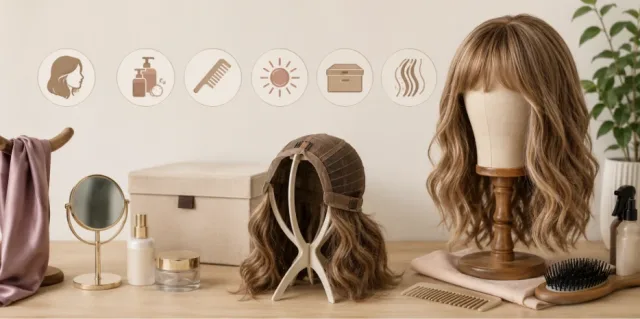
A few basic rules will help significantly extend the service life of your accessory. Thermal exposure to the wig should be minimized. Synthetic fibers are especially sensitive to high temperatures. Even heat-resistant hair is better styled at low temperatures.
Specialized care for the product is needed. Shampoos, conditioners, moisturizing sprays – everything should be specifically for wigs, not for regular hair. Pay attention to the manufacturer's recommendations: some models have restrictions on the frequency of washing or methods of fixation.
Store the accessory on a stand. The wig should stand in a straightened form, away from the sun, moisture, and dust. If there is no stand, it is important to store the accessory in a fabric bag.
With daily wearing of a wig, we recommend alternating models. If possible, rotate them, not wearing one to the limit.
Following basic tips will help avoid premature replacement. But if even with care the wig has lost its appearance and cannot be restored, this is a clear signal that it's time to refresh your look.