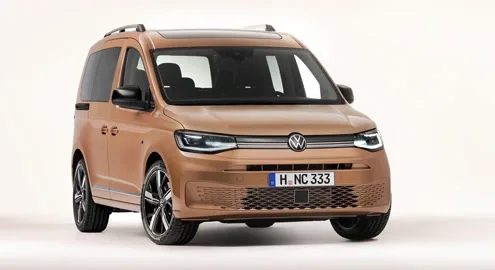
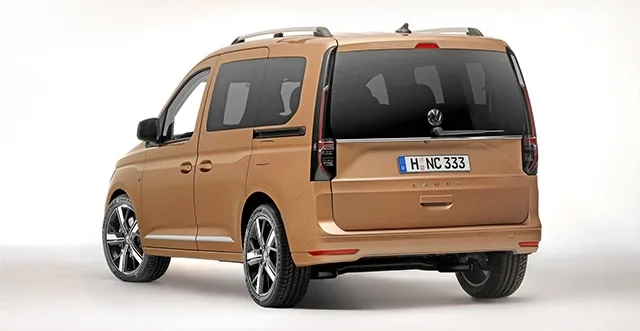
As expected, the design of the German "heel" has evolved, while retaining recognizable features, such as stampings on the sides. The optics were modernized and made fully LED (in expensive trim levels), the headlights and taillights became narrower. With the transition to a modular architecture, the dimensions of the van changed: the wheelbase became larger, and the length increased by 93 millimeters, to 4,501 millimeters. The new Caddy is 25 millimeters lower than its predecessor, and the drag coefficient decreased from 0.33 to 0.30. Another important innovation is that the leaf springs in the rear suspension gave way to coil springs.
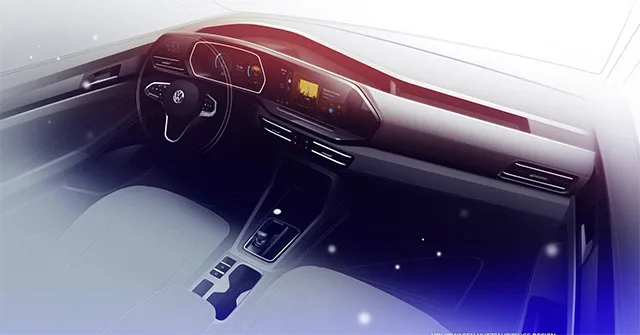
In the cabin, a new instrument panel appeared, and for top versions, its digital counterpart is available. The large multimedia system screen is slightly turned towards the driver, with touch buttons for climate control underneath. The list of electronic assistants includes active cruise control with lane-keeping function, as well as a trailer maneuvering assistance system.
At the first stage, the cargo-passenger van will be offered with two-liter diesel engines producing 75, 102, and 122 horsepower, and a version with a bi-fuel setup with a 1.5 TSI (116 hp) that runs on gasoline and gas is also announced. For the most powerful diesel modification and the version with a gasoline engine, an all-wheel drive system is provided. Transmissions are a six-speed manual or a seven-speed DSG robot. Later, a hybrid Caddy with a plug-in function will appear on the market.