In theory
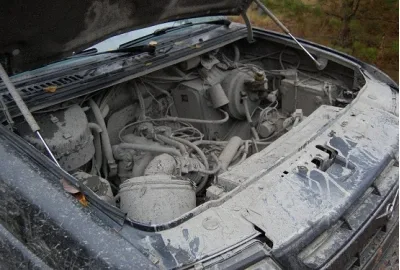
If we reason logically, any unit requires removal of contaminants. The car's power unit is no exception. There is an opinion that with a dirty engine…
- heat dissipation worsens
- power loss is possible
- fuel consumption may increase
- current leaks occur
- instability in operation appears
- diagnostics become difficult (oil and other fluid leaks may be unnoticeable)
It is worth emphasizing that the listed points are relevant only for very neglected cases. If there are no clumps of dirt or puddles of leaked fluids under the hood, there is no cause for concern. Modern engines are reliably protected, and cooling is provided through the radiator. This position is held by Anton Rotov, an engine repair specialist at STO «Vezdekhod». He believes that washing the engine is advisable only before selling the car, if its age does not exceed 5-7 years and it has not been driven off-road. If the engine has never been washed (or done rarely), the layer of dust and dirt may scare off a potential buyer.
Does this mean that a dirty engine is a sign of the owner's carelessness and neglect of their car? Partly there is some truth here, but there is another side to the issue.
The other side of the issue
Among car enthusiasts, there are staunch opponents of washing the engine. They believe that washing the "heart" of the car can lead to negative consequences that will be more serious than a slight deterioration in heat dissipation and a layer of dust. Washing at a specialized car wash? Many consider such a procedure almost a crime.

Arguments:
- car wash workers themselves do not always know how to do it correctly
- if everything were simple, the administration would not disclaim responsibility for the car's operability after such a procedure
The last argument is even more down-to-earth. Why wash the engine if it is already protected from dirt.
Who is right?
As in the question of washing the body, the experts surveyed by AvtoPortal were divided into two camps. Like car owners, some said that washing the engine is not necessary.
Thus, at the KIA representative office, they advise paying more attention to the cleanliness of the radiator, removing fluff and dirt from it. As for washing the engine, the representative office of the South Korean brand strongly recommends entrusting this to specialized service stations that use special cleaning compounds. Masters do not advise doing it manually, at least because you will not be able to wash off old dirt or oil leaks yourself.
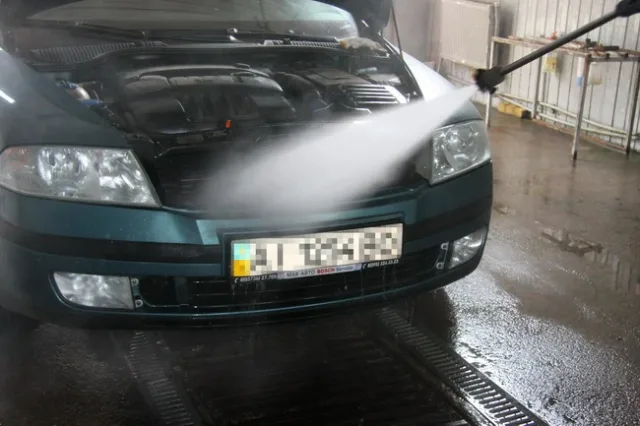
"Washing the engine is purely a personal matter. If the owner does not service the car themselves and the car is relatively new, then there is no need to wash the engine regularly. The risk here is unjustified – the car owner has more chances to spend money on repairs than to improve or maintain the car's characteristics. Nothing terrible will happen even if you do not wash the engine for 5-7 years", - we were told at the capital's Nissan service center.
Others, on the contrary, suggested that neglecting this procedure is fraught with problems.
"The engine is not called the 'heart' of the car for nothing. If a person lives in dirt, drinks, and generally leads an unhealthy lifestyle, the work of their heart will worsen. The same with a car. If you do not take care of the engine, sooner or later it will fail. In particular, electronics failures are possible, oil viscosity may decrease, there is a risk of fire due to oil leaks... and hardly anyone enjoys checking the oil level while getting dirty on all parts. I believe that the engine needs to be washed. Especially in our country, where no one cleans the roads of dust and dirt. It will not be superfluous, but the engine must be washed wisely", - believes an engine repair specialist at STO «115».
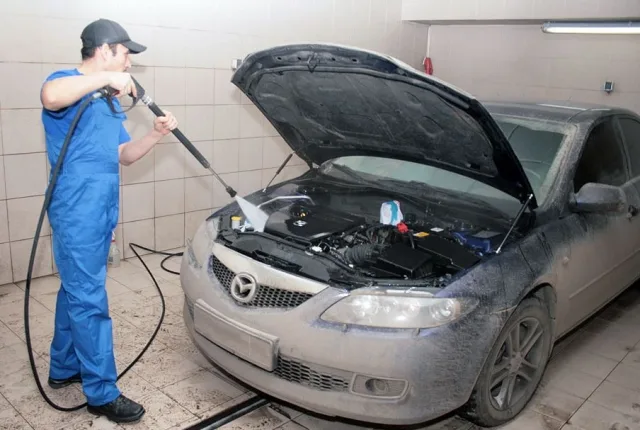
A similar position is held by Alexander Chalenko, head of the service department of UkrAVTO Corporation:
"Sometimes the engine needs to be washed. It is like a general cleaning in an apartment. The engine also gets dirty; dirt (abrasive, technical fluids) gets on its elements, both moving and stationary, which has a negative impact. This includes corrosion due to the hygroscopicity of accumulated dirt, the risk of clogging contacts in poorly protected wiring connectors, and the possibility of small dirt particles getting into containers with technical fluids when you open them. In addition, a dirty engine is harder to maintain, and you can easily get dirty when topping up washer fluid. These are the banal reasons why you should wash it. But you should not do it often, especially in urban conditions."
According to Alexander Chalenko, engines of modern cars are safer to wash – they have a higher degree of water protection and better insulation. Engines of old cars, especially carburetor ones, are more dangerous to wash – they may not start. The reason is simple – water getting on the contacts of the ignition system, less often into the carburetor and the air filter housing. Such engines are advised by craftsmen to be washed on a running engine. By the way, some car enthusiasts talk about good results of washing the engine with Sprite, but experts do not advise testing this hypothesis. At least on your own car.
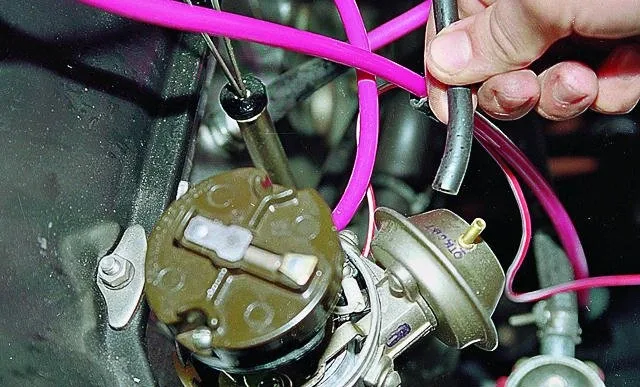
Washing the engine needs to be done wisely
For the sake of experiment, we visited 8 capital car washes (Troieshchyna, Lisovyi massyv, Pechersk, Podil, Holosiivskyi district), where the engine washing service is available. By the way, it is available in almost all "auto baths". However, as our survey showed, not all workers understand the intricacies of washing the engine. So, at 6 car washes, we were told that the engine is washed using a high-pressure washer without any preparation. To the question "what if the engine does not start?" in all cases the answer was that the car wash is not responsible for the consequences of washing the engine. And they can be...
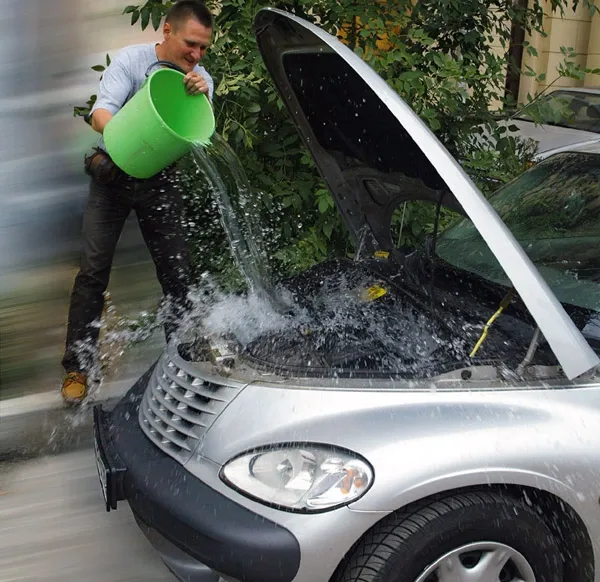
The Internet is literally full of complaints about the consequences of washing engines on various cars. The most common problem is that after washing, the engine may not start. Wiring, battery... Less often – failure of the distributor and/or spark plugs.
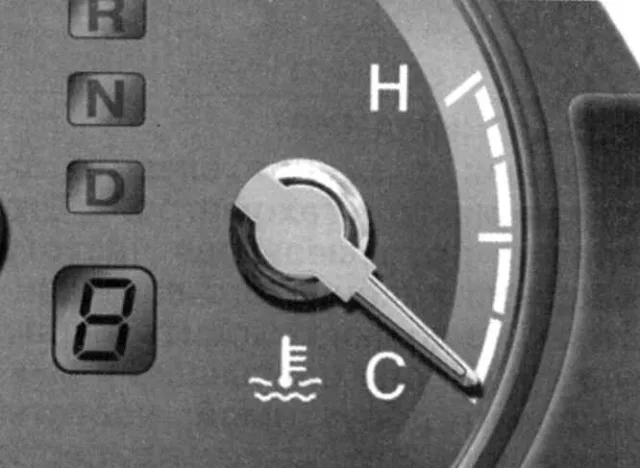
"After washing the engine, the car may not start due to the negligence of the washers themselves. In particular, the most important rule is thorough drying of the underhood space. Washing the power unit 'hot' is also highly undesirable. It is better that the engine cools down a bit before rinsing – at least to 40-45C. But better to room temperature", - they believe at the KIA representative office.
Regardless of whether you want to wash the engine at a specialized car wash or yourself, you must follow certain rules:
- do not wash the engine when it is cold or, conversely, at operating temperature. The optimal temperature is 30-40C
- the water should be approximately the same temperature as the engine itself (plus 10C is acceptable)
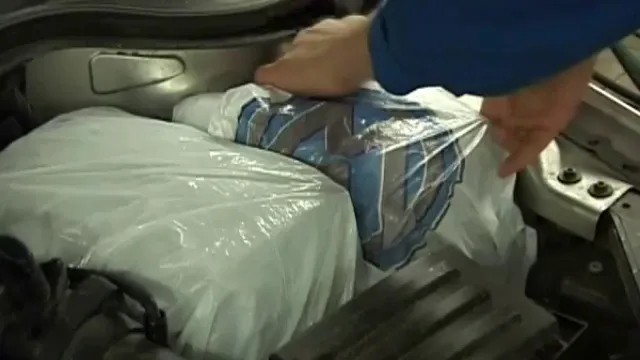
- the air intake should be covered from water ingress (for example, with a plastic bag secured with tape)
- if there is an alarm, it should also be "covered" to avoid water ingress
- it is necessary to protect the wiring, electrical equipment, and battery (for example, with a plastic bag secured with tape)
- it is dangerous to clean the engine with oils and/or gasoline and kerosene (there is a risk of fire)
- there is an opinion that you can use dishwashing liquid and washing powder. Do not experiment, since their composition is still a mystery – it is unknown how this or that substance will affect engine parts
- factory stickers on the unit should preferably be sealed with tape or securely covered in another way. With a 90% probability they will peel off, especially when washing under high pressure
- if problems in the engine's operation still arise after washing, write a complaint to the car wash administration and with this statement, if it does not help, go to court and/or the consumer protection society (with a preliminary visit to a car service to obtain the appropriate document about the loss of the engine's operational qualities)
- for cleaning the engine, it is better to use special auto cosmetics (for self-cleaning). If done at a car wash, ask about the use of such
- apply special agents or foam (at the car wash). Let the dirt "soak" (about 5-10 minutes) and rinse the engine
- after carrying out the engine cleaning procedure, you need to remove the "protective polyethylene" and thoroughly dry absolutely all engine elements. If at a car wash – using a compressed air device. If in "home" conditions – using a vacuum cleaner in blowing mode. As a last resort – without closing the hood, start the engine and let it run for 15-20 minutes
- at the end of the entire procedure, you can go over with a cloth and remove smudges so that everything is very neat and beautiful
Moidodyr
After reading this, many may have a question: "so, should I wash it myself or go to a car wash?". The question is complex and rhetorical. If you "wrap" vital elements and do not pour the engine from a hose, while simultaneously threading meat onto a skewer, you can quite clean the engine yourself. But you need to understand that the result will be worse than in the case of rinsing at a car wash. But we would advise not to be stingy and visit an official service station at least once every 3 years to rinse the engine – there is at least some guarantee that in case of an unforeseen breakdown, there will be someone to turn to.
If you have an old car whose warranty expired in the last century, we advise you not to take risks and wash the engine under careful supervision at a car wash or yourself, but without excessive "pouring". In principle, there is nothing complicated about it, but you need to follow at least the elementary rules listed above.
Well, do not forget that a clean engine always runs quieter. As in the case of a clean car, which after washing somehow always drives better and faster. Self-hypnosis is a great force…