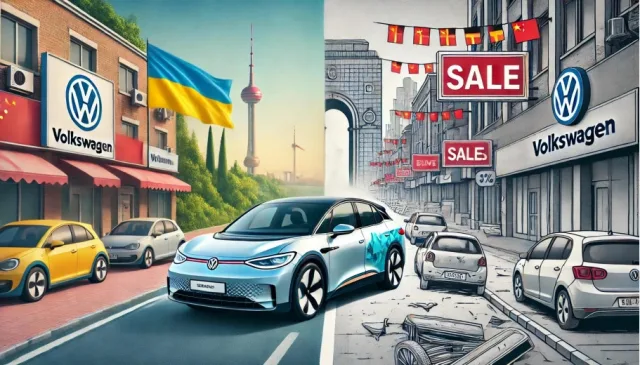
However, few people pay attention to the fact that Volkswagen electric cars mostly come off assembly lines in China — a market where interest in such vehicles has been rapidly fading recently.
In January 2025, the company sold 171,900 cars in China, but the bulk were gasoline versions. Electric cars did not particularly interest local drivers: only 4,552 such vehicles were sold, which is 71% less than in the same month of 2024, when the figure reached 15,828 units. The brand's presence in the Chinese electric vehicle segment decreased to 2.6%, although the market itself was growing overall.
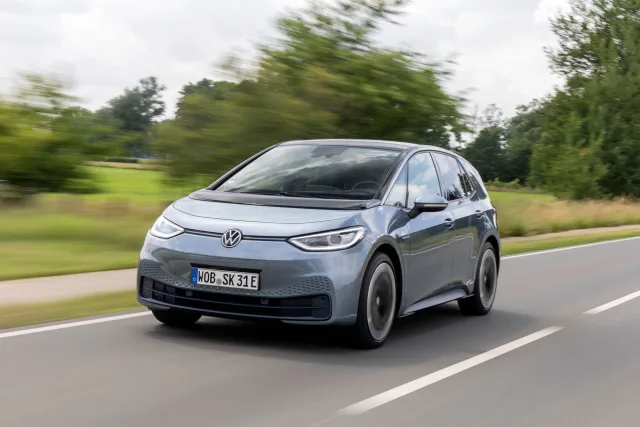
The greatest demand among Volkswagen electric models remained for the ID.3 hatchback — in January, 2,623 buyers purchased it, but this is almost three times less than last year's result. The ID.4 X and ID.4 Crozz crossovers, which sold 1,020 and 889 units respectively, also noticeably lost ground — a decline of 59-70%. The launch of the electric sedan ID.7 Vizzion was particularly disappointing, finding only nine owners — for a company of Volkswagen's level, this is practically a fiasco.
It is noteworthy that even significant price concessions on electric models do not allow the German manufacturer to compete adequately with local and American rivals. For example, the Geely Xingyuan was chosen by 28,100 customers in January, and the Tesla Model Y by 25,700.
Analysts attribute the decline in demand in China to the fact that electric Volkswagens do not meet the demands of young people. Buyers in the PRC are looking for modern digital solutions: phone connectivity, advanced autopilot systems, and constant software updates. And it is precisely with this, according to Chinese media, that the German brand's electric models have difficulties. In fact, in the Celestial Empire, electric vehicles are already treated not as transport in the classical sense, but rather as mobile gadgets...