
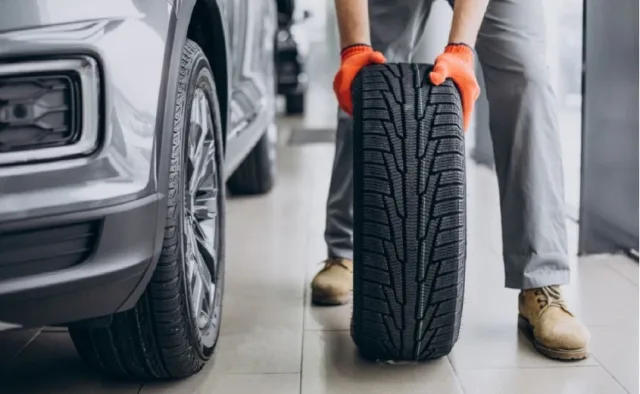
Spring weather often throws surprises, especially at night and in the morning, when the thermometer can drop to sub-zero levels. So before planning a visit to the tire fitting service, it is worth clearly determining when the right time for seasonal tire replacement has actually arrived.
The main rule is to focus not on the calendar, but on the actual air temperature. Summer tires are designed to work in warm weather, and their rubber compound loses its characteristics when the temperature drops. If the air cools below 5°C, the efficiency of summer tires significantly decreases, and grip on the road surface noticeably worsens. This is especially dangerous on wet or slippery asphalt, where even a slight cold snap can affect the car's handling.
It is also worth considering that spring rains and temperature fluctuations create additional risks for drivers. If after several warm days frost strikes again at night, summer tires on a slippery road will not provide proper grip, which can lead to emergency situations.
As a rule, you should switch to summer tires after the air has consistently warmed up to 10°C and above. Under such conditions, the rubber works in normal mode, ensuring safety and comfort while driving. However, these are only average indicators, and much depends on the specific situation. It is best to change tires when the average daily temperature stays at 10°C or more for several consecutive days.
Tips from a professional
Famous Ukrainian racing driver Oleksii Mochanov advises not to rush with changing tires even in April. "Despite the fact that according to the calendar it is already spring, tires should be changed only after the warmth stabilizes. And even then, there are nuances", he notes.
Mochanov also draws attention to an important detail for owners of two sets of wheels of different freshness: "If you have two sets of wheels that differ in condition, better tires should be installed on the rear axle, regardless of whether the car has front-wheel drive, rear-wheel drive, or all-wheel drive". This rule helps avoid dangerous situations on the road, as the rear axle is more prone to skidding on slippery surfaces.
Why does the rear axle need better tires?
Oleksii Mochanov explains that when changing tires, you should correctly choose which wheels to install where, especially if they are worn differently. "The rear axle, which has worse grip, will constantly try to overtake the front axle, which threatens loss of control over the car, especially on descents or during braking", the expert warns. This is important to consider, as incorrect tire placement increases the risk of accidents, especially in adverse weather conditions.
So you should switch to summer tires only when the temperature consistently stays above 10°C, and the weather forecast does not promise sharp cold snaps. If there are doubts about the feasibility of replacement, it is better to wait a few more days or even weeks, because safety on the road is paramount.
Also, before changing tires, it would not be superfluous to inspect the summer tires: check the degree of wear, the presence of cracks or other damage. Timely tire replacement is a concern not only for your own safety and the safety of passengers, but also for all road users.