In some networks, the price is about 12 hryvnias per liter, which is not very pleasing for owners of cars with LPG. In addition, some companies are lobbying for the introduction of additional duties on imported gas and diesel.
In such a situation, many unscrupulous traders are tempted to "fiddle" with the quality of autogas or the accuracy of filling. Specialists of the capital's Institute of Consumer Expertise decided to check the quality of gas offered to Ukrainian customers. Control sampling followed by testing in a certified laboratory revealed significant differences in gas from different samples.
The choice of participants is made
Under the scrutiny of inspectors came large all-Ukrainian gas station networks (Shell, BRSM Nafta, OKKO, Glusco, Amic), a capital network (KLO), several large regional operators (Sun Oil, Marshall, Avantage 7) and "barrels", i.e. illegal filling stations. By the way, the latter have significantly decreased recently, but you can still meet them on the road.
Experts took samples into a special sampler, after which the samples were delivered to the laboratory.
How much is "poured"?
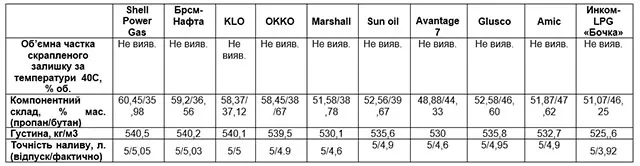
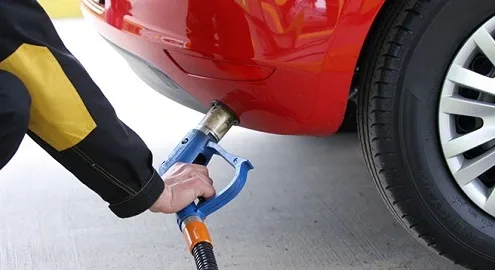
The accuracy of gas filling is the most criticized parameter by drivers. Many motorists measure mileage and complain that they are filled with more gas than the capacity of the cylinder. According to standards, underfilling can be no more than 1%, but achieving such a result at a dispenser is quite difficult. Experts took 5 liters of gas at each gas station, the mass of the empty sampler was measured, then the mass of the full one, and using the formula taking into account density, recalculated into volume. The results turned out to be very polar, and not always pleasant for consumers.
In the Power Gas sample at Shell stations, the best result was found – here they even "poured" more than paid - 5.05 liters! Apparently, the company values its status as a serious international company, so it is extremely scrupulous about equipment verification and does not allow even a hint of deviations here.
The BRSM Nafta network is not far behind in the accuracy of the "fill" dose – 5.03 liters. At KLO, fuel was also dispensed exactly according to the receipt. But at Marshall and Avantage 7 stations – 4.6 liters instead of the paid 5, and the "illegal" one even dispensed 3.92 liters! And if the first two cases can still be attributed to savings on timely maintenance of dispensers, then in the case of the "barrel" it seems that the buyer is deliberately deceived. It turns out that the low price at the dispenser does not correlate with the number of kilometers the car will travel. As a result, the desired savings effect is not achieved.
What did laboratory tests show?
In the laboratory, samples were first tested for compliance with the requirements of the relevant GOST in terms of "Component composition". As is known, automotive gas consists of a mixture of propane and butane, as well as other hydrocarbons (isobutane, propylene, ethane, ethylene, etc.). For different seasons, the quantitative content of the mixture may be different – in summer it is approximately 40:60 (propane to butane), in winter, on the contrary, 60:40. The more propane in the gas, the higher the saturated vapor pressure and the better the starting qualities and operation of fuel equipment in winter operation.
Our study showed that all participants met the standard, but the spread of actual indicators turned out to be quite significant. The best ratio was shown by the Power Gas sample at Shell stations – 60 propane and 35 butane. Such figures allow for the most complete combustion of the mixture, and hence dynamics while maintaining fuel efficiency. Also, this sample recorded low values of propylene content, which is harmful to the fuel system.
Experts also placed the automotive gas of the BRSM Nafta gas station network (59:36) in the group of leaders in terms of indicators. As previously reported in an interview with the publication "Enkorr", the BRSM Nafta network very seriously controls the percentage ratio of propane and butane. It is also worth noting the result of the KLO sample, which has a well-balanced composition of components (58:37) and low propylene content.
Also important are the grades of liquefied gas. There are two main ones – PBA (automotive propane-butane) and SPBT (technical propane-butane mixture). What is the difference? The first grade is purified gas adapted for use in cars, the second is "dirtier", intended for household needs (for example, heating).
According to the requirements for SPBT, a liquid residue of up to 1.6% is allowed, while for PBA the presence of residue is not allowed. The presence of liquid residue in SPBT when used in cars leads to the accumulation of residue in tanks, clogging of filters, and malfunctions of fuel equipment.
Unlike previous studies of the Institute, this time all samples turned out to be exactly automotive gas; no liquid residue was found in any sample.
Finally, another important parameter was checked – gas density. The higher it is, the greater, all other things being equal, the mileage on one fill. In this parameter, the highest indicators were demonstrated by samples from the BRSM Nafta and Shell networks – respectively, 540.2 and 540.5 kg/m3. But at Avantage 7 and the "barrel", the gas turned out to be the least dense – 530 and 525.6 kg/m3.
Large networks sell "cleaner" gas, while others attract with low prices
Despite the significant price increase, over the past year the quality of automotive gas has improved. Gas at filling stations has become truly "automotive" – "dirty" household gas is no longer there, although a year ago it was sold en masse. Of course, there is a difference – large solid networks try to sell "cleaner" and "premium" automotive gas, while regional and medium networks prefer to attract with low prices. But at the same time, a pleasant "price" at the gas station dispenser does not always guarantee a benefit – in the end, only the distance traveled for a certain amount of money matters.
Alexander Babenko