In 2018, a unified Euro-5 standard for gasoline and diesel fuel came into effect in Ukraine. However, as it turned out, the mere existence of the standard does not guarantee full compliance of products with the declared norms. There is a widespread opinion that at a number of gas stations, fuel does not meet the requirements of DSTU. This situation attracted the attention of the Carta.ua portal team, which decided to conduct its own study of fuel quality at gas stations in Kyiv.
What was the purpose of the gas station inspection?
As representatives of the resource said, initially the inspection was conceived as a small initiative — to test fuel at several gas stations that Carta.ua employees themselves regularly used. Over time, this task grew into a larger project — systematic monitoring of fuel points in the capital.
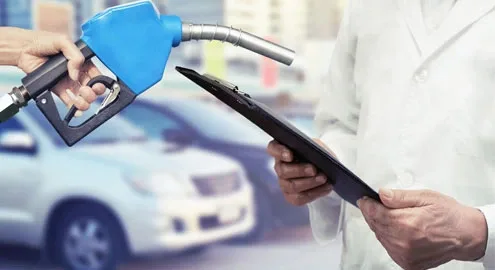
The site team emphasized that gasoline analysis was carried out in an accredited independent laboratory. Portal specialists processed data from quality passports, brought them into a unified form, and highlighted key parameters for motorists. In addition to comparing fuel at different gas stations, site visitors can learn about how individual fuel characteristics affect the car's behavior, its technical condition, smoothness of ride, and fuel consumption.
Under each report posted on the portal, you can leave a comment — research is conducted primarily for the audience, and feedback is of great importance to the project authors.
What results did the testing show?
The inspection covered the following gas station networks in Kyiv: Shell, OKKO, KLO, WOG, ANP, BRSM, Socar, Amic, Ukrnafta, Chipo, Ultra, Clusco. The study analyzed such fuel grades as A-92, A-95, A-95+, and A-98-100.
Overall, almost all tested samples met the Euro-5 standard, but violations of DSTU were still recorded for certain parameters. Some samples were very close to the limit of permissible values.
For example, a sample of 95-grade gasoline taken at the KLO gas station at 53 Hlybochytska Street showed an excess of sulfur content — almost twice as much as the Euro-5 standard allows.
Carta.ua representatives promised to conduct repeated checks at those stations where discrepancies were found to verify the results and understand whether the situation has changed. Motorists can learn more about the research results on the project's website. The portal team notes that it does not insist on certain conclusions and does not call for specific actions — every driver has the right to decide for themselves how to treat the data obtained. You can follow new tests on Carta.ua.