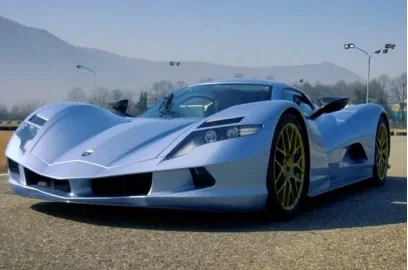
A total of 50 Aspark Owl units will be delivered to customers this fall after the supercar completes all tests. It is preliminarily known that acceleration from 0 to 100 km/h will take only 1.72 seconds.
According to Aspark, the "Owl", which debuted in Dubai last year, can actually go even faster, with a target time of 0-100 km/h of less than 1.7 seconds. This makes it the world's fastest production car.
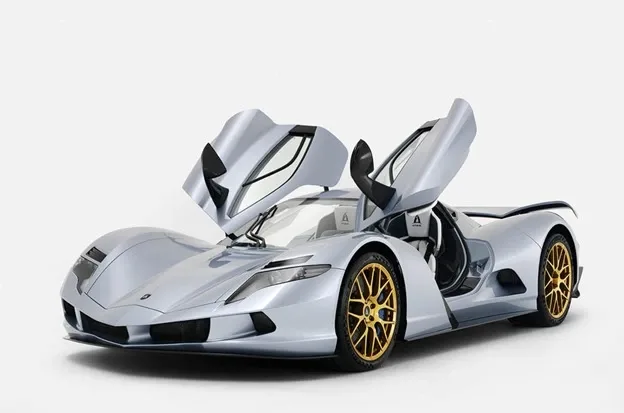
The Owl generates 1985 horsepower from four electric motors - almost twice the power of a Formula 1 car - combined with a "unique" battery pack for a claimed range of 400 km. The powertrain also develops about 6500 Nm of torque, with motors spinning at up to 15,000 rpm. Top speed is 400 km/h.
The Owl's 64 kWh lithium-ion battery is much smaller than those of competing electric hypercars such as the Rivian and Lotus, with the aim of reducing weight. The car's chassis, like most of its other components, is made of carbon fiber, contributing to a claimed mass of 1900 kg.
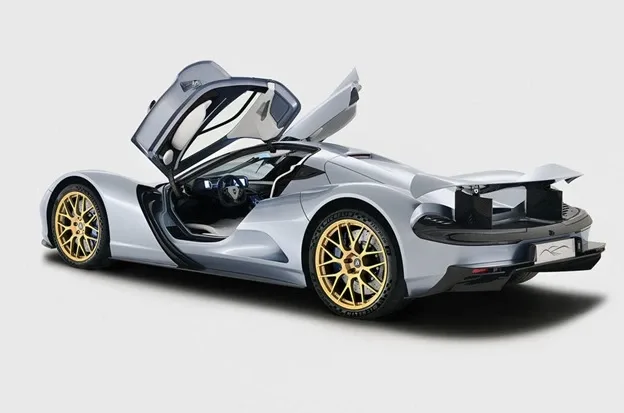
Originally, the "Owl" concept was announced at the 2017 Frankfurt Motor Show. The production version will feature an automatically extending spoiler, digital cameras integrated into the rearview mirrors, and an updated interior design that moves controls and switches to the ceiling.
This was reported to journalists by Aspark CEO Mansanori Yoshida: "It is a great honor for Aspark to be the first to announce this achievement, accomplished in record time. When we first announced this project, no one believed it could be done: it is true that we do not have a long history, but now we are completing what is the first Japanese electric hypercar."