However, such a turn of events was not a surprise: the introduction of the updated WLTP procedure, which assesses real fuel consumption and harmful emissions, at the beginning of last month provoked an abnormal for this time of year surge in sales in August — then the market grew by 31.2%. Because of this, in many EU countries September was marked by a decline in demand, and in some cases the drop was measured in double digits.
In particular, the German market for new passenger cars fell by 30.5%, the Italian by 25.4%, the British by 20.5%, the Spanish by 17%, and the French by almost 13% compared to September last year.
At the end of the month, the largest car market in the European Union turned out to be the UK: 338.8 thousand new passenger cars were sold there.
In second place was Germany, where residents purchased 200.1 thousand cars.
The top three was closed by France with 148.7 thousand registered cars.
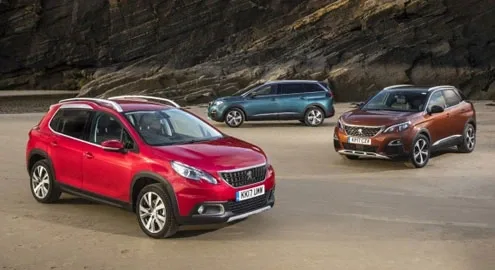
Among European automakers, the PSA Group retained its lead, selling 198,988 cars in EU markets, which is almost 8% less than its result last year.
Second place was taken by the VW Group, whose sales amounted to 171,963 cars — this is 48% less than in September 2017.
The third indicator in terms of the number of cars sold was BMW Group — 99,371 units, which is 8.6% lower than the previous level.
Overall, in the first nine months of 2018, registration of new passenger cars in the European Union increased by 2.5% and reached 11.658 million units, which fully fits into the growth forecasts for the current year.
Among the five leading markets, positive dynamics were shown by Spain (+11.7%), France (+6.5%) and Germany (+2.4%), while in Italy sales decreased by 2.8%, and in the UK by 7.5%.