In particular, many are interested in the most important point – which cars will not be able to pass the technical inspection? Unfortunately, the standards are not yet specified, but there is, of course, an understanding of what to expect. Autoportal tried to explore this topic, basing it on the experience of a neighboring European country – Poland. But first, a few words about what is already specifically known about the upcoming technical inspection in Ukraine, which is returning after more than 10 years.
Mandatory technical inspection in Ukraine
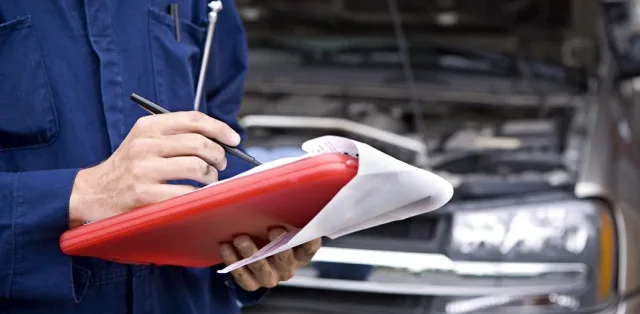
According to the draft, the inspection will be carried out with the following frequency: passenger cars (up to 3.5 tons) – once every two years (if the car is new – the first check only after four years), taxis – once a year, buses – once every six months, trucks – once a year, motorcycles – once every two years. Who will conduct the inspection? Well, here's the question. It is expected that this matter will be given to private certified service stations to avoid corruption, but it is not excluded that the police will also take on the inspection. For this, by the way, they have mobile technical control laboratories that appeared this year.
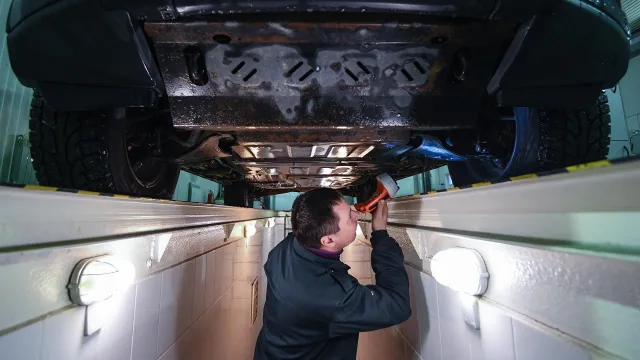
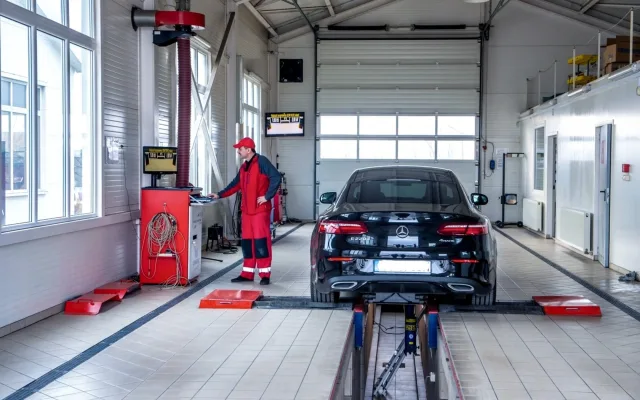
On average, for passenger cars, the vehicle inspection will take about 40 minutes, for buses and trucks – an hour. If mobile complexes also carry out the inspection, they will perform the procedure in 20 minutes. By the way, mobile laboratories are currently checking only commercial transport and transport carrying people. For such vehicles, by the way, the inspection was not canceled.
How much will the technical inspection cost? It is expected to be within 1000-1500 UAH depending on the service station. To pass the inspection, you will need to have an identity document and a vehicle registration certificate.
Now, let's move on to the main point.
Which cars will not be able to pass the technical inspection
So, the most important message – those cars that do not pass the check of the operation of individual systems and components for safety and environmental impact will fall under the "ban".
What exactly will be checked? Most likely:
- steering system (condition of connections, degree of wear, presence of play);
- brakes (efficiency and uniformity of action);
- suspension (presence of play in metal and rubber elements);
- tires (load selection, compliance with vehicle type, tread depth, wear);
- lighting (serviceability, mechanical damage);
- glass, body (condition of sills, etc.);
- seat belts;
- additional equipment (emergency stop sign, fire extinguisher);
- exhaust system (technical condition, noise level measurement, emission of harmful substances).
That is, those cars that have problems with the above-mentioned components will not pass the inspection (here we want to emphasize the exhaust – cars with a removed catalytic converter (and there are many such in Ukraine) will not be able to pass the technical inspection!). However, the nature of malfunctions can be different, and therefore, the decision on allowing a car on the roads will obviously be made based on the vehicle's belonging to the level of malfunction. In total, there will probably be three such levels:
- minor malfunction, that is, not having a significant impact on safety or the environment;
- significant malfunction, that is, one that can affect road safety and the environment;
- dangerous malfunction.
That is, those cars that have a serious defect (third level) in at least one of the above components will not be able to pass the inspection. At the first level, the driver will be allowed to continue driving immediately, at the second – also allowed, but provided that the owner fixes the breakdown and returns after some time for a re-inspection (in Poland this is 14 days).
Instead of conclusions
The return of the technical inspection is a double-edged sword. On the one hand, this procedure will complicate the lives of motorists (time, money, nerves), and on the other hand, it may even help save that very life. After all, the main goal of the inspection is the safety of both the motorist himself and those around him.