Autoportal explains why a car consumes more fuel in winter and how you can reduce fuel consumption.
Why fuel consumption increases in winter
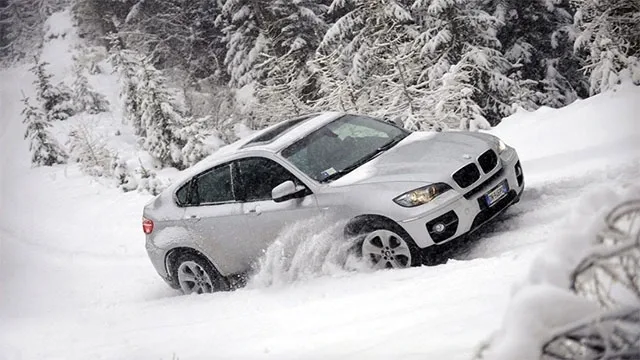
There are two main reasons. The first is the car's resistance to snow. A snowdrift, deep ruts, driving on snow itself – all this is an additional load on the car. Overcoming such obstacles requires the driver to give more power and traction, and this inevitably leads to increased fuel consumption.
The second reason is the use of various heating systems. They are powered by electronics, but the initial point of energy consumption originates from the fuel tank.
How to reduce fuel consumption in winter
In addition to generally accepted recommendations such as smooth and predictable driving, without sharp accelerations and with minimal braking (which is really not necessary on a flat, albeit snowy, road), it is useful to periodically review the contents of the trunk. There are usually more than enough unnecessary things here, but if the car travels several thousand kilometers a year, an extra 10 kg also plays a role. According to the German automobile club, ADAC, for every 100 kg of cargo on board a mid-size sedan, fuel consumption increases by 0.3 l / 100 km.
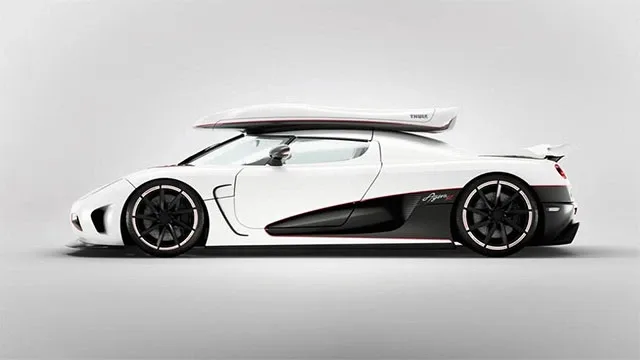
In addition, if there is a roof rack, it is better to remove it if possible. At a speed of 130 km/h, this extra weight takes an additional 2 l/100 km.
As for energy-consuming equipment such as seat heating, steering wheel, mirrors, as well as windshield and rear window, it should be used when necessary. After the car has warmed up well, the heating systems can be turned off until it gets colder. By the way, regarding engine warming up – you don't need to idle for a long time: 2-5 minutes is quite enough. In any case, the main warming up of the units occurs after the start of movement (and it is achieved by the same unhurried driving).
In this regard, before a trip, you should remove all snow from the car (even on the roof) – this will minimize the use of heating systems. And also reduce the air resistance coefficient and the weight of the car.
Car lighting also requires fuel, but if with headlights in winter it is better to drive always (without any exceptions – even during the day in the city), then, for example, powerful fog lights should be used only for their intended purpose, since their bulbs consume about 0.2 l of fuel per 100 km of travel.
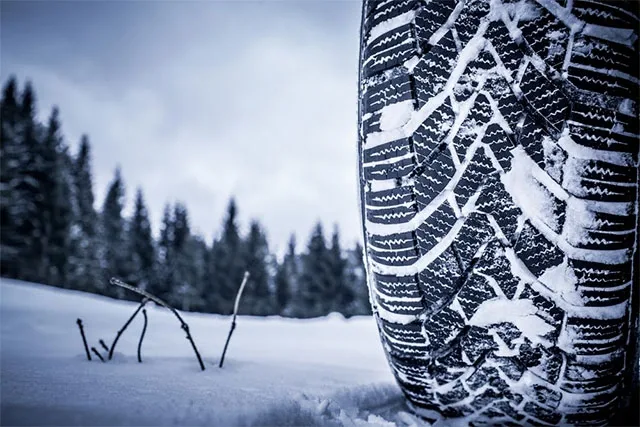
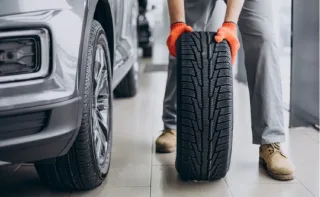
Finally, every two weeks you need to check the tire pressure. Low tire pressure not only affects the overall driving characteristics of the car and traction with the road, but can also increase rolling resistance and, consequently, fuel consumption.