In "heavy weather," roads are subject to various negative impacts – in summer they melt and crack due to intense heat, in winter they break up due to excessive moisture. Both phenomena are dangerous and often lead to serious accidents. And often the solution here is one – high-quality and timely repair of the pavement. However, Germans believe that it makes sense to apply a solution that would be aimed not at eliminating consequences, but at preventing troubles.
The idea is to "bury" a kind of air conditioners into the roads. In some Northern European countries, road heaters are already used, but the use of cooling systems has been discussed for the first time.
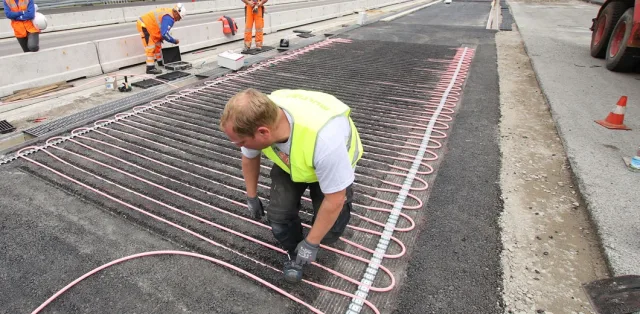
In terms of engineering, the project is implemented on the following principle: a special radiator unit is installed "under" the road, which is then connected to an electrical power source. Then low-temperature water is run through the entire system – it circulates in a circle, and depending on weather conditions, cools (in summer) or heats the asphalt (in winter). Thus, Germans expect to win twice. However, another technology is also being tested – not water-based.
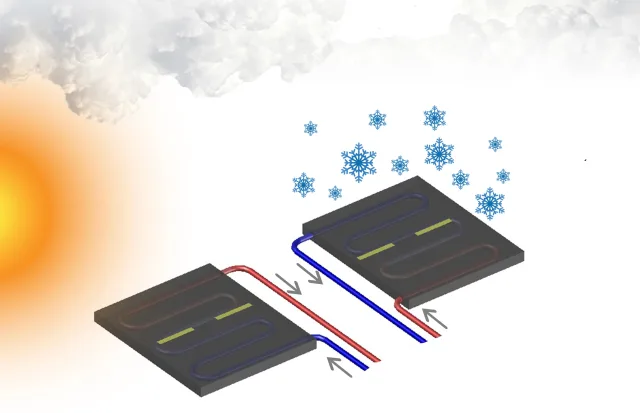
In total, five test fields and one control field will be built in Germany. The length of each will be 55 meters. Two test fields will be cooled/heated by water, and three test fields will use an air cooling/heating system (but how this will work is not specified).
Over three years, the effect of the "air conditioner" on the road surface will be checked using built-in temperature sensors. In addition, thermal imaging cameras will monitor the surface temperature of the asphalt. Ultimately, the technology that proves more effective will be "adopted."
It is expected that road "air conditioners" will first be used on sections that suffer the most – these are turns, tunnel exits, etc.