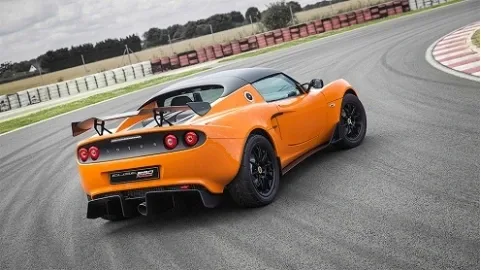
The company claims that this model has become the fastest in its history — on the test track in Hethel, the car completed a lap in one minute and 33.5 seconds. This result is half a second better than the achievement of the previous Elise Cup 220 R version and is considered the best among all racing modifications.
Under the hood is a 1.8-liter supercharged engine with four cylinders. The unit works in conjunction with a six-speed manual transmission, developing 246 horsepower and 250 Nm of torque. There is no data on acceleration time to one hundred kilometers per hour, but the fastest regular production version reaches the first "hundred" in 4.3 seconds.
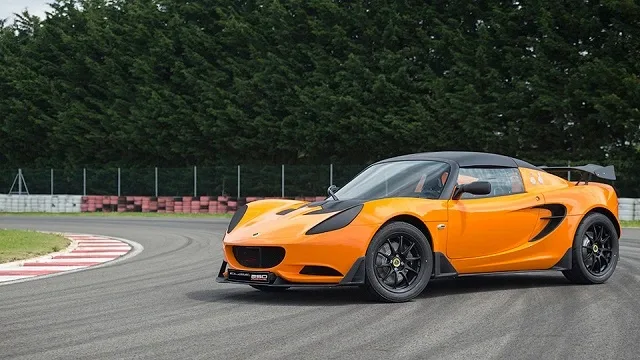
The maximum speed of the Race 250 is 248 kilometers per hour. At this speed, the aerodynamic kit, including the front splitter, diffuser, and rear wing, generates downforce of 155 kilograms. For an additional fee, these parts can be ordered in carbon fiber.
The curb weight of the new model is 900 kilograms, which is 30 kilograms lighter than the Elise Cup 250. The weight reduction was achieved thanks to blanking plates instead of headlights, a more compact lithium battery (saving 10 kilograms compared to the standard car), seats with a carbon frame (minus 6 kilograms), a polycarbonate rear window, as well as carbon fiber aerodynamic elements that allowed removing another 10 kilograms.
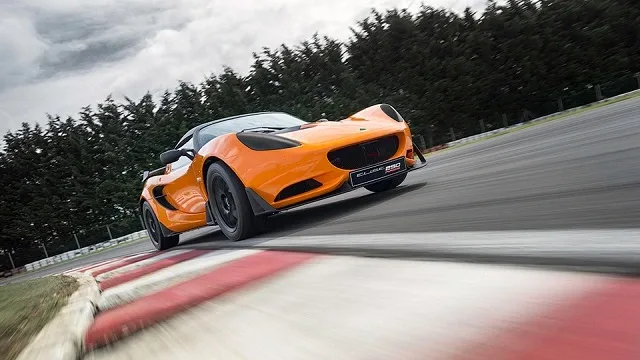
In addition, the track coupe is equipped with adjustable Nitron shock absorbers, an adjustable anti-roll bar, two-piston AP Racing brakes on the front axle and single-piston Brembo at the rear, ultra-light wheels with Yokohama AO48 tires, a removable steering wheel, a roll cage, tow hooks, and a fire extinguisher in the cabin.