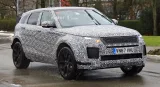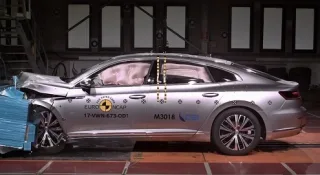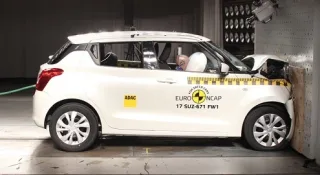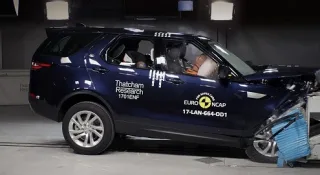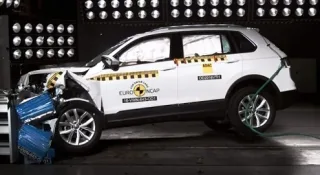
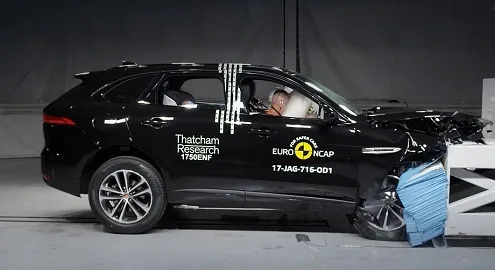
The Jaguar F-Pace crossover passed all checks almost without criticism. The only drawback experts noted was insufficiently strong protection for the rear seat row.
The compact Hyundai Kona crossover also showed a high level of safety, but lost points because the automatic emergency braking system is not included in the starting equipment.
The hot hatch Kia Stinger demonstrated confident protection in all types of tests. The only flaw was the not most reliable operation of the seat belt for the rear passenger.
The BMW 6 Series Gran Turismo, despite receiving five stars, failed to properly protect the driver's shins, and in a side impact, passengers suffered serious injuries.
The compact Toyota Yaris hatchback also reached the highest rating, but not without reservations. In frontal and side collisions, increased load on the chest of the driver and front passenger was recorded.
The city car Toyota Aygo in the base version earned only three stars — mainly due to weak protection for the front passenger. However, the modification with an additional autonomous braking system still managed to rise to four stars.
The Kia Stonic crossover was decided not to be subjected to crash tests, considering it identical to the Rio hatchback, which was tested in September. Therefore, the model received the same ratings: three stars in the initial configuration and five in the top version with a full package of electronic assistants.
The Chinese MG ZS crossover managed to please with decent passenger protection only in a side impact, so it could not rise above three stars.
The budget Dacia Duster of the second generation also stopped at a three-star result. The reason was not only mediocre safety, but also a minimal set of electronic systems.
The Alfa Romeo Giulietta was let down not so much by the quality of protection as by the almost complete absence of electronic assistants. As a result — only three stars.
The Ford C-Max surprised with modest three stars, because this model once received the maximum rating. The compact MPV was let down by passenger protection, a deformed side door, and questions about the operation of the autonomous braking system.
The Opel Karl was sent for crash tests again for the second time in two years. The first attempt brought four stars, but the second took one away. Under stricter requirements, the hatchback worsened its performance in all disciplines.
The DS 3 also ended up among the "C students." The protection of rear passengers in a frontal impact was recognized as especially weak, as well as the ineffective operation of side curtain airbags.
The main disappointment of the session was the already rather outdated Fiat Punto, which did not get a single star. Twelve years ago, the model was five-star, but today cars without side airbags and electronic assistants are better not brought to European crash tests.