AutoPortal previously wrote about the consequences awaiting a driver who hits a dog. Formally, a traffic inspector is also a pedestrian, but only partially. The main difference is that he is a representative of authority, and hitting him can turn into much more serious problems.
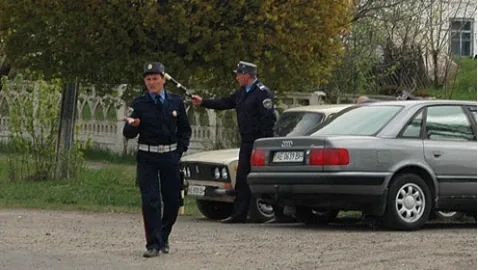
In fact, almost every motorist risks accidentally hitting an inspector. Many drivers have encountered situations where a traffic officer, trying to stop a car moving in the second or third lane, literally jumps under the wheels of a car driving in the first lane. Readers have also complained that sometimes traffic controllers choose a position such that in heavy traffic they are simply impossible to notice in time. So what threatens a driver if he runs over a traffic inspector's foot?
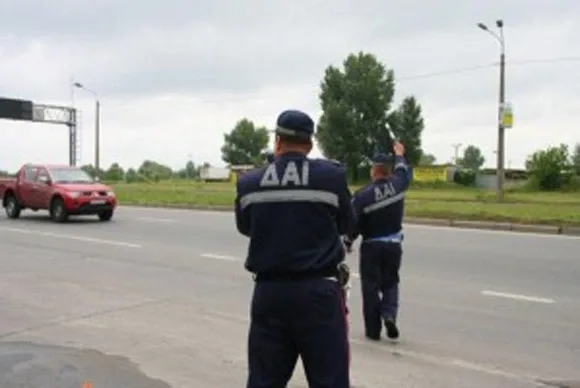
The outcome of such an incident directly depends on the driver's legal preparedness and ability to prove that avoiding the collision was physically impossible. Dashcam recordings and eyewitness testimony can be a significant help in this.
In any case, it is strictly forbidden to leave the scene of the incident. If there were no injuries and it was possible to reach a peaceful agreement with the "victim" (even if he is wrong), this is the best scenario. It is advisable to formalize the agreement in writing, for example, a written agreement on the absence of mutual claims. If an agreement could not be reached or you consider the inspector himself to be at fault, you must act strictly according to the law, namely in accordance with clause 2.10 of the Traffic Rules of Ukraine.
If a driver becomes a participant in an accident, he is obliged to:
• immediately stop and not leave the scene of the accident;
• turn on the hazard lights and set up an emergency stop sign in accordance with clause 9.10 of the same Rules;
• not move the vehicle or move objects related to the incident;
• do everything possible to provide first aid to the injured, call an ambulance, and if this is impossible, involve others and send the injured to a medical facility;
• if the actions under subparagraph "d" cannot be performed, it is necessary to personally take the injured person to the nearest hospital, having first recorded the traces of the accident and the position of the vehicle; at the medical facility, report your surname and license plate number (presenting your driver's license and vehicle registration documents), then return to the scene of the accident;
• report the accident to the police, write down the names and addresses of witnesses, and wait for the arrival of officers;
• take all measures to preserve the traces of the incident, cordon them off, and organize a detour;
• before a medical examination, do not consume alcohol, drugs, or medications based on them (except those included in the standard first-aid kit).
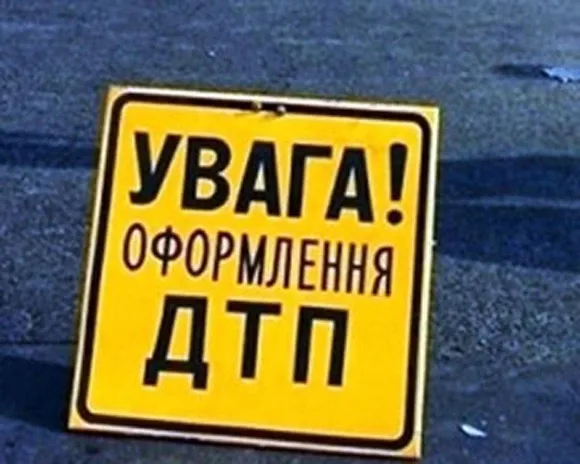
The accident must be processed by another patrol, not the one in which the injured inspector serves. Further developments will depend on whether you have evidence of your innocence and the integrity of the traffic officers.
An incident with a police officer may be qualified under Article 345 of the Criminal Code of Ukraine "Threat or violence against a law enforcement officer." An alternative option is Article 286 of the Criminal Code of Ukraine "Violation of road traffic safety rules or vehicle operation by persons driving vehicles."
...if the inspector himself "threw himself under the wheels"
If a police officer unexpectedly jumped onto the road and provoked an accident, and you hit him, you need to gather all possible evidence of your innocence. If a peaceful resolution fails, rely on witnesses and dashcam footage. Your goal is to prove that it was technically impossible to stop before contact with him. You should also insist on an expert examination.
Advice from lawyer Vadim Volodarsky:
"To avoid an undesirable turn of events, the driver should know: the possibility of avoiding an accident is determined only by an expert examination. Therefore, in initial testimony, one should not give exact figures—for example, the distance from which the pedestrian was noticed or the moment he ran onto the road. These figures will later form the basis of the examination, and they are almost always inaccurate, since it is impossible to determine distance by eye in a stressful situation. It is better to clarify these data later, during the investigative experiment.
There are also many nuances in the methods of conducting examinations, which are well known to auto-technical experts, investigators, and lawyers specializing in accidents. Therefore, the participation of a lawyer is desirable from the earliest stage—from the moment the accident is processed. Even then, a defense line can be built. The main thing is not to admit guilt immediately just because of the fact of hitting a pedestrian."
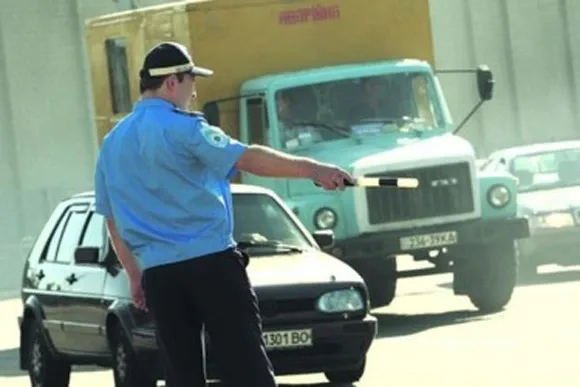
In such a situation, the traffic inspector is a pedestrian for you, and according to clause 4.14 of the Traffic Rules, even in a permitted place, a pedestrian may enter the roadway only after making sure that he does not create a danger for himself and other road users. Therefore, a person who throws himself under a car is, from the point of view of the law, a violator.
A driver cannot always react to the sudden appearance of a pedestrian and avoid hitting him. When determining guilt, the court will rely on the expert's conclusion about whether the driver had the technical ability to stop before the collision.
In practice, there are cases where a driver who hits a pedestrian even at a crosswalk avoids liability. It is worth noting: the Traffic Rules do not oblige the driver to slow down or stop when seeing an inspector on the roadside. Therefore, a traffic inspector who jumps under the wheels acts unlawfully. Similarly, a situation where a police officer suddenly appears in front of you from behind a car driving ahead should be assessed.
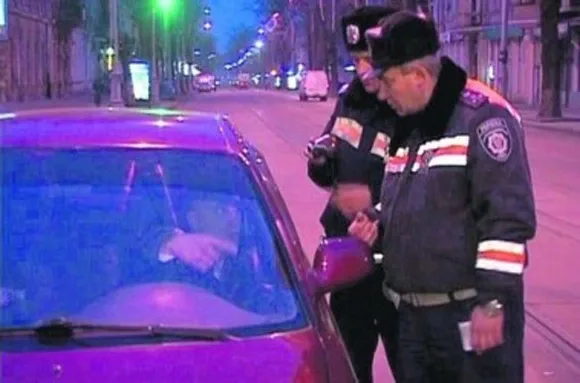
However, if the examination shows (even if the inspector is at fault) that you had the opportunity to brake or go around the pedestrian, liability cannot be avoided. And if the hit on the foot occurred when the inspector had already stopped you, you will have to answer under the article on intentional infliction of beatings or light/moderate bodily harm to a law enforcement officer in connection with the performance of his official duties.
...if the inspector stood in the middle of the road
A traffic officer is obliged to choose a place of service so as to timely record and suppress violations without creating emergency situations and obstructing traffic.
If these requirements are violated, you have the right to make a remark (provided it is in a correct form) and call the trust service. But it is unlikely that you can count on serious punishment for the inspector (reprimand or suspension).
Lawyers agree: if the hit occurred when the inspector was regulating traffic or simply standing in an inappropriate place, obstructing passage, one cannot count on a favorable outcome for the driver. The exception is the presence of witnesses or video recordings confirming a violation on the part of the inspector.
However, there is also a positive point: few traffic officers, knowing they are wrong, will want to participate in proceedings and become subjects of an internal investigation.
The price of hitting a traffic inspector
As already mentioned, everything depends on the circumstances. If intentional infliction of bodily harm to a law enforcement officer is seen in your actions—up to 5 years in prison. If the case is qualified as hitting a pedestrian—deprivation of rights and/or a fine.
As for attempts to resolve the issue on the spot, first you should try to apologize (even if the inspector, in your opinion, is wrong). If this does not work and the inspector threatens sanctions, you can threaten to contact the trust service for violating instructions and creating an emergency situation. It would not be superfluous to mention witnesses and dashcam footage (even if there is none). If this does not help either, call the trust service, call a lawyer (ideally), another patrol to process the accident, and an ambulance. And most importantly, do not admit guilt solely based on the fact of the hit. You should also start video recording what is happening, capturing where the inspector was, his words, rank, and name.
It would be dishonest to say that one should not try to part peacefully by making the inspector an offer he cannot refuse. This makes sense when you know for sure that you hit the foot (or another part of the body) of a traffic officer through your own fault.
Criminal Code of Ukraine