
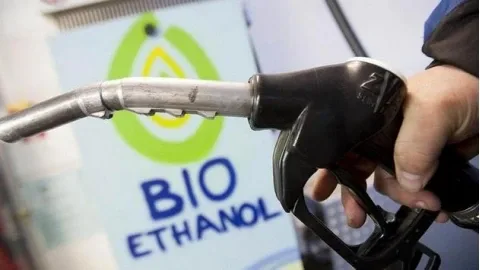
To retain customers, gas station networks are actively developing loyalty programs and introducing additional services. However, for a driver, the decisive factor when choosing a gas station is most often the price. It is here that the "budget" segment — alternative alcohol-based fuel — is beginning to play an increasingly important role. Such fuel is on average one hryvnia cheaper than regular fuel, and its market share is steadily growing. The pioneer in selling such gasoline in Ukraine was the BRSM-Nafta gas station network, but during a difficult period for the industry, other players also thought about such a product. Thus, one of the largest operators, the WOG network, introduced new A-95 eco+ fuel with the addition of absolute bioethanol. According to the company, it is produced under factory conditions at a European enterprise. It is important to note that such an additive, unlike ordinary alcohol, requires storage in special tanks and can only be produced at a specialized facility. It was this circumstance that prompted a large-scale inspection of alcohol gasolines, which was carried out by specialists from the Kyiv Institute of Consumer Expertise.
The choice of such fuel on the market is still small — alcohol fuel was found only at gas stations of four networks: WOG, BRSM-Nafta, KLO, and Avias. The test results turned out to be unexpected, since only one of the samples showed, to put it mildly, unsatisfactory results.
Alcohol content
Laboratory tests began with the most important thing — determining the volume fraction of bioethanol, on which the key characteristics of alcohol fuel directly depend. It should be clarified that such products are divided into two categories. Gasoline with a bioethanol content of at least 30% is considered alternative fuel. If there is less alcohol, then the fuel is not alternative, but belongs to alcohol grades E5, E7, E10 (according to the Technical Regulations). These grades should not be confused with alternative fuel, as they are produced according to different regulatory documents. According to test results, samples from WOG, BRSM-Nafta, and KLO had an ethanol content of about 36%, which classifies them as alternative. But gasoline from Avias gas stations showed only 26% alcohol. Such fuel does not meet the requirements of the Technical Regulations, which allow bioethanol content from January 1, 2016, up to 7% (E7), and from January 1, 2018, up to 10% (E10). According to the Law on Alternative Fuels, they must contain at least 30% bioethanol, otherwise they are not considered such.
For motorists, the main news is that there is not so much alcohol in such gasoline, which means it can be safely used in winter.
Octane number
The next stage of the test was measuring the octane number. This parameter shows the fuel's resistance to detonation — premature combustion of the mixture in the cylinders. Detonation is dangerous for the engine not only due to excessive fuel consumption and power loss, but also accelerated engine wear due to increased loads. The octane number was determined by the research method. And here the experts had pleasant surprises. All samples demonstrated a good safety margin. Indicators ranged from 96.6 units for WOG to 97.2 for BRSM-Nafta. For Avias, the octane number reached 98.8 units. This is a non-standard indicator that could even harm the car. Such a high value is explained by the high octane number of the alcohol itself.
Benzene and aromatic hydrocarbons
It is known that benzene and aromatic hydrocarbons can harm the fuel system and cause its premature wear. In addition, benzene, without evaporating completely, washes away the oil film in the engine, which increases cylinder wear. We should also not forget about the harm to the environment.
However, without aromatic hydrocarbons it is impossible to obtain high-quality gasoline, since they are products of secondary oil refining and serve as a high-octane component. They are indispensable in the production of high-octane fuel. The downside is the negative impact on the environment, so regulatory documents limit their content. But these standards cannot be tightened indefinitely. In alternative gasolines, due to the 30% bioethanol content, the proportion of aromatic hydrocarbons can be reduced, because alcohol itself has a higher octane number.
Alcohol gasolines are produced according to technical specifications, so the manufacturer sets the limit values for these substances, for example, for benzene. For KLO, this indicator is 4%. Therefore, experts assessed the actual content, focusing on the DSTU for improved "ninety-five", where benzene should not exceed 1%. Almost complete absence of harmful substances (0.3% benzene and 10% aromatics) was recorded in the "factory" fuel 95 eco+ from WOG, as well as (1% benzene and 15% aromatics) in A95 E Premium+ from BRSM-Nafta. Such results really confirm the European origin of this gasoline. The KLO sample was slightly inferior to the leaders (0.61% benzene and 12.3% aromatics). But with the alcohol fuel sample from Avias, the situation turned out to be deplorable. If the aromatic indicator is still tolerable (22.1%), then with benzene everything is serious — its content was as much as six percent.
Corrosion resistance
One of the key operational parameters of alcohol fuel is its corrosive activity. Alcohol is a strong solvent that can corrode rubber and plastic elements of the fuel system. To avoid this, a special additive is added to the biofuel, increasing the pH value. Normally, this parameter should be in the range from 6 to 9 units. All test participants coped with this task. The highest indicator (7.4 units) was recorded in the 95 eco+ sample from WOG, the second place was taken by the BRSM-Nafta network (7.3 units). For the other participants, the value also did not fall below seven. Such results indicate that in terms of anti-corrosion properties, alcohol gasoline is practically not inferior to regular gasoline and is safe for rubber-technical engine parts.
Conclusions
So what's the bottom line? Can you refuel with "alcohol" gasoline without harming your car? Experts give an unambiguous answer — yes. The fact that such fuel has appeared at the flagship of the domestic market indicates the great potential of this direction, and competition in this segment will only intensify. It is gratifying that large networks such as BRSM-Nafta and KLO, which have long been selling such fuel, have everything in order with quality. As for the new product from WOG, the study showed: there is no limit to perfection. Produced at a petrochemical enterprise in compliance with all technologies, such fuel will set new quality standards.
| Gas station | Octane number (research method) | Mass fraction of benzene, (%) | Mass fraction of aromatic hydrocarbons, (%) | Mass fraction of ethanol, (%) | pH value |
| WOG | 96.6 | 0.3 | 10 | 36.2 | 7.4 |
| BRSM-Nafta | 97.2 | 1 | 15 | 36 | 7.3 |
| KLO | 96 | 0.61 | 12.3 | 36.3 | 7.2 |
| Avias | 98.8 | 5.9 | 22.1 | 26.7 | 7.2 |
Dmytro Sysoiev