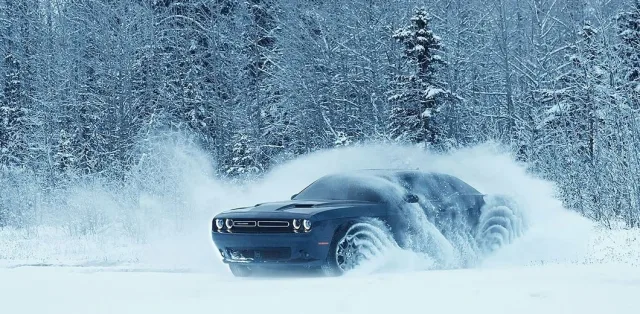
In Ukraine, this period when the weather can spring an unpleasant surprise begins in November and ends in March. During this season, even a light rain at temperatures around zero can turn a trip into a difficult ordeal. Therefore, beginners should approach their preparation for winter driving with full responsibility, as this is the main guarantee of safety on the road.
Getting to know the car
Whatever the results of the driving exam, the average Ukrainian driving school graduate should assume that they received only a basic set of skills for survival in favorable conditions at driving school. And these skills need to be developed as soon as possible. For example, it would be useful to find an empty asphalt lot late in the evening: during a snowfall, you can safely test the car's behavior when braking and making sharp maneuvers. In a real situation, an established connection with the car can prevent an accident.
It is also worth considering additional courses that show how to avoid skidding when braking on ice.
Watch your speed
At the first signs of precipitation, if the temperature fluctuates around zero or below, it is important not to overdo the gas pedal. A thin film of water on the asphalt can turn into an ice rink in five minutes. On suburban highways in rain and snow, it is not superfluous to periodically brake to compare the sensations from the process with what the driver is used to on a dry road. This should be done when there are no other road users in close proximity behind. If during light braking the wheels lock or the ABS system starts to work, it is necessary to release the accelerator, significantly reduce speed, and in the same way find the safe limit where the brakes remain effective.
Drive in the ruts and don't overtake
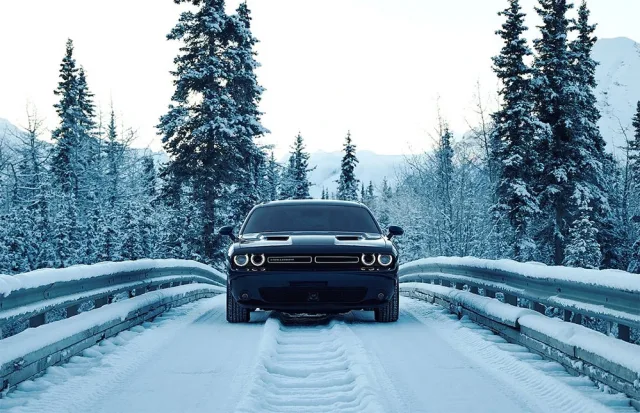
On a snowy road, a rut laid by traffic forms quite quickly. This is the safest trajectory because it allows you to see the condition of the asphalt – there may be ice patches on it. Overtaking, driving onto untouched snow cover on the road, should be done with extreme caution and only if you are confident in the safety of the maneuver.
The danger of slush at night
A dense flow of cars with hot engines heats the snow lying on the asphalt, and it melts, mixing with ice and forming slush. While this dirt is more liquid, driving is relatively safe. But late in the evening, there are fewer cars and the temperature drops lower, and the slush in places turns into an uneven crust of ice, on which the contact patch of the tire with the road changes unpredictably. Therefore, it is very important to track this transition and, again, reduce speed to a safe one.
Winter washer fluid
If possible, it is worth getting rid of the summer washer fluid in the tank before the onset of frost, and instead fill it with winter fluid that does not freeze at low temperatures. It is important to monitor the fluid level and add new portions in advance, otherwise low-quality non-freezing fluid can clog the filter in the tank, and the supply of washer fluid to the nozzles may stop altogether.
New wiper blades
Whether the car was bought new or used, it is necessary to assess the quality of the wiper blades, and if uncleaned areas are noticeable, the blades should be replaced. Even if it seems that everything is not so bad, it is important to address this issue, because at low temperatures, water on the windshield at speed can quickly freeze, and good visibility is the main safety factor.
Quality winter tires
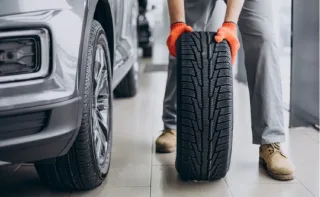
Everyone who has not yet installed a winter set on their cars must do so as soon as possible. At current temperatures, the summer rubber compound loses effectiveness even on dry asphalt, which affects traction. And drivers with little experience especially need quality winter tires that will not let them down in a critical situation and will provide consistently high performance in rain, snow, and dry weather. Nokian Tyres offers a wide range of winter tires, including the friction model Nokian Hakkapeliitta R3 and the new studded Nokian Hakkapeliitta 10 with the highest level of grip on snow and ice. Both tires feature a large number of innovations that provide them with excellent performance, a high level of safety, and at the same time increased wear resistance.