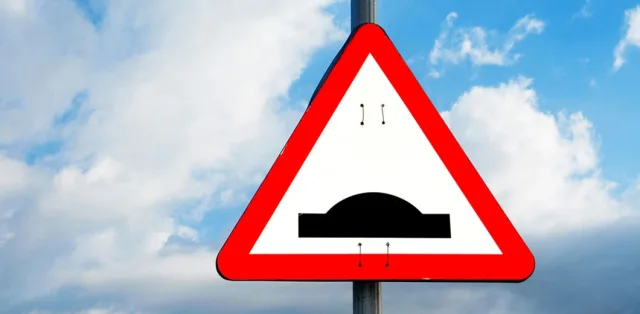
The official explains his position by saying that speed bumps are actually counterproductive: every car must slow down when passing a speed bump and then accelerate, thereby consuming more fuel and emitting more harmful gases dangerous to human health.
At the same time, most of these barriers are located precisely in the most "dangerous" areas – near residential buildings and schools.
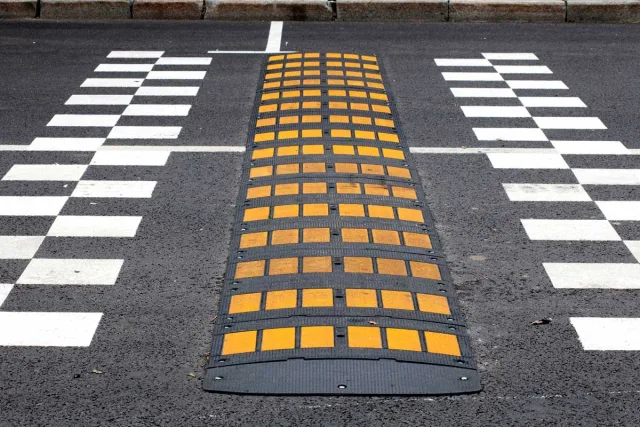
"They [speed bumps – ed.] were introduced for control, which is quite commendable, but they do the exact opposite in terms of human health," the Daily Mail quotes Philip Desmond.
As an alternative to speed bumps, the politician proposes increasing the number of traffic surveillance cameras and raising fines for speeding.
Autoportal comment
It is worth noting that Desmond's words do have logic. It is one thing when a car slows down before a speed bump, and quite another when it accelerates after passing it. In the latter case, the car indeed consumes more fuel than usual, consequently emitting more CO2. And if there are not just one but several such speed bumps on a single stretch, this risks excessive air pollution. Moreover, one should not forget that speed bumps harm the cars themselves, namely their suspension. This is especially true for cars driven by beginners – they do not always know how to properly pass speed bumps, thereby speeding up their next trip to the service station.