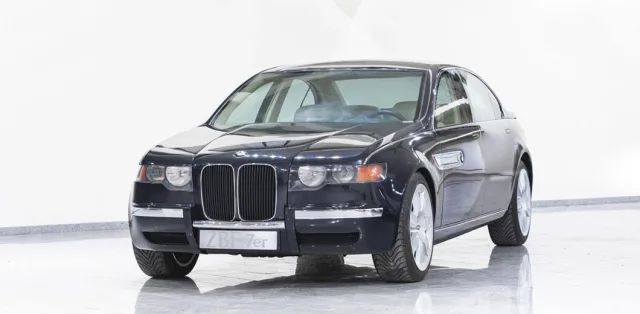
The car, as well as its full history, was presented by BMW Group Classic in a couple of videos. To summarize briefly, the ZBF 7er was born in 1996 as part of a competition held by the brand's internal design department. The artists were tasked with developing an updated version of the 7 Series sedan E38. As a result, one of these examples was produced.
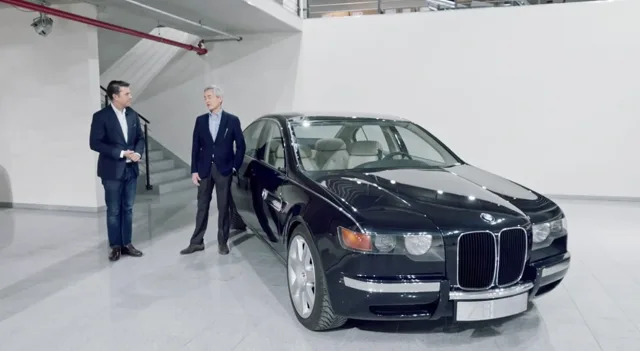
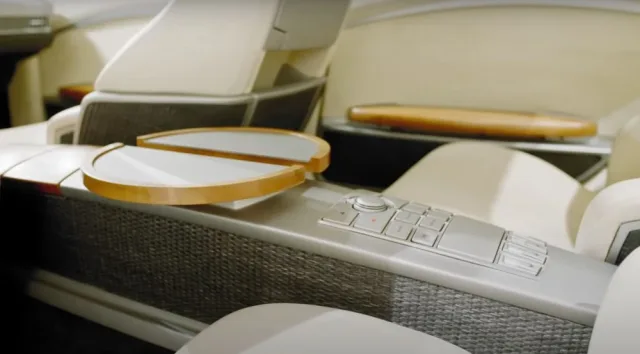
The ZBF 7er concept was designed by Japanese designer Joji Nagashima (he even appears in one of the videos), who worked as a designer at BMW in the 90s and designed the iconic 5 Series E39, as well as the 3 Series E90 and E36, and the Z3. As you can see, the most characteristic element of the car was the huge "kidneys" of the radiator, which the Bavarians only returned to now (a similar grille is installed on the new 4/4M, M3, i4, iX). However, this was not the only innovation: the prototype also received cameras instead of mirrors (in the 90s!), retractable handles, huge 19-inch wheels (usually at that time wheels of 14-15, maximum 16 inches were used). Inside, the concept boasted a large space, a high level of comfort, and little things like a table for a laptop.
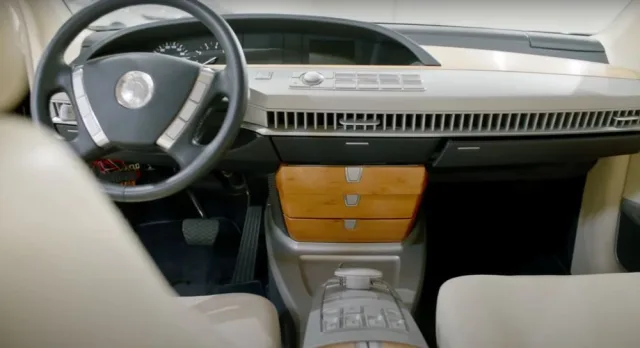
Only one example of the ZBF 7er was built in metal, and it is this one that is currently in the museum. Moreover, despite being a concept, it is a fully functional car, not a mock-up – with an aluminum body, a working engine, and a functional interior.
Initially, BMW bosses approved the launch of the ZBF 7er into production, but then changed their minds. Instead, the world saw the iconic "seven" in the E65 body. And some solutions implemented in this show car were carried over to models such as the 5 Series E39 and even the BMW X5 E53.