When choosing new tires for a car, the driver studies many options from different brands. The assortment is so wide that the buyer inevitably has questions about every aspect of selection.
Features of summer tires
Summer tires differ from winter ones in the type of tread and the composition of the rubber compound. Tires for the warm season must be hard enough to withstand high temperatures and speed loads.
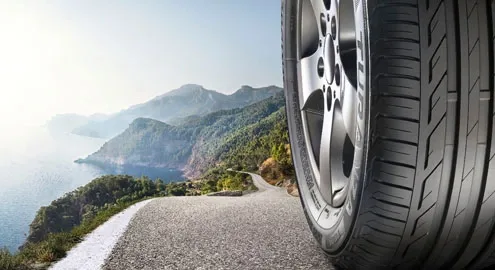
The tread of summer tires for cars has a smooth and shallow structure that smoothly transitions to the sides. Wide longitudinal and transverse grooves create a common drainage system, which reduces the likelihood of aquaplaning.
Tire specialists distinguish three types of tread pattern:
• symmetric;
• asymmetric;
• directional.
Symmetric wheels offer a balanced set of characteristics. Such tires are often installed at the factory on budget passenger cars, minibuses, and trucks. During operation, such rubber can be rearranged in any order.
The asymmetric pattern has outer and inner parts. The outer zone is responsible for water drainage, maneuverability, and stability in corners. The inner side ensures control over handling on dry surfaces, braking distance, and vehicle stability. The asymmetric tread is considered the most popular for summer tires.
The directional design of tread blocks maintains good handling and effective precipitation drainage. This pattern is used in most sports tires, since its features help achieve better acceleration dynamics. Also, directional tires are often used in winter models.
How to choose tires for summer
Selection of wheels should start with the tire size that is suitable for a particular car. It is not recommended to change the size, so it is better to rely on factory recommendations and data in the technical passport. On the side surface of each tire there is a set of numbers and letters. For example, the marking may look like this: 195/65 R15 91H.
The number "195" means the width of the tread zone in millimeters. The next value "65" is the profile height, expressed as a percentage of the tire width.
The mounting diameter of the rubber must correspond to the diameter of the disc and is indicated as "R15". Then the speed and load indices "91H" are indicated, which can be deciphered using tables on the Internet.
The choice of tires depends on driving style and road conditions. For calm daily trips around the city, wheels with a symmetric or asymmetric pattern and a profile height of 55% or more are suitable.
For fast driving, it is better to choose models with a directional tread, high speed indices (V, W, or Y) and a low profile (55% and below). For off-road, high-profile tires with a fine-block pattern, reinforced carcass, and strengthened sidewall are suitable.