The first mass-produced Soviet vehicle for people with disabilities is considered to be the three-wheeled “Kievlianin”. A unique design feature was the drive to only one rear wheel, and instead of the usual steering wheel, control was carried out using a long lever attached to the fork.
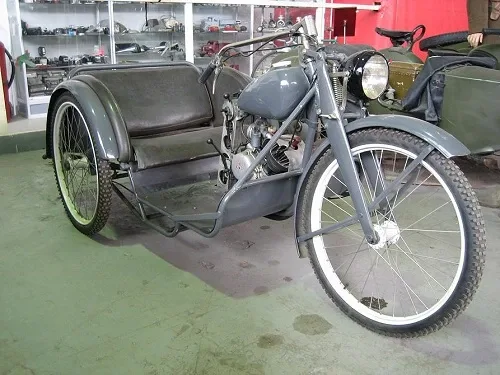
Under the hood (or rather, under the seat) of the “Kievlianin” was a 98-cubic-centimeter engine producing just 2.3 horsepower at 4000 rpm. Such modest power was sufficient only for short trips on flat, hard surfaces.
The next step in this direction was the three-wheeled vehicle S-1l, which began production in 1952 at the Serpukhov Motorcycle Plant. This motorized wheelchair already had protection from precipitation, although the top was made of canvas.
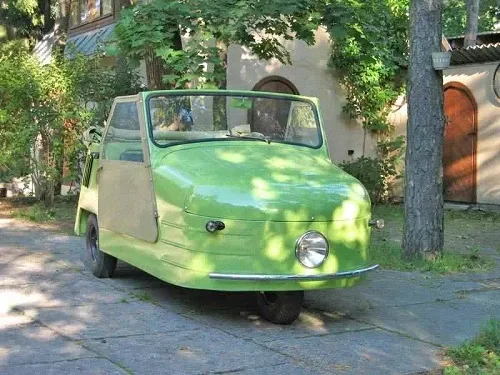
The power unit with a displacement of 125 “cubes” and a power of 4 horsepower, borrowed from the “Moskva” motorcycle, barely pulled a structure weighing 275 kilograms, allowing acceleration to only 30 km/h. In 1956, the engine was replaced with a more powerful one — from the Iz-56 model with an output of 7.5 hp, thanks to which the maximum speed increased to 55 km/h.
In 1958, in Gorky, they decided to go further and create a full-fledged car for disabled people. The experimental GAZ-18 received an engine that was a halved version of the power unit from the “Moskvich-402”, making it close to automotive units.
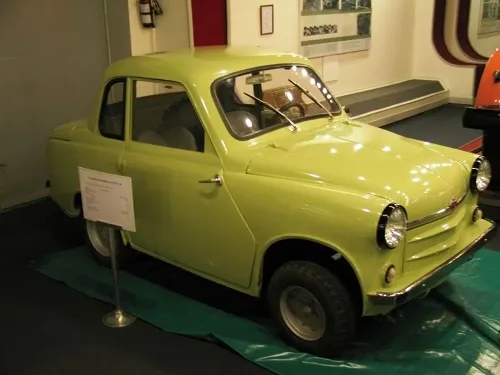
However, the most curious detail of the GAZ-18 was the automatic transmission with a torque converter — exactly the same as on the prestigious ZIM and the first “Volgas” GAZ-21. The all-metal body had well-thought-out door openings, a spacious interior, and an adjustable seat, ensuring a comfortable seating position for the driver.
Despite all the advantages, the country's leadership decided that supplying such cars to people who lost their legs in the war would become too heavy a burden for the economy, and the GAZ-18 never went into mass production.
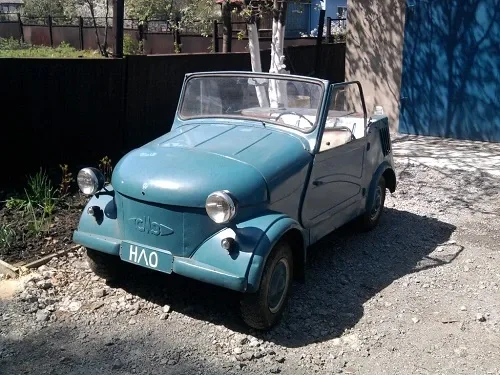
But in Serpukhov, they did not abandon the refinement of the not-so-successful S-1l model and soon launched production of a new version, the S3A. It was this car that appeared in Leonid Gaidai's comedy “Operation Y”, where the shot with Morgunov, easily spinning the small car around its axis with his hands, is memorable.
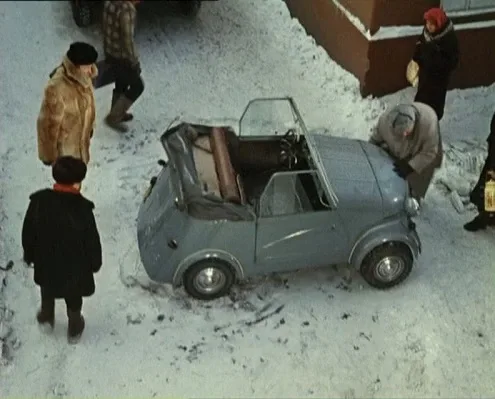
Under the body of the S3A was a motor from the “Iz-Planeta” motorcycle. With a cylinder diameter of 72 millimeters and a piston stroke of 85 millimeters, its displacement reached 346 cubic centimeters, and peak power was 10 horsepower.
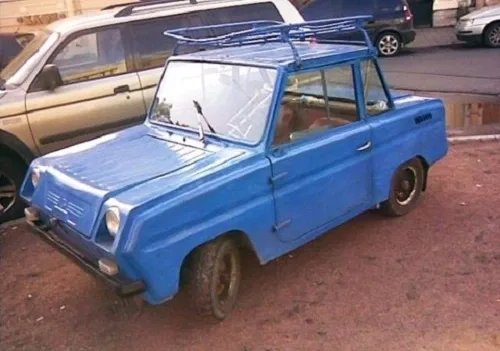
In 1970, the S3D model replaced it, and all disabled people began to switch to it. The appearance of the new model was angular and boxy, not distinguished by aesthetics, but thanks to the large windows, visibility significantly improved. Although the power of the old Izhevsk engine increased to 18 hp, the increase in speed was modest — a maximum of 70 km/h.
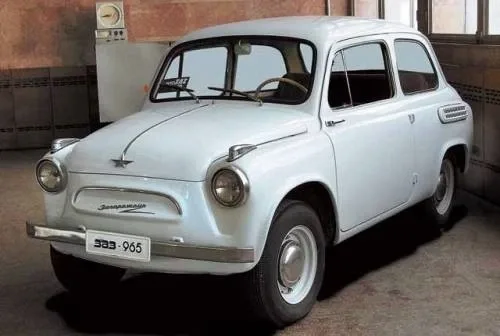
A separate chapter is the production of cars with manual controls at the Zaporozhye Automobile Plant. The first ZAZ-965, popularly nicknamed “hunchbacked”, rolled off the assembly line in 1961.
The issuance of cars and motorized wheelchairs to disabled people was carried out through social protection authorities, and the cost could be paid either partially or in full. In 2013, AvtoZAZ won a tender for the supply of 678 cars for people with disabilities for a total amount of 44.2 million hryvnias. As part of the order, the ZAZ Sens model is offered, the price of which varies from 57 to 70 thousand hryvnias depending on the configuration.