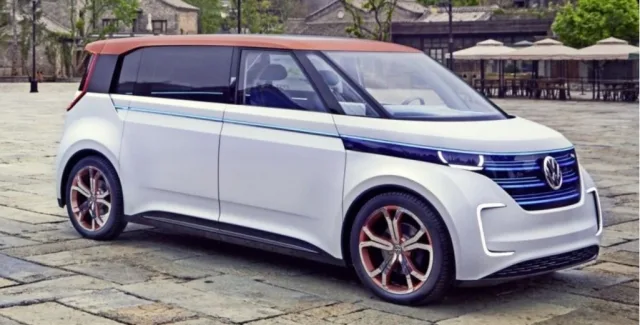
The car currently exists only as a concept. Its exterior and interior may echo several well-known prototypes from the past, including the Bulli (2011) and the Budd-e (2016). The latter was one of the first electric show cars built on the MEB platform, which later became the basis for the entire modern family of Volkswagen electric vehicles.
According to preliminary data, the new minivan will be more compact and cheaper than the ID.Buzz, but will retain practicality, flexible interior layout, and convenience. These qualities could make the model in demand—especially in Europe and China, where, despite the great popularity of crossovers, there is still demand for spacious and versatile vehicles. Among potential buyers are also commercial entities, including taxi companies in Germany, which usually prefer MPVs due to their spaciousness and convenience.
Although the final design has not yet been approved, the new model will likely retain the characteristic features of Volkswagen minivans: a high roof, vertical proportions, short overhangs, and a flat floor. As reference points, production cars are also mentioned—the second-generation Touran and the Golf SV, which appeared in 2014, both with restrained but functional design.
In terms of dimensions, the Budd-e concept, 4597 mm long, could serve as a benchmark—that is 70 mm more than the Touran Mk2 and 124 mm less than the ID.Buzz. So the new MPV could occupy an intermediate position, offering comfort in the city and a spacious interior.
Technically, two options are being considered: an updated MEB platform or the newer SSP, intended for next-generation electric vehicles. Battery capacity could range from 60 to 80 kWh, with front-wheel drive with a single electric motor, and all-wheel drive with two motors offered as an option. This would allow preparing different versions to suit different customer needs.