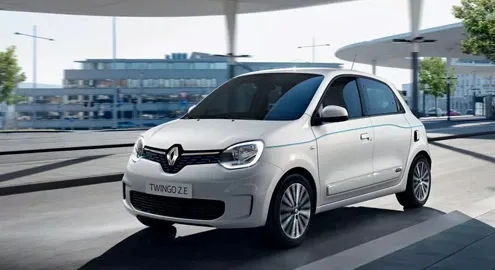
The new model retains the functionality of petrol compact cars, but instead of an internal combustion engine, an 82-horsepower (160 Nm) electric motor is installed, and a 22-kilowatt-hour battery is mounted under the floor. In the WLTP City cycle, the Twingo Z.E. can travel 250 kilometers without recharging.
The Renault Twingo Z.E. retains its rear-engine layout, so the electric motor drives only the rear wheels. As insiders predicted, the 82-horsepower electric unit was "shared" by the Smart EQ ForFour, but the traction batteries of the city cars differ: the Smart is equipped with a 17.6-kilowatt-hour lithium-ion battery, while a more powerful 22-kilowatt-hour one was adapted for the Twingo Z.E.
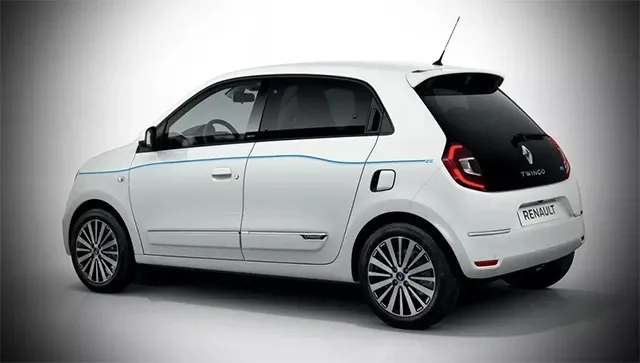
Externally and inside, the electric car is practically no different from the petrol Twingo: only badges, decals on the sides, blue inserts on the grille, and a special instrument panel skin give away its "eco-friendliness."
In the "gentle" WLTP City cycle, the Twingo Z.E. can travel up to 250 kilometers, but in "normal" mode, which includes highway driving, the range drops to 180 kilometers. However, the electric car can accelerate from standstill to 50 kilometers per hour in 4 seconds and reach a top speed of 135 kilometers per hour.
From a household outlet, the Twingo Z.E. will charge from zero to 100 percent in 13 hours 30 minutes. From a 3.7-kilowatt source, charging time will be reduced to 8 hours, and a 7.4-kilowatt "supercharger" will cut the wait to 4 hours. From a fast 11-kilowatt charger, you can recharge to 80 percent in 2 hours 10 minutes, and if you find a 22-kilowatt device, the battery will fill to four out of five bars in just 63 minutes.
The Twingo Z.E. will be offered to customers alongside petrol versions with the 1.0 naturally aspirated engine and the 0.9-liter turbo engine. Prices have not yet been announced: the price list will likely be published during the Geneva Motor Show. Renault expects that electric cars will account for 15 to 30 percent of Twingo sales in Europe.
For Renault, the city car became the seventh "green" model after the miniature Twizy Z.E., the Zoe hatchback, the Kangoo Z.E. and Master Z.E. vans, the Korean Samsung SM3 Z.E. sedan (electric Fluence), and the Chinese City K-ZE crossover. The next new product from the French automaker will be a budget electric car under the Dacia brand — its concept version will be shown next week.