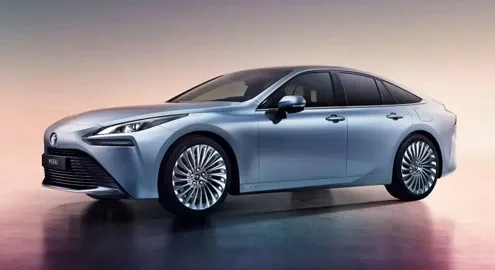
The new model surpasses its predecessor in dimensions: the wheelbase has grown by 140 millimeters, to 2,920 millimeters, and the width has also increased – by 70 millimeters, to 1,885 millimeters. The length and height are 4,975 and 1,470 millimeters, respectively. The extra space in the cabin was used to install a sofa instead of two separate rear seats, so now three passengers can fit in the second row.
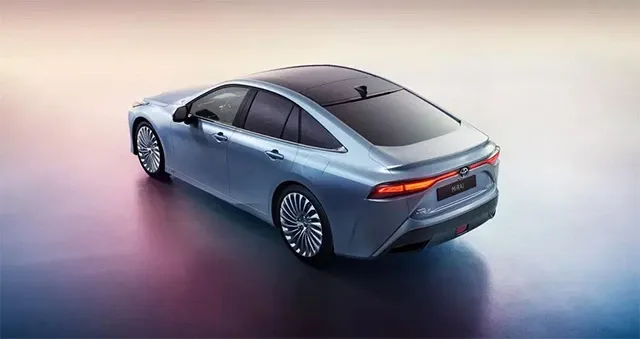
Two more important innovations are the increase in the volume of hydrogen tanks (there are three in total), as well as the modernization of the fuel cell system. As a result, the range of the hydrogen car has grown by almost a third and reaches 650 kilometers. The design of the second-generation Toyota Mirai is similar to the pre-production show car that debuted at the Tokyo Motor Show last year.
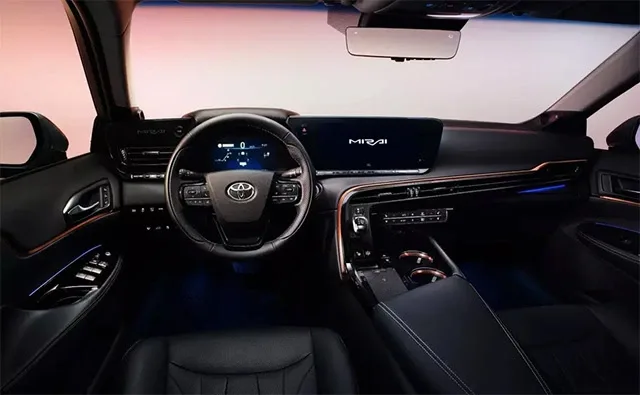
The cabin now features a digital instrument panel, a 12.3-inch touchscreen for the multimedia system, which is turned toward the driver, wireless smartphone charging, and a transmission joystick that has replaced the selector.
Since the introduction of the Toyota Mirai in 2014, global sales of the hydrogen car have amounted to about 10,000 units. In the European market, the model is less popular than in the US. For example, in 2018, only 160 sedans were sold in Europe, while in North America – 1,700.