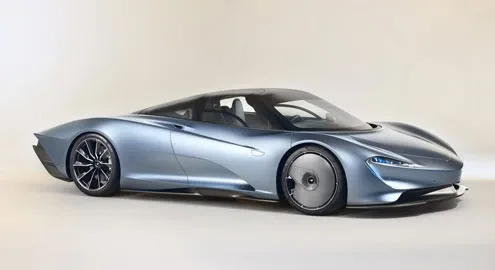
The hypercar is built around an ultra-lightweight "unique" carbon fiber monocoque, thanks to which the car's mass is only 1430 kilograms. The car's length is 5137 mm, which is 549 mm longer than the previous P1 super-hybrid.
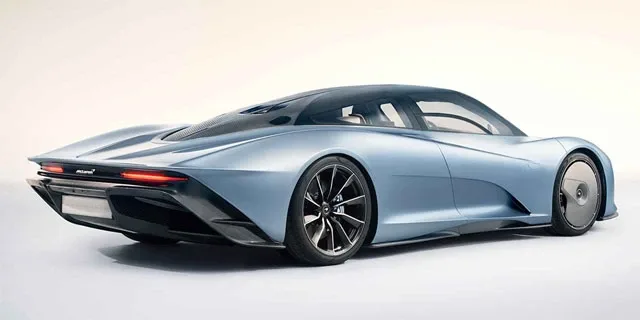
To improve aerodynamic performance, instead of traditional external mirrors, special cameras are used, with images displayed on interior monitors at the base of the front pillars. The Speedtail also features electrochromic glass — the system can independently select the optimal level of light entering the cabin.
The McLaren Speedtail is equipped with a petrol-electric hybrid powertrain, the technical details of which have not yet been announced. According to unofficial data, it is based on a four-liter twin-turbo V8 engine working together with two electric motors. The total output of the units is 1050 horsepower. Traction is transmitted to the rear wheels.
The control electronics allow you to select one of several driving modes, the most extreme of which is called "Velocity". In this case, the adaptive suspension reduces ground clearance by 35 mm, and the external cameras retract into the doors, reducing resistance to oncoming airflow. The front wheels are hidden behind special covers to reduce the formation of air vortices in the wheel arch area.
The McLaren Speedtail can accelerate from standstill to 300 km/h in 12.8 seconds, which is 2.7 seconds faster than the McLaren P1 and 0.3 seconds faster than the Bugatti Chiron. The car's top speed is 403 km/h.
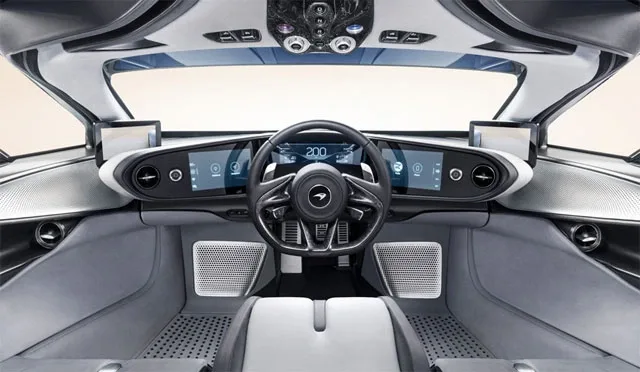
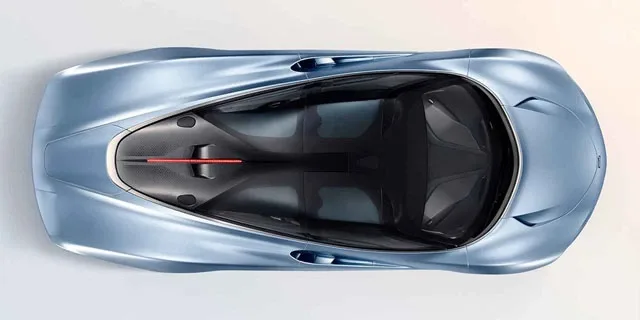
Like the McLaren F1, the new hypercar has a three-seat cabin where the driver's seat is positioned in the center, and two passenger seats are on either side behind the driver's shoulders. The new model has small luggage compartments — at the front and in the rear of the car.
The two emblems for the front and rear of the car will be made from 18-karat white gold by the Birmingham jewelry firm Vaughtons. Additionally, the logos, which weigh about 100 grams, will feature carbon fiber inserts. For an additional fee, buyers will be offered the option of making the emblem from platinum.
In total, the British company will produce 106 such cars, each costing about $2.3 million. At the moment, all hypercars have already been sold. The first customers will receive their cars no earlier than the beginning of 2020.