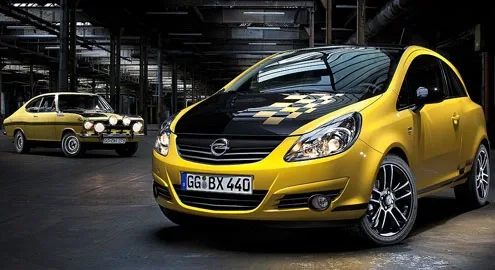
The car's exterior was left untouched — whether for cost savings or other reasons is still unknown. To make the cars stand out on the show stands, they were painted in special shades. To draw public attention to the innovations, Opel recalled the 111th anniversary of the release of the brand's first car in 1899. Thus, a special series 111 Limited Edition came into being. It was joined by three more variants with unusual paint: Color Race, Color Edition, and Color Wave, with the latter fitted with large 17-inch wheels, while other differences are limited to small details in the interior design. However, such cars will be available exclusively on the German market, and for the rest of Europe, Opel has prepared only more economical powertrains.
The 1.7 CDTI diesel engine gained 5 horsepower (now 130 horsepower), and peak torque increased to 300 Nm (20 Nm more), while fuel consumption dropped to 4.5 liters per hundred kilometers. The 1.3-liter diesel became 27 percent more powerful and 10 percent more economical — 95 horsepower (190 Nm) and 3.7 liters of diesel per "hundred." Additionally, a car with such an engine in the base trim was already equipped with a gear shift indicator.
The 1.2 and 1.4-liter gasoline engines received variable valve timing on intake and exhaust, reduced friction in the oil pump, recalibrated thermostat, and added a gear shift indicator. These measures also affected fuel consumption, which decreased by up to 13 percent.
Opel did not stop at just engines: shock absorber, spring, and anti-roll bar settings were also changed, the rear suspension was refined, and the electric power steering was optimized. This applies to the Essentia, Enjoy, and Cosmo versions. For the GSi and ecoFLEX modifications, already equipped with sport suspension, they limited themselves to different suspension and power steering settings. And the "hot" hatchback Corsa OPC received only new parameters in the electric power steering.