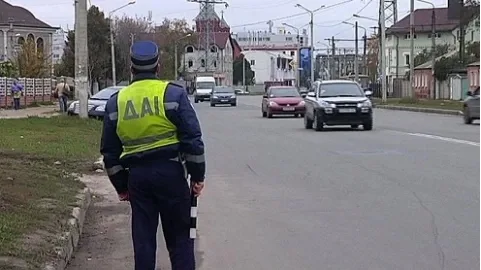
Practice has shown that a significant portion of reasons for stopping vehicles is often artificial — they are needed only so that a traffic police officer has a formal pretext to stop a car that caught their eye. A number of items in the list of grounds actually repeat each other. For a dishonest inspector, the main task is to stop the car and get the driver's documents, and what happens next depends on their skill.
For example, the most common reason for stopping in the absence of others — "conducting targeted measures (operations, exercises, operational plans)" — in reality does not bring tangible results. Deputies studied the statistics: in the first half of 2011, before amendments were made to the "Law on the Police" that legalized "operational measures," the rate of solving car thefts was 69.9%.
After the adoption of amendments that gave traffic police officers the right to stop any vehicle, the rate of solving car thefts in the second half of 2011 dropped to 55.9%. Apparently, the increased workload on inspectors, who had noticeably more work on the roads, took its toll.
The updated version of item 21-1 of Article 11 of the "Law on the Police" was reduced by people's deputies to five points that any driver can easily remember:
- violation of traffic rules;
- availability of information indicating the involvement of the vehicle, its driver, passengers, or cargo in a traffic accident, criminal or administrative offense;
- the need to interview or involve as witnesses the driver and passengers regarding the circumstances of a traffic accident, criminal or administrative offense, of which they were or could have been witnesses;
- the need to involve the driver to provide assistance to other road users or police officers in cases provided for by legislation;
- implementation of decisions on restricting or prohibiting traffic, adopted by authorized state bodies.