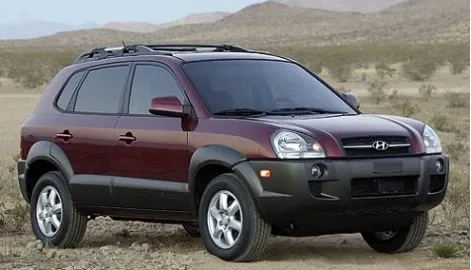
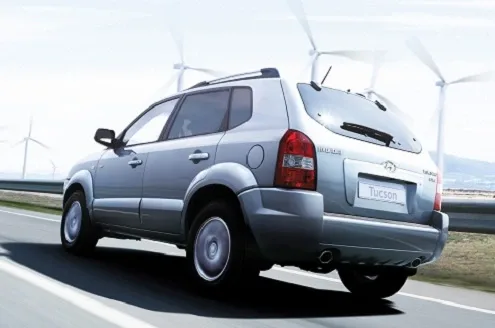
In this publication, AvtoPortal examines a used Hyundai Tucson as part of a series of articles dedicated to choosing used cars. A catalog of available offers can be found in the corresponding section of the site.
Technical specifications
Body: wagon
Number of doors/seats: 5/5
Dimensions (L/W/H), mm: 4325/1795/1730
Wheelbase, mm: 2630
Ground clearance, mm: 195
Weight (kerb/gross), kg: 1550/2050
Trunk, l: 325/1375
Fuel tank, l: 58
Engines
Petrol
R4: 2.0 L 16V (142 hp)
V6: 2.7 L 16V (175 hp)
Diesel
R4: 2.0 L 16V Turbo (112 hp), 2.0 L 16V Turbo (140 hp)
Drive: front or plug-in all-wheel drive
Transmission: 5- and 6-speed manual or 4-speed automatic
Brakes (front/rear): ventilated discs/discs
Suspension (front/rear): independent/independent
Tires: 215/65 R16, 235/60 R16
Model timeline
2004 - The Hyundai Tucson debuted at the Chicago Auto Show
2005 - Diesel engines became more powerful: their output increased to 103 kW (140 hp) and 110 kW (150 hp) depending on turbocharger settings.
2006 - Based on NHTSA crash test results, the car received maximum ratings for frontal and side impacts. However, a poor rating was given for rollover.
EuroNCAP tests: 11 points for frontal collision, 18 for side impact. Final rating – four stars.
The American analytical company Strategic Vision recognized the Tucson as the best compact SUV in the USA.
2006 - Assembly of the Tucson started at a Ukrainian enterprise in Lutsk
2008 - The model underwent a light facelift, affecting mainly the front optics and instrument panel. Assembly in Ukraine moved from Lutsk to Cherkasy, where a nearly full-fledged production line was organized.
2009 - The second generation of the model appeared, which in a number of markets, including the Ukrainian one, was sold under the name ix35.
2010 - Production of first-generation cars was completed
Body and interior
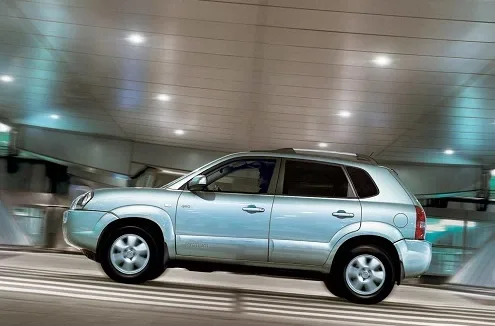
The Hyundai Tucson body demonstrates decent corrosion resistance, and there are no complaints about the strength of load-bearing elements – pillars and side members. At the same time, used examples often no longer look fresh. On plastic elements, paint begins to peel over time, and with careless handling, varnish can also come off painted metal panels.
Owners also note that the metal of exterior parts is quite soft. Dents easily appear on it, for example, from fallen tree fruits. However, for those who buy a car as a utilitarian tool, such flaws are just a reason to bargain.
The interior of the Tucson does not shine with luxury, but five people fit comfortably inside, and with the rear seats folded, the car turns into a practical cargo compartment. If the seats are left in place, the trunk volume is quite modest – 325 liters.
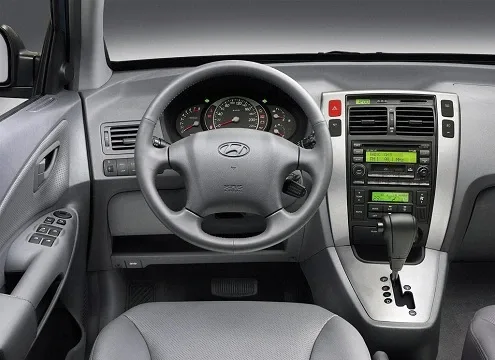
The ergonomics of the Tucson are typical for Korean cars of that period. There are no serious layout errors, but the steering column does not have reach adjustment, the left front pillar somewhat limits visibility, and lateral support of the seats is practically absent. The driver is surrounded by hard plastic and a standard set of comfort and safety options.
Most often, the car is equipped with air conditioning (although versions with climate control are also found), a simple audio system, two front airbags, and ABS supplemented by the EBD system.
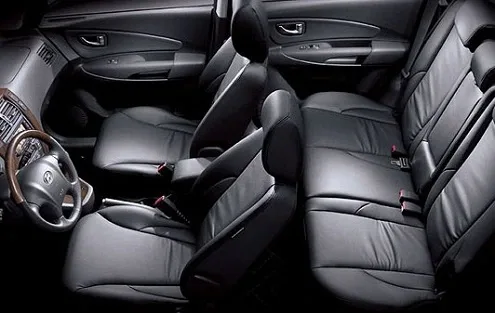
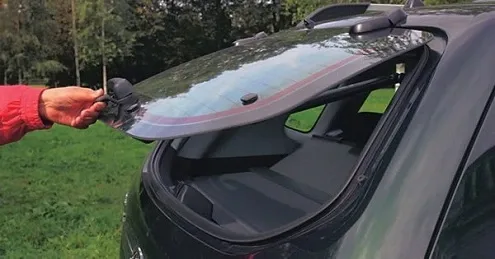
If the interior has already been reupholstered, this should not cause concern. The standard fabric upholstery of the Tucson was not durable, so seat covers and new trim are common practice. True, if there are seat covers, it is worth removing them and inspecting the condition of the original fabric. But an undoubted advantage of the model is the rear door glass, which can be raised separately. Those who regularly carry long items will appreciate this function. Also convenient is the front passenger seat, which folds forward and forms a flat surface.
Engines
The car was equipped with proven units. The petrol engine G4GC of the "Beta" series (2.0 L) came from the "Elantra", and the V6 G6BA of the "Delta" series (2.7 L) – from the "Sonata". The diesel D4EA of the D-Engine series with 140 hp was also borrowed from there. In addition, a version with 112 hp was also installed.
All engines are quite reliable, and typical malfunctions are mainly associated with poor-quality fuel (especially for diesels) and failure to follow the maintenance schedule.
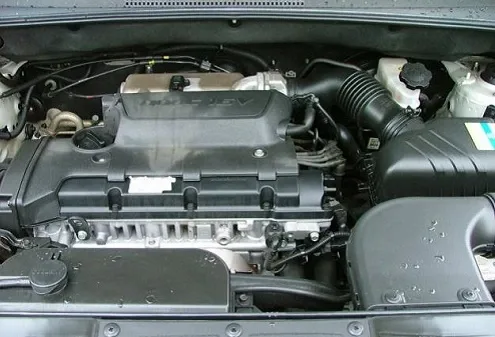
For example, if the oil is not changed in time on the 2.0-liter petrol engine, the CVT sensor responsible for changing valve timing may fail. For the V6 and diesel, contaminated oil can lead to failure of hydraulic lifters. It is also important to monitor the timely replacement of spark plugs – on the V6 this procedure is quite labor-intensive due to the cramped space under the hood and therefore is not cheap. On diesel engines, glow plugs usually last about three years, and it is better to replace them in advance, without waiting for problems with starting in cold weather.
Water entering the fuel has an extremely negative effect on the fuel pump and diesel injectors, although the estimated service life of these elements is about 300 thousand kilometers.
When inspecting a Tucson, it is worth asking the seller when the timing belt was changed. In our conditions, its service life averages about 60 thousand km. Replacement should be carried out together with rollers, and on the V6 after 100-120 thousand km it is advisable to also replace the pump, which is driven by a common belt. By this mileage, the air conditioning belt usually also wears out.
Transmission
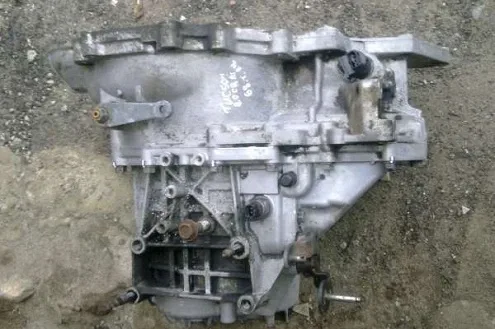
On cars produced before 2006, owners of vehicles with a manual gearbox could encounter problems already after 60 thousand kilometers. Cases of wear of synchronizers of second and third gears were noted. Most often, the cause is an aggressive driving style, but such a short service life of these elements can also be considered a design flaw. In later versions, such problems were no longer observed.
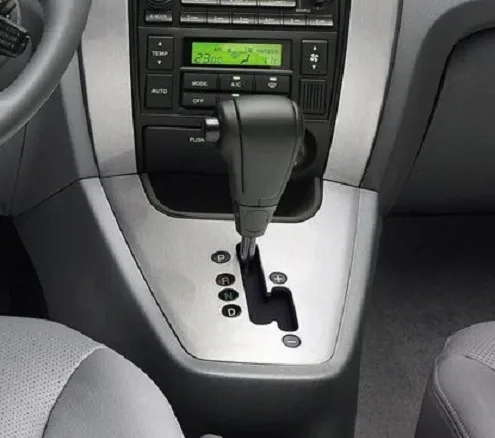
After 150 thousand km, a noticeable play of the gear shift lever appears due to wear of the bushings. In this regard, the outdated but reliable 4-speed automatic looks like a more preferable option.
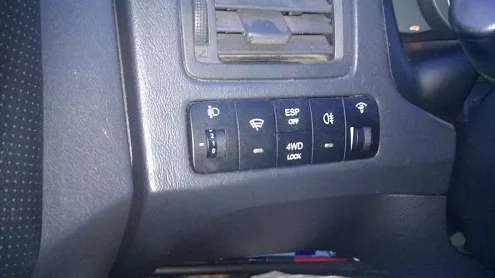
The all-wheel drive of the Tucson is plug-in. On dry asphalt, the crossover drives only on the front wheels, and the rear axle is connected automatically when slipping. To overcome difficult sections, the clutch can be locked forcibly with a button on the panel. There are no serious complaints about the all-wheel drive system. Thanks to the ground clearance of 195 mm, the car feels confident on light off-road. True, it is worth remembering that at speeds above 40 km/h, the electronics itself disconnects the clutch to protect the transmission from wear.
Owners of cars produced after 2007 complained about the unreliability of the axle shaft seals. Otherwise, the Hyundai Tucson transmission causes no complaints.
Chassis
Already by 60 thousand km, stabilizer struts may require attention. The time comes to replace silent blocks both in the front and rear suspension – their service life is from 50 to 100 thousand kilometers, so they are worth paying attention to. Ball joints and tie rod ends are also short-lived. After 80 thousand km, a power steering leak is possible.
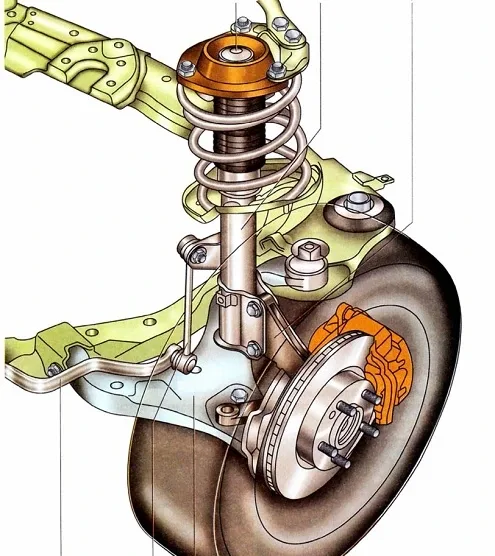
Despite the fact that many elements (mainly rubber) serve relatively short, maintaining the Hyundai Tucson in good condition does not require large costs. Complex units are repairable, and spare parts are relatively inexpensive. No significant design defects were found in this model.
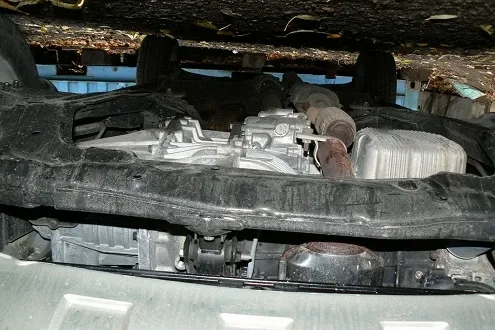
Weak points include shock absorbers and the brake system, especially the parking brake.
Cost of spare parts and maintenance
Oil filter - 68 UAH.
Air filter - 144 UAH.
Fuel filter - 288 UAH.
Cabin filter - 210 UAH.
Spark plugs - 120 UAH. (4 pcs.)
Timing belt - 591 UAH.
Tensioner roller - 729 UAH.
Alternator belt - 115 UAH.
Power steering belt - 66 UAH.
Air conditioning belt - 237 UAH.
Front headlight - 800 UAH. (1 pc.)
Rear light - 600 UAH. (1 pc.)
Fender - 290 UAH. (original 1160 UAH.)
Door - 400 UAH. (used)
Prices for used Hyundai Tucson 2004-2010 on the market start from $12,500 and reach $22,000. This spread is due to the year of manufacture, configuration, and general condition of a particular car.
Advantages
-Affordable price
-All-wheel drive
-Ground clearance 195 mm
-Energy-intensive suspension
-Spacious body
-Easy to repair
Disadvantages
-Spartan interior
-Outdated appearance
-Weak dynamics
-Mediocre handling
-Problems with manual transmission
-Short-lived front suspension
Owner reviews
Judging by reviews, most Hyundai Tucson owners are satisfied with their purchase. But this is true if you consider the car as a workhorse that copes well with our roads and operating conditions. If you need a real SUV, the Tucson is poorly suited for this role. The multi-disc clutch for connecting the rear axle is ineffective on serious off-road: it quickly overheats, disconnects at speeds above 40 km/h, and is useful only for getting out of a snowdrift or driving on slippery surfaces. Dynamics and comfort levels are also far from ideal. But low prices for consumables and good maintainability make buying a used Tucson quite attractive.