It is possible that some of these "life hacks" are well known to some motorists, but there will surely be points that will surprise even experienced drivers.
How to drive economically
So, what exactly do experts from Germany recommend? Let's take a look!
Point 1. Proper gear shifting. Automatic transmissions independently optimize and select the necessary gear ratio, but on a "manual" the driver has to do everything himself. To save fuel, you should shift to a higher speed at 2000 rpm. In cities, especially densely populated ones, many drivers have to maintain a low speed; in such conditions, achieving any fuel savings is difficult, but there is still a way out. For example, if you drive at 50 km/h not in second but in fourth gear (and some types of gearboxes and engines even allow you to "engage" fifth), fuel consumption can be reduced by as much as 50%! However, it is important to observe one condition – you can drive this way only on a straight road to avoid "overloading" the engine. On an "automatic", the main recommendation is not to "floor it" and avoid any kick-downs.
Point 2. Proper braking. Before a red traffic light, you need to take your foot off the gas and smoothly press the brake. You should not accelerate sharply just to stop the car just as sharply. In general, this is not only uneconomical but also unsafe.
Point 3. Observing speed limits. You don't need to accelerate beyond 130 km/h, even on roads where more is allowed (this applies to Germany – in Ukraine, 130 km/h is the maximum permitted speed, and even then only on highways, of which there are few). Often, due to traffic conditions, constant braking and acceleration, the time gain is minimal, while fuel consumption increases.
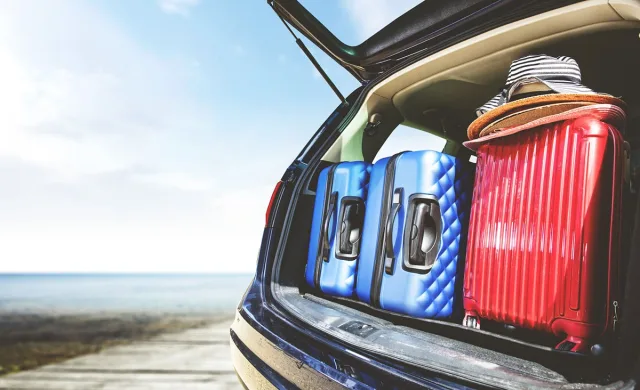
Point 4. Unnecessary things – out! If the car is packed with extra items, they should be removed. An additional 100 kg in the car increases consumption by 0.3 liters. The same applies to accessories such as roof boxes and bicycle racks – they disrupt the car's aerodynamics and increase fuel consumption.
Point 5. Pressure control. Finally, you need to monitor the pressure in the tires. For example, under-inflated tires by 0.2 bar increase fuel consumption by as much as 10%.