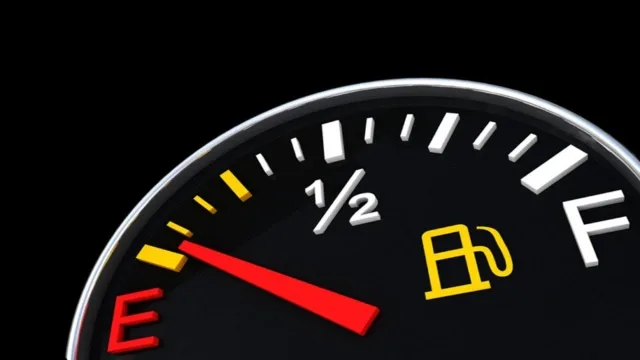
Most drivers believe they can only cover (about) 40 kilometers after the warning light comes on, but in practice this number is twice as high (on average, "across the board"). Many modern cars' onboard computers usually show the remaining distance at critically low fuel levels, but even in such cases, as established in the study, cars travel further than the electronics indicate.
How far can a car travel with the fuel warning light on (winners and losers)
The winner of the ranking was the VW Passat – its remaining range with the warning light on is 120.73 km. Next come the Volvo V40 and Ford Mondeo with figures of 113.6 and 112.68 km respectively, and in fourth place is the BMW 5-Series, which "stretched" 109.96 km. Then the Toyota Prius (107.2 km), Mercedes E-Class (103 km), Audi Q5 (102.7 km), Range Rover Sport (102 km), Mazda 6 (101.3 km), Audi A6 (99.8 km).
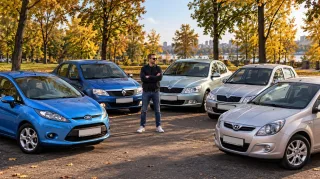
But the lowest "long-range capability" was found in the BMW M3 – only 51.48 km, followed by the Kia Picanto (51.72 km) and Fiat 500 – 59.77 km. Also disappointing (if one may say so) were models such as the Ford Fiesta (66.1 km), Nissan Juke (65.7 km), Citroen C1 (62.4 km), and Mini Cooper (60.4 km). Closing the bottom ten is the Ford Fiesta – after the warning light comes on, it travels only 66.09 km.
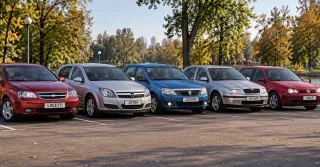
Separately, we note the most popular cars: Skoda Octavia (95.5 km), Fabia (80 km), Volkswagen Golf (91.65 km), Polo (74.25 km), Tiguan (90.46 km), Renault Clio (83.55 km), Dacia/Renault Duster (80 km), Sandero (93.55 km), Peugeot 208 (96.47 km), Opel Astra (82.5 km), Corsa (69.18 km), Hyundai i30 (84.67 km), Suzuki Vitara (78.06 km).
Although the average warning light comes on when the tank's capacity is one-tenth of its full capacity, in practice there is no guarantee how far it will go. The numbers are just an indication.
Instead of conclusions
Often the warning light comes on when the fuel level drops to about 10%. That is, if the car's tank is, for example, 60 liters, then the indicator "appears" when there are 6 liters of fuel left. But even this, of course, is conditional data – in reality, fuel consumption is affected by a number of factors such as road conditions, air temperature, braking force and acceleration, the number of passengers and luggage.