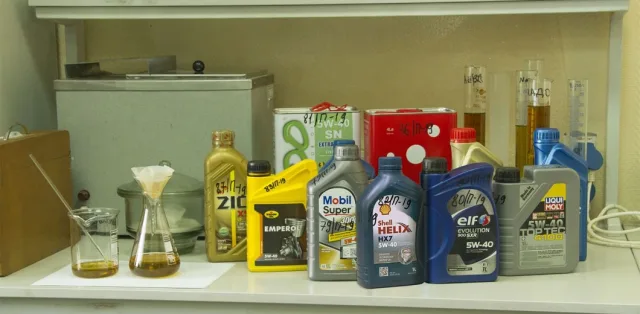
В 2019-м году в Украине была проведена независимая экспертиза моторных масел, представленных на отечественном рынке. Для проверки качества Институт потребительских экспертиз взял 10 наименований масла 5W-40 разных брендов.
Предыдущий тест был связан с отменой государственной системы сертификации УкрСЕПРО. Фактически, это значит, что она стала не обязательной, а добровольной. Autoportal.ua решил подробнее изучить эту тему и проанализировать зависимость цены моторного масла, именитости бренда и его качества. Отдельный момент – изменение цены за минувшие годы.
Из 10 образцов, ровно половина (Castrol, Liqui Moly, Nanoprotec, Aral и ZIC) классифицируются как ACEA C3. Грубо говоря, в таких маслах меньше содержания серы, фосфора и сульфатной золы, чем в маслах категории A3/B4 (буквы «А» и «В» определяют тип двигателя – для бензинового или дизельного, а это масла: Elf, Shell, Kroon-Oi, Mobil, Xado). Масла с допуском ACEA C3 предназначены для автомобилей экологического класса не ниже Евро 4 и совместимы с катализаторами и сажевыми фильтрами.
ВАЖНО: нельзя использовать для новых автомобилей масла более раннего поколения, чем предусмотрено производителем. То же касается и использования масел нового поколения в старых авто. Перед покупкой, необходимо посмотреть руководство по эксплуатации и/или проконсультироваться со специалистами, чтобы требования и допуски соответствовали конкретному автомобилю.
Методика проверки
Исследования качества моторных масел проводились в испытательном центре НИИ «МАСМА» в Киеве, которое считается одним из наиболее авторитетных учреждений в этой сфере. Каждый образец проверяли на базовые физико-химические свойства, после чего были проведены лабораторно-стендовые методы исследования. Последние позволяют сымитировать использование масел в реальных условиях, включая наиболее экстремальные.
Подробнее расскажет видео:
Физико-химические испытания
По основным физико-химическим свойствам все 10 масел успешно прошли лабораторную проверку. Все образцы отвечают заявленным характеристикам и соответствуют нормам.
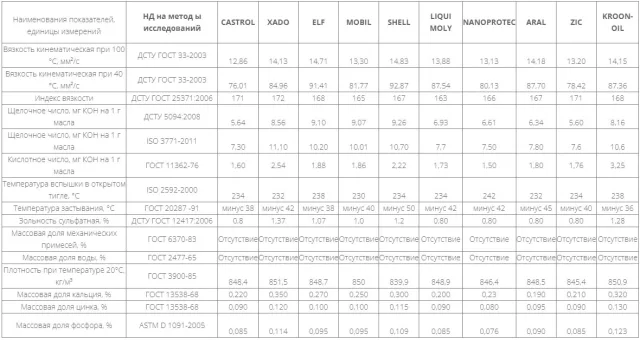
Нормы согласно европейской классификации АСЕА:
Для категории А3/В4:
Общее щелочное число не меньше 10,0 мг КОН/г, сульфатная зольность от 1,0 до 1,6 %.
Для категории С3:
Общее щелочное число не меньше 6,0 мг КОН/г, сульфатная зольность не более 0,8 %.
Стендовые испытания
Как показали стендовые испытания, масла 3-х производителей «провалили» проверку коррозионности на пластинках из свинца. А это на самом деле ну очень важный момент, ведь от него зависит, насколько масло может предохранить детали двигателя от коррозии. Излишнюю коррозионную активность показали:
- Castrol
- Kroon-oil
- Xado
Коррозионность масел

* - отсутствие коррозионности до 5 г/м2.
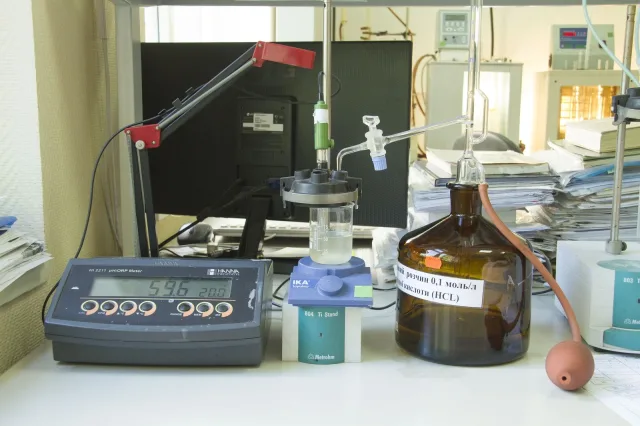
Индукционный период осадкообразования
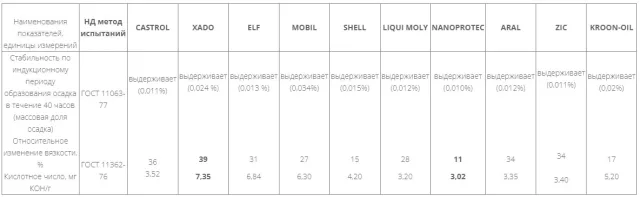
Что это? Если не углубляться в подробности, то, если массовое содержание осадка меньше 0,5 %, то конкретный образец прошел испытание и обладает хорошими антиокислительными свойствами. Кроме того, хорошие антиокислительные свойства характеризуются незначительными изменениями относительной вязкости и кислотного числа.
По этим параметрам лучшими оказались:
- Nanoprotec
- Shell
- Kroon-Oil
А вот аутсайдером оказалось масло Xado – у него наихудшие показатели.
Трибологические характеристики на ЧШМ при 20±5°C
Эти испытания проводились на четырёхшариковой машине трения с целью определения критической нагрузки, показателя износа и индекса задира, в конечном итоге, для оценки смазывающих свойств масел. В данном случае образцы нужно оценивать в совокупности по трем параметрам с разделением масел по классу.
Класс ACEA C3
- Liqui Moly
- Nanoprotec
- Aral
- Castrol
- ZIC
Класс A3/B4
- Elf
- Shell
- Kroon-Oil
- Mobil
- Xado

Результаты проверки
Какое масло заливать? По результатам проверки качества моторного масла 5W-40 однозначно определить лидеров непросто – есть лучше, есть хуже. Ведь в этом случае нужно учитывать совокупность показанных результатов в соотношение с ценой. И вот это самое интересное – как показали тестовые испытания, высокая цена не является гарантией высокого качества.
Как изменились цены на масло
О небывалом росте цен на подсолнечное масло в 2021-м году знают не только домохозяйки, но и автомобилисты. Что касается автомобильного моторного масла, нельзя сказать, что оно взлетело в цене, но стоимость всё же изменилась, а у некоторых брендов существенно.
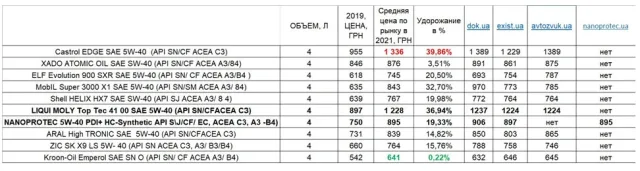
Так, например, у Liqui Moly, Castrol и Mobil оно подорожало больше чем на треть. И если Liqui Moly попало в тройку лидеров, то Castrol трудно назвать одним из лучших, несмотря на узнаваемость бренда и самую (!) высокую цену (по состоянию на 2021 год) из масел, участвовавших в экспертизе.
Средний рост стоимости показали Shell, Elf и Nanoprotec. Меньше всего подорожали Kroon-Oil и Xado, которые показали одни из худших результатов проверки. И если Kroon-Oil было и остается одним из самых дешевых масел на рынке, то Xado таковым не назвать.
Отметим, фаворитами теста по качеству масла в классе ACEA C3 можно считать Nanoprotec и Liqui Moly – они наиболее близки по характеристикам. Правда, с учетом удорожания, по соотношению цена/качество Liqui Moly проигрывает Nanoprotec – в 2019-м году первое было дороже конкурента почти на 20%, тогда как в этом году разница в цене между Ликви Моли и Нанопротек увеличилась до 37%.
Что касается класса A3/B4, лидеры исследований Elf и Shell - подорожали на 20% и потому сопоставимы как по цене, так и по качеству (по состоянию как на 2019-й, так и на 2021 гг.).