Причиной для создания этого материала стали вечерние заторы, которые мы регулярно наблюдаем рядом с нашей редакцией — на кольцевой развязке, где пересекаются потоки проспекта Леся Курбаса, улиц Гната Юры и Картелишвили на киевской Борщаговке.
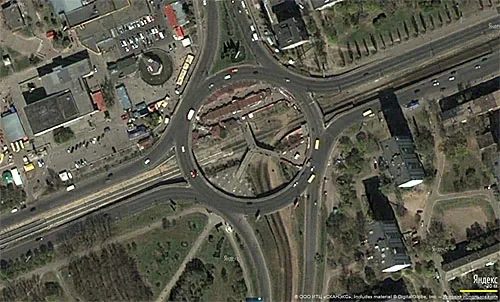
Тогда и появилась идея: а что, если детально разобрать проезд через сложные перекрестки и развязки? Это позволило бы водителям проходить их более слаженно и, как следствие, быстрее.
Поэтому мы предлагаем читателям присылать нам проблемные участки дорог, места со сложной разметкой: адрес, фото или описание — мы постараемся найти оптимальную траекторию проезда в таких местах.
Итак, представляем первый материал из этой серии, в котором мы постарались охватить основные варианты прохождения кругового движения.
Поворот направо
Это наиболее простой маневр. Подъезжая к перекрестку с круговым движением, заранее включите правый «поворотник» и сместитесь в крайний правый ряд. Далее нужно определить, находитесь ли вы на главной или второстепенной дороге.
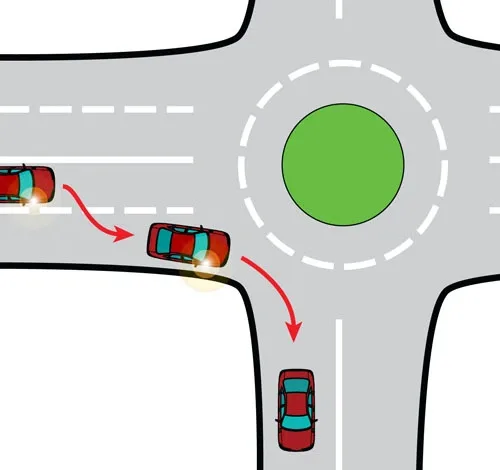
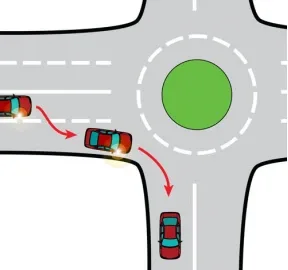
Если вы на главной, убедитесь, что вам уступают, и въезжайте на перекресток, сразу занимая крайний правый ряд на кольце. Если же вы подъезжаете по второстепенной, сначала пропустите транспорт, который уже движется по перекрестку. После завершения маневра выключите правый указатель поворота.
Движение прямо
Проезд прямо означает движение по полукольцу. Перед въездом включите левый сигнал поворота. Если у вас преимущество, дождитесь, пока вас пропустят, и выезжайте на кольцо. В противном случае пропустите машины, едущие по кругу, и только потом въезжайте.
Выбор полосы зависит от того, сколько рядов движения есть в этом направлении.
На перекрестке продолжайте ехать по своему ряду с включенным левым «поворотником», пока не приблизитесь к нужному съезду.
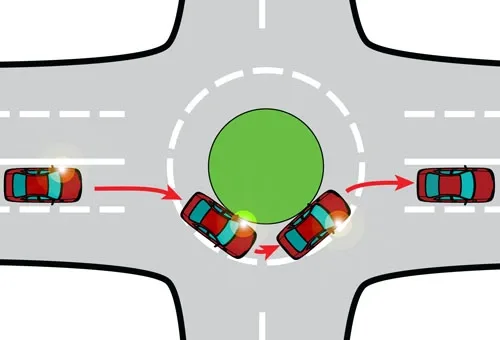
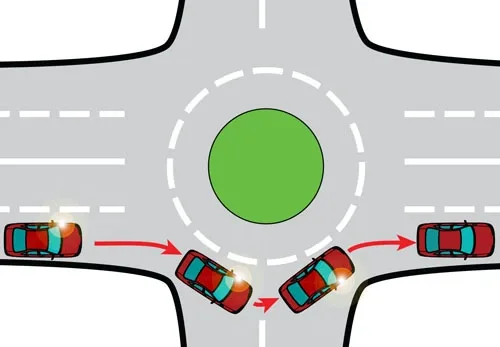
Когда планируете покинуть кольцо, сразу после проезда последнего съезда справа включайте правый сигнал поворота — так вы предупредите других водителей о намерении выехать на следующем ответвлении. Заодно перестраивайтесь в правый ряд, если с текущей полосы съезд направо запрещен.
2 полосы движения. Здесь выбор удобной полосы зависит от конкретной развязки, требований знаков и разметки, а также от ситуации на дороге.
3 полосы движения. В таком случае лучше всего держаться среднего ряда.
Если занять левую полосу, придется делать два лишних перестроения, которые тут совершенно не нужны (сначала вы перестраиваетесь для въезда на эту полосу, потом — для выезда с кольца перед съездом).
Что касается правой полосы, помните: если водитель из среднего ряда захочет покинуть перекресток на ближайшем повороте направо, его траектория пересечется с вашей. Преимущество в этой ситуации будет у вас, но такая обстановка лишний раз усложнит движение.
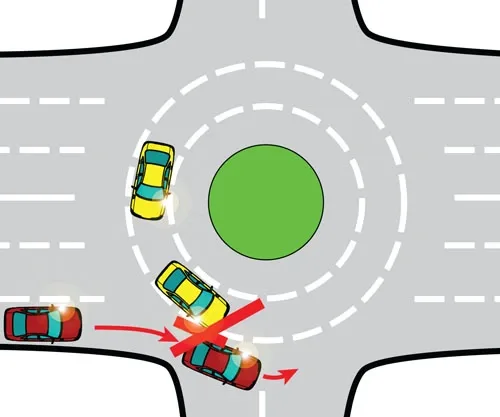
4 и более полос движения. В этом случае лучше занять одну из центральных полос — решение принимайте, исходя из обстановки на дороге.
Перестраиваться в крайний правый или крайний левый ряд для движения прямо не имеет смысла.
Поворот налево
Здесь нужно проехать три четверти круга, минуя несколько съездов (то есть правых поворотов).
Перед въездом на перекресток займите подходящую полосу и включите левый указатель поворота (даже несмотря на то, что после въезда на кольцо придется какое-то время ехать в правом направлении):
- если перед кольцом в этом направлении только один ряд — держитесь крайнего левого положения,
- при наличии двух или трех рядов — перестраивайтесь в левый ряд,
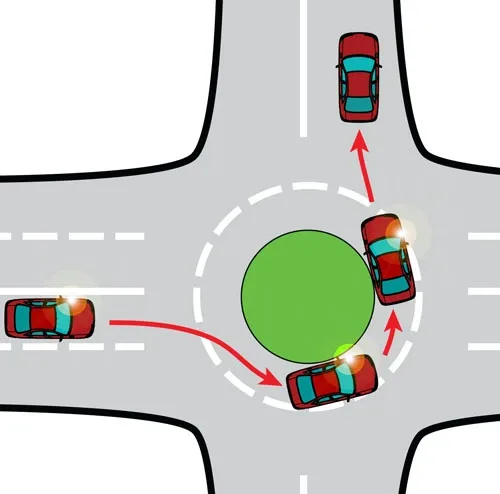
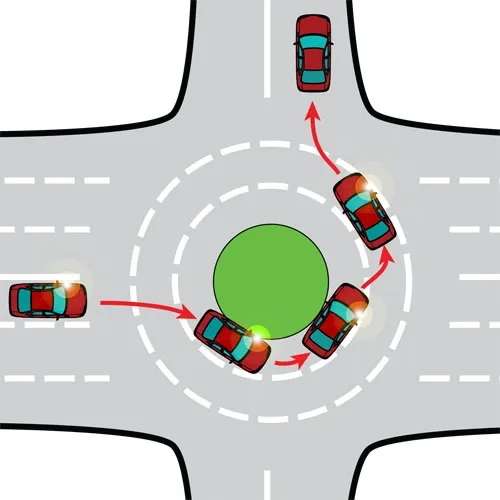
- если перед кольцом четыре или более полос — выбирайте любую из двух крайних левых.
Порядок движения и перестроений
Порядок проезда перекрестка также определяется количеством полос:
- Если полоса всего одна — езжайте с включенным левым «поворотником», пока не проедете все съезды до нужного. Как только они останутся позади, включайте правый сигнал и покидайте кольцо.
- Если на перекрестке две полосы движения, то начинать маневр нужно из левого ряда, а после первого или второго съезда (в зависимости от особенностей развязки и обстановки) перестроиться в правый ряд, заранее включив правый указатель поворота. После перестроения выключите правый «поворотник», чтобы другие водители не подумали, что вы собираетесь съехать на следующем ответвлении, и снова включите его после проезда второго съезда.