AutoPortal has already told you about how to install gas equipment on diesel engines, so this article will be a logical continuation of the topic.
First, let's figure out the main thing: which gas is most often used in car engines and what it actually is.
Automotive gas. Varieties
Almost all modern internal combustion engines can run on two types of gas that are actually available for purchase at a reasonable price.
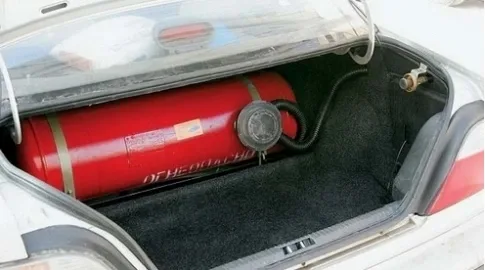
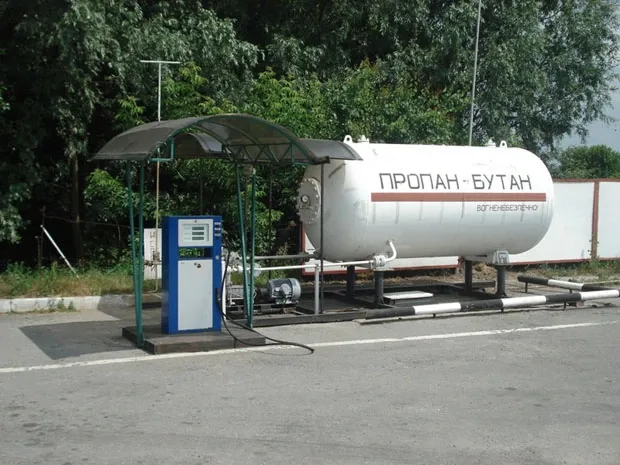
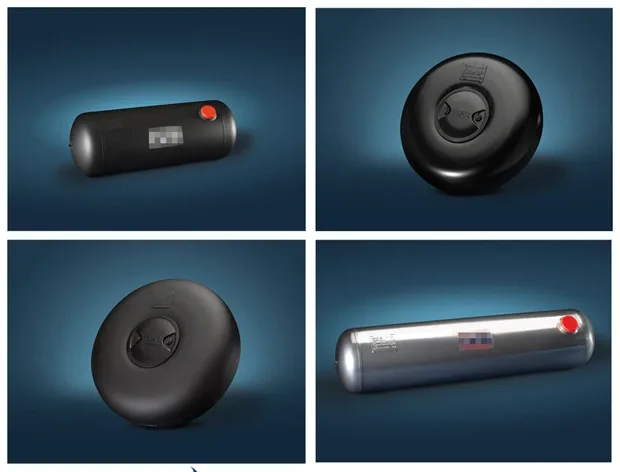
The first is liquefied petroleum gas (LPG). In essence, like gasoline, it is a product of oil refining, but a by-product. That is why its price is about half that of gasoline. At gas stations, a mixture of propane and butane is mainly sold, where the share of these components is 70–75%. Such fuel is stored in liquid form in special tanks under low pressure — about 1.2–1.6 MPa (12–16 atmospheres).
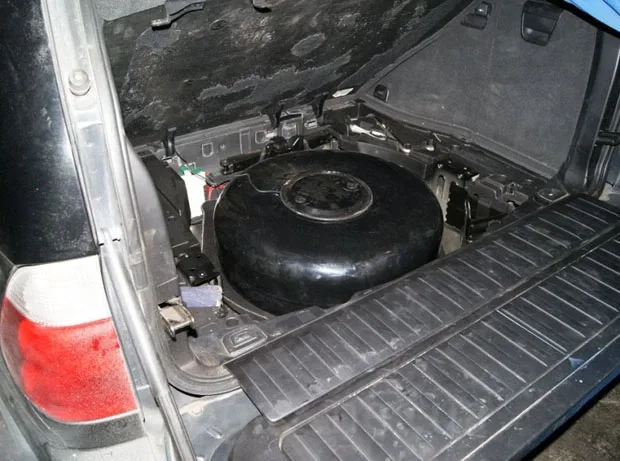
The second common option is methane. This is the basis of natural gas, as well as biogas, which is obtained from organic waste and animal waste products. It is methane that powers home stoves, boilers, and boiler houses. It is more complicated: it does not turn into a liquid, so it is pumped into strong cylinders made of alloy steel under a pressure of 20 MPa (200 atmospheres). Modern technologies make it possible to make such containers from composite materials, which has somewhat reduced their weight, but not too much.
Which is more convenient — methane or propane-butane? To answer, it is worth comparing the strengths and weaknesses of both systems.
Propane-butane
Pros
| Cons
|
Feature: start and warm-up occur on gasoline, and when the coolant temperature reaches 40°C, the system switches to gas.
Methane
Pros
| Cons
|
Feature: measured in cubic meters. 1 cubic meter of methane corresponds to 1.2 liters of gasoline.
Bottom line:
For passenger cars, propane-butane looks like the most practical choice. Installation is inexpensive and allows saving up to 40%.
Methane is more profitable from a financial point of view, but due to massive and heavy cylinders, it is difficult to use in passenger cars.
Dispelling stereotypes:
Opponents of LPG systems assure: the equipment kills the engine. This myth dates back to Soviet times. Then someone in the country's leadership came up with the idea of saving resources, and an order was issued to convert gasoline engines to gas in all vehicle fleets. But drivers and their bosses met this without enthusiasm: the opportunity to "launder" gasoline disappeared. Draining and selling it was easy, but gas did not lend itself to such a scheme — it is cheaper, and it cannot be poured into another container. That is when they began to fabricate reports about breakdowns and burnt-out engines running on gas. Whether to believe these stories or not is a personal matter for everyone.
The Soviet Union collapsed, but the legends remained. They are carefully passed down by older generations, reinforced with fictional examples.
What does gas do to the engine?
Take the Netherlands, where 86% of cars run on gas. According to the local automobile club, engines running on gas last 1.5–2 times longer without major repairs than gasoline engines.
Any engineer will confirm: since the combustion chamber is filled with a more homogeneous mixture, fuel on gas burns completely. Moreover, the gas-air mixture, unlike the gasoline one, does not wash lubricant off the cylinders and rings. Less resinous deposits and carbon are formed on pistons and cylinder head parts. Engine oil stays clean longer. The high octane number (100–110) eliminates detonation. Gas burns slower and smoother, so the engine runs quieter and softer.
The second argument of skeptics: LPG is dangerous
In old first and second generation systems, the risk was real: leaks in gas lines could only be noticed by smell. But modern 4th and 5th generation systems are equipped with sensors that reduce the likelihood of leakage and fire to zero. Safety is almost one hundred percent if the installation is done correctly. In the event of damage to the lines, special valves instantly shut off the gas supply. Notably, gasoline systems do not have such protection — a gasoline leak is hard to notice immediately. Cylinders, meanwhile, undergo regular inspections and have a limited service life, which cannot be said about the fuel tank, which can also leak or be damaged.
In an accident, a gas cylinder withstands loads many times greater than the strength of a fuel tank. Methane cylinders are so strong that it is easier to destroy the entire car than to damage the container.
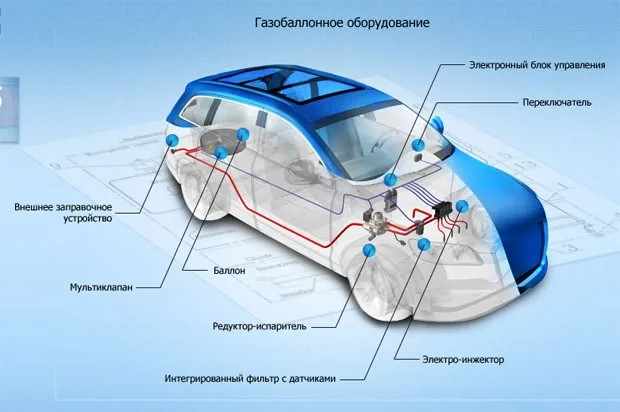
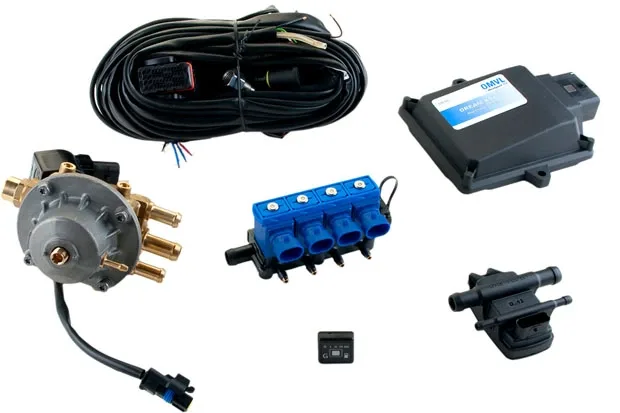
4th generation LPG works on the principle of gasoline multipoint injection: fuel through injectors under pressure enters the intake manifold. Only in a gasoline system the pressure is created by an electric pump, while in a gas system it is already there — gas in the cylinder is stored under excess pressure, which also needs to be reduced. This is done by a reducer connected to the cooling system, because heat is absorbed when pressure drops.
To ensure the engine runs stably on the gas-air mixture, the LPG control unit adjusts the ignition timing and injection parameters, guided by the factory control unit. 4th generation LPG maintains dynamics almost at the level of gasoline.
Now about what happens with incorrect LPG tuning.
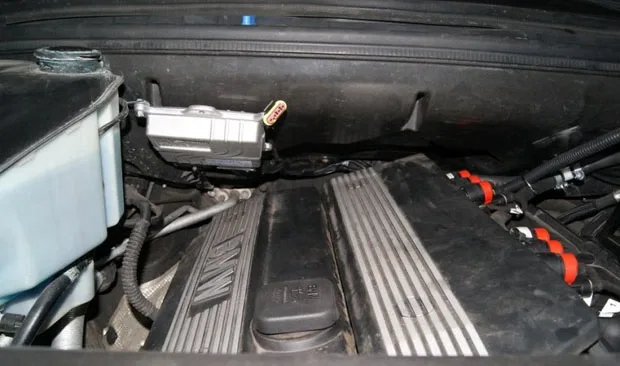
If the system is not tuned correctly, the spark plugs ignite the gas-air mixture at the same time as the gasoline mixture. But gas, as we remember, burns longer. It turns out that the combustion process is still ongoing when the exhaust valves are already beginning to open. Hence — overheating and subsequent burnout of the valves. This is the malfunction most often found in cars with LPG.
But if everything is tuned correctly and the installation is done according to the manufacturer's recommendations, the engine operates in normal mode, the thermal balance is not disturbed, and no breakdowns occur.
AutoPortal recommends checking the ignition timing at every maintenance — this also applies to those who drive only on gasoline. With incorrect values, detonation and valve burnout are possible.
Conclusion: in most cases, engines fail not because of running on gas, but because of incorrect system tuning.
Is it worth it
Let's calculate the savings from LPG on engines of different sizes. As examples, let's take the 2.0-liter R4 from Hyundai Sonata and the 5.7-liter V8 from Toyota Tundra.
Installation on a four-cylinder engine will cost 5,600–8,000 UAH, so payback comes quickly. The Sonata with a 2.0-liter engine consumes an average of 10 liters of gasoline per 100 km. LPG for it costs about 7,600 UAH.
Thus:
Gasoline Gas Gasoline consumption, l/100km 10 0.3 (compensation during
warm-up) Gas consumption, l/100km 0 11 Gasoline cost, UAH 113 3.39 Gas cost, UAH 0 61.6 Savings, UAH/100 km 48.01
By saving 48.01 UAH on every hundred kilometers, you will recoup the equipment costs in just 15,830 km of mileage. After that — pure profit. You must agree, both the equipment price and the payback period are quite reasonable.
Now let's look at the Toyota Tundra with a 5.7-liter V8 engine. Here, installation will cost 11,000–15,000 UAH.
Let's take the maximum amount — 15,000 UAH.
| Gasoline | Gas | |
|---|---|---|
| Gasoline consumption, l/100km | 18 | 1.0 (compensation during warm-up) |
| Gas consumption, l/100km | 0 | 19.8 |
| Gasoline cost, UAH | 203.4 | 11.30 |
| Gas cost, UAH | 0 | 110.88 |
| Savings, UAH/100 km | 122.88 |
With savings of 122.88 UAH per 100 km, payback occurs in just 12,208 km. You must agree, here both the price and the terms look more attractive than in the case of the 2.0-liter engine.
Result: gas is profitable. The larger the engine displacement, the more noticeable the savings. And what is better — gas or diesel, you will learn in our article comparing Renault Duster with LPG and diesel. We will also add that, according to the latest data, cars on gas are more profitable than electric cars!
P.S. Are there other ways to reduce the cost of mileage? Yes — filling systems from a household gas network. We will talk about this in the next article.