Volkswagen Passat: prices and specifications
8 generations Country of origin: Germany

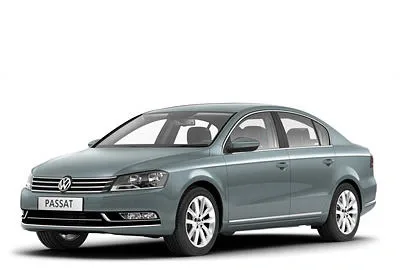
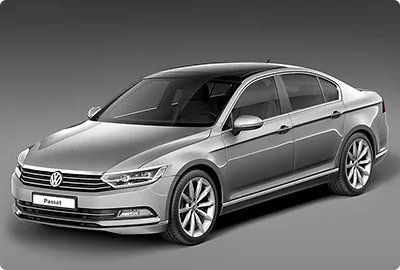
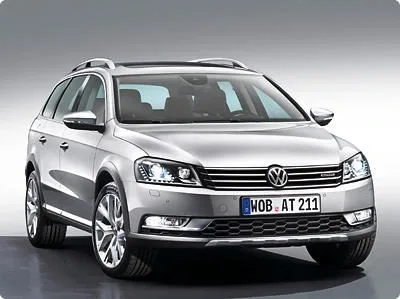
Volkswagen Passat is a full-size car of the German brand, first built on the Audi 80/Fox platform. The model name, following Volkswagen tradition, comes from the name of the wind that blows between the tropics in both hemispheres. The first generation Passat (B1) debuted in 1973 in sedan and liftback body styles. The next generation introduced a station wagon. In 2005, with the release of the sixth generation, a four-door coupe CC was added to the lineup, and in the seventh generation (2010), an "off-road" version of the Passat Alltrack station wagon was introduced.
Trims and technical specifications of Volkswagen Passat
Volkswagen Passat is offered with petrol engines ranging from 1.4 to 2.0 liters and diesel engines from 1.6 to 2.0 liters. They are paired with a 6-speed manual gearbox or a 6- or 7-speed DSG dual-clutch automatic. Drive is front or all-wheel. Detailed technical specifications and trims can be studied by selecting a specific version of the model below.
Where to buy a new Volkswagen Passat at a favorable price?
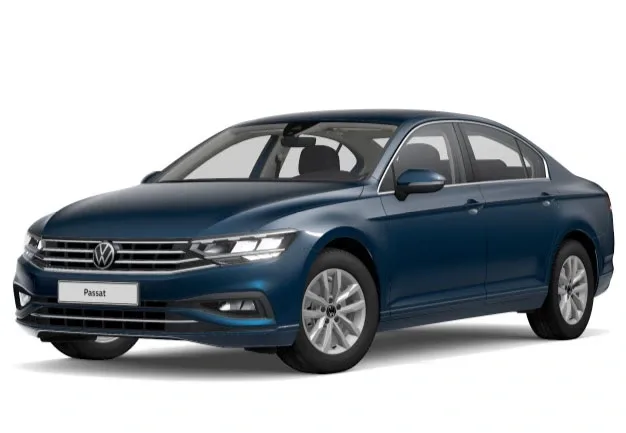
The price of a Volkswagen Passat in Ukraine starts from approximately 930,000 UAH, however, on the Ukrainian market, the new Passat is only available as a sedan. Current prices are indicated under the images of the versions, and more details about the model can be found on the page of the specific modification.
Reviews of Volkswagen Passat
The Volkswagen Passat model is valued for its high build quality, reliable chassis, and excellent handling. Owners also like the good value for money and prestige. Among the disadvantages, problems with robotic gearboxes and the demanding nature of turbo engines regarding fuel quality are often mentioned. You can leave your review or read others' reviews below on this page.
History
The Passat appeared in the Volkswagen lineup in 1973. Since then, the model has been repeatedly updated, and as of 2014, the VW Passat is among the top ten best-selling cars in the world.
Volkswagen Passat B1 (1973-1980)
Volkswagen Passat B2 (1980-1988)
Volkswagen Passat B3 (1988-1993)
Volkswagen Passat B4 (1993-1996)
Volkswagen Passat B5 (1996-2005)
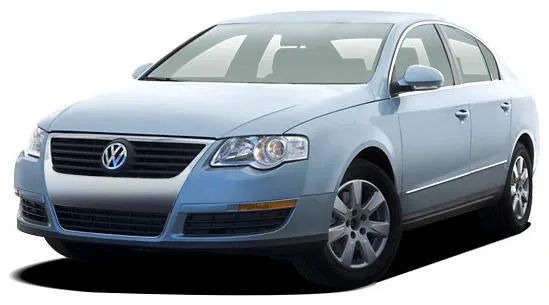
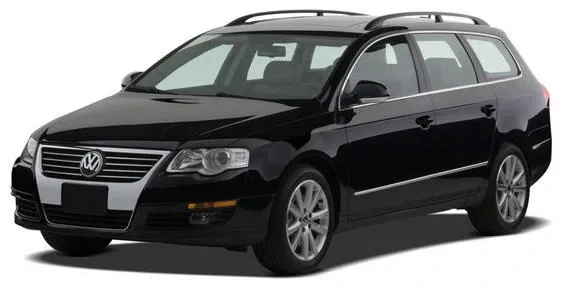
Volkswagen Passat B6 (2005-2010)
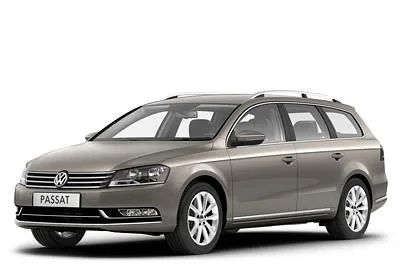
Volkswagen Passat B7 (2010-…)
The first generation Passat B1 was presented in four body types: 2- and 4-door sedan, as well as 3- and 5-door hatchback. Initially, the model was planned to be called "511", but eventually it received the name Passat — after the tropical wind. The strength and constancy of these winds during the age of sail were key for routes between Europe and America.
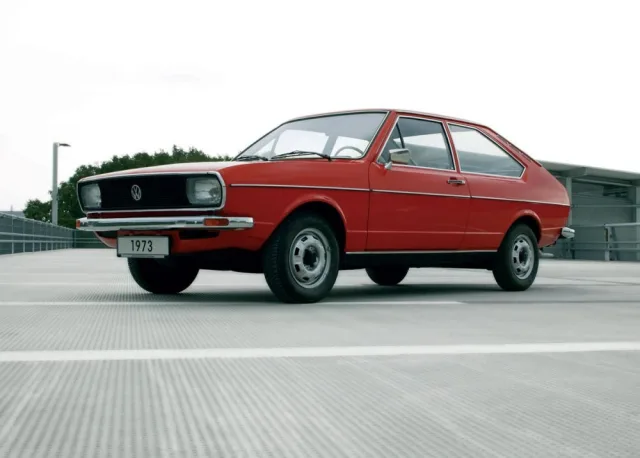
The design of the first Passat was developed by Italian designer Giorgetto Giugiaro. In 1974, a 5-door station wagon was added to the lineup.
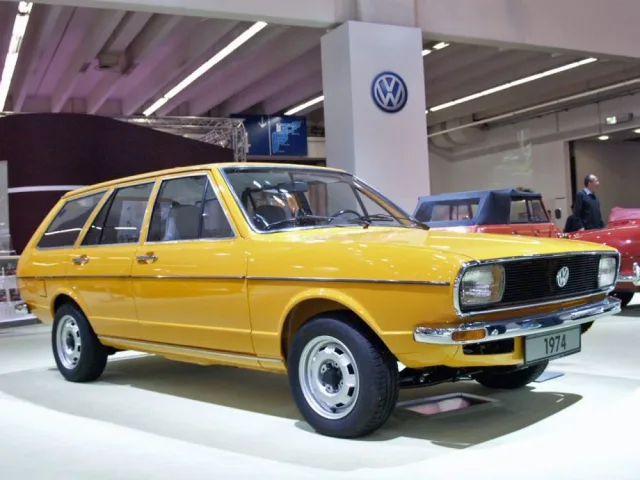
At that time, the Passat was one of the most modern cars and was intended to replace the Volkswagen Type 3 and Type 4 models. In 1974, it was named "Car of the Year" by Wheels magazine, and its relative, the Audi 80, became Car of the Year in Europe.
Initially, two four-cylinder petrol engines were installed: 1.3 L and 1.5 L (55 hp and 75 or 85 hp), which were also used on the Audi 80. Torque was transmitted via a 4-speed manual or 3-speed automatic. In 1975, the 1.5-liter engine was increased to 1.6 L, without changing power but increasing torque. In 1978, a 1.5-liter diesel with 50 hp was added, and in 1979, the GLI version with fuel injection.
In 1980, the second generation Passat B2 was released. It offered 3- and 5-door hatchbacks in G (base), L, and GL trims. The platform became longer, and the appearance changed: large square headlights appeared, which later became a signature feature.
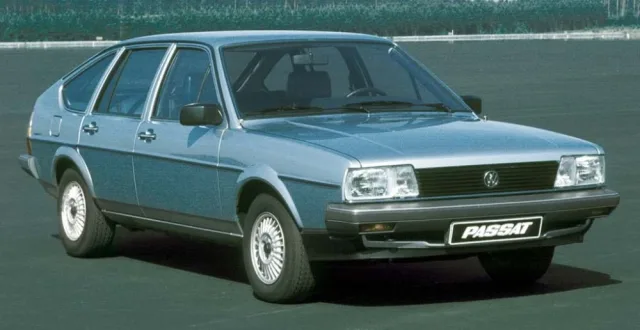
The engine lineup was extensive: 1.6-liter diesel (54 hp), petrol 1.3 L (55 hp), 1.6 L (75 hp), and 1.9-liter 5-cylinder (115 hp, on request). The sedan was sold under the name Santana, and the 5-door station wagon as Variant.
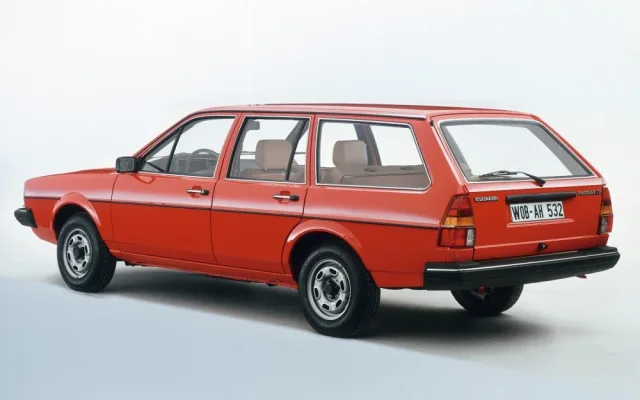
Already in January 1981, the Passat was updated: wide spoilers, power package, and 5-speed manual transmission appeared. In February 1981, the Santana sedan began to be equipped with a 1.6 L engine (85 hp).
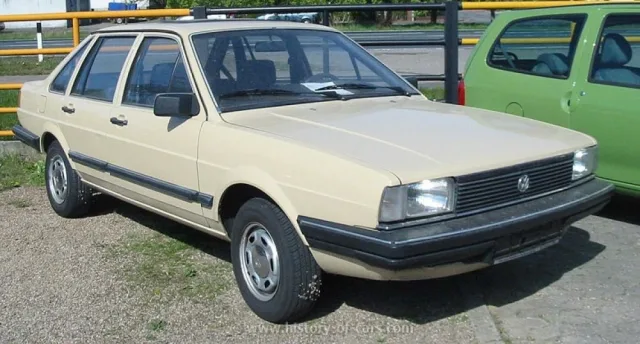
Later, 5-cylinder engines from the Audi 100 appeared: 1.9 L (115 hp), 2.0 L (115 hp), and 2.2 L (136 hp).
In August 1984, the company released all-wheel drive versions of the Passat/Santana in Topic and Country trims, and the station wagon in the Syncro variant.
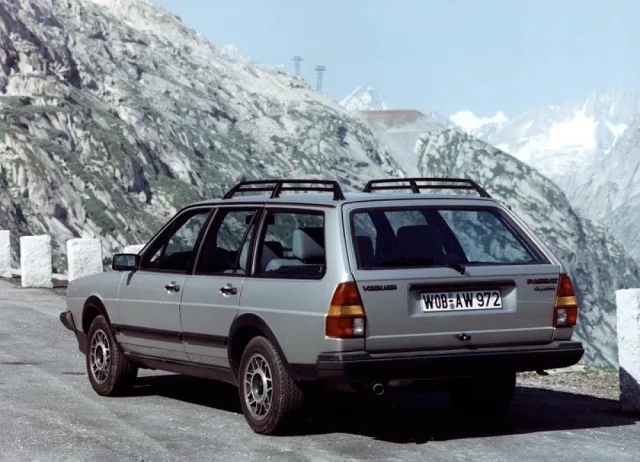
In January 1985, the entire Passat model range was updated: new radiator grille, bumpers, rear lights, and glass (for the hatchback). Santana was renamed Passat Stufenheck. The Passat Variant Syncro was produced in GT version with ABS.
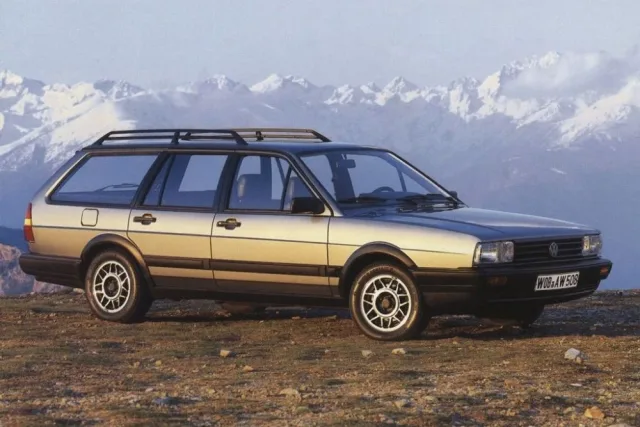
1985 — start of production of Passat Arena.
1986 — Passat Tramp introduced.
1987 — Passat Trophy introduced.
The third generation Passat B3 went on sale in Europe in February 1988 (in North America in 1990, in South America in 1995). It was a fundamentally new design with a transverse engine layout. Externally, the model was distinguished by large block headlights and the absence of a radiator grille.
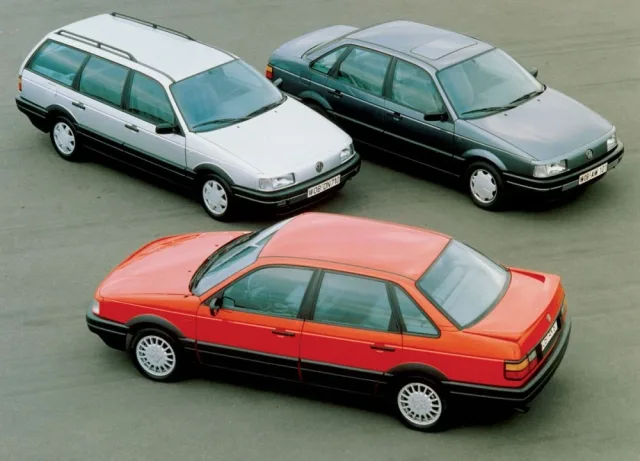
In 1989, an all-wheel drive version Syncro appeared with a viscous coupling that engaged the rear drive when the front wheels slipped.
The third generation used petrol engines ranging from 1.6 to 2.8 L (53–128 kW) and diesel 1.6–1.9 L (50–59 kW). They were combined with a 5-speed manual or 4-speed automatic.
The next version of the Passat was released in 1993. Although structurally it differs little from the B3, it is considered the fourth generation — B4. Main differences: modified body panels, different radiator grille, and in the base trim — front airbags and ABS. In Europe, trims L, CL, GL, GT, and VR6 were available, and the all-wheel drive version was called Syncro. Ground clearance and transverse engine layout remained the same as the B3.
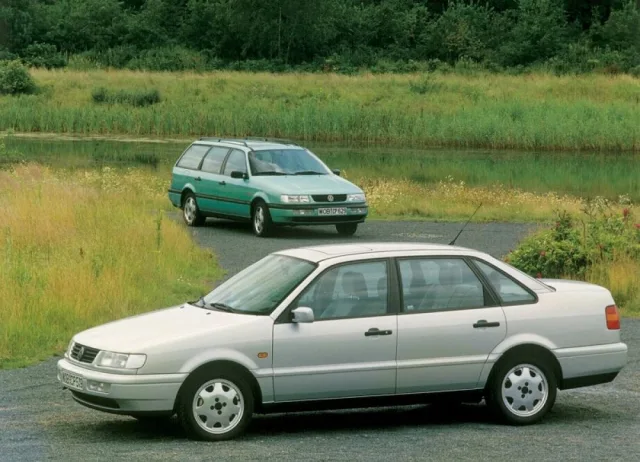
In 1996, the fifth generation Passat B5 was introduced. Unlike the previous one, produced since 1988, the car was again unified with the Audi A4 and A6, allowing the use of powerful modern longitudinal engines. The fifth generation was produced only in sedan and station wagon (Variant) body styles.
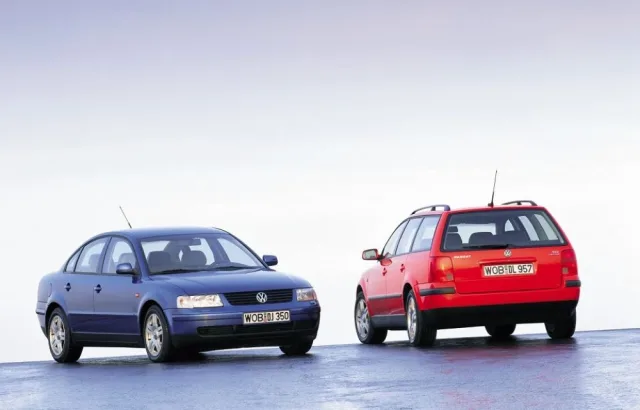
The engine range was extensive: petrol 1.6 L (101 hp), 1.8 L (125 hp), 1.8 L turbo (150 hp), six-cylinder 2.8 L and "VR5" 2.3 L, as well as diesel from 1.9 to 2.5 L with power from 90 to 150 hp.
Three transmission options were offered: 5- and 6-speed manual and automatic. Drive could be front or all-wheel (4Motion).
The handling of the fifth generation improved compared to its predecessors, which is attributed to the introduction of a multi-link rear suspension.
In mid-2001, the Passat underwent a facelift, receiving the factory designation B5 GP. The changes were mostly cosmetic.
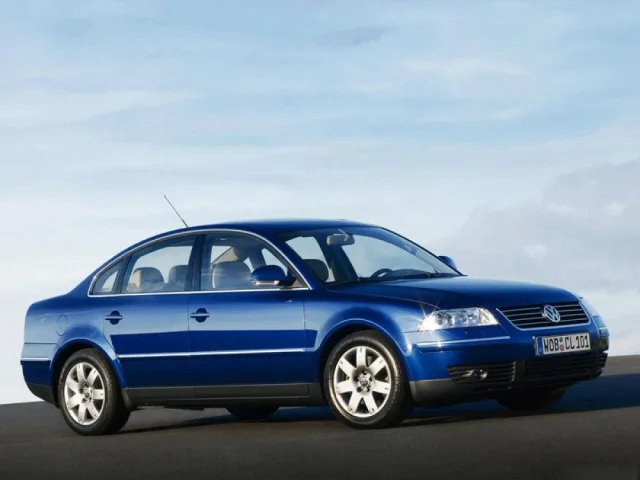
There was a limited series Passat W8 with an 8-cylinder 4.0 L engine producing 275 hp in sedan and station wagon bodies. Over nine years of production, 3,331,000 units of the B5 were produced.
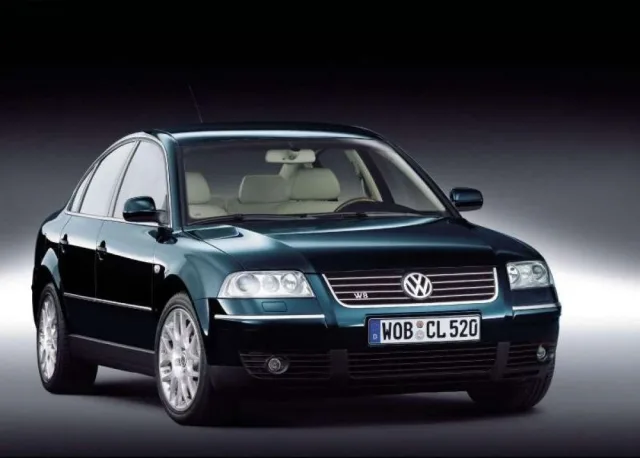
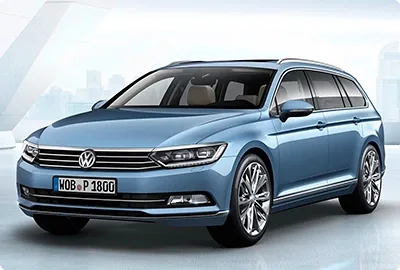
In March 2005, the sixth generation Passat B6 was presented at the Geneva Motor Show, and in the summer of that year it went on sale. At the end of the year, the Passat Variant station wagon appeared with a trunk volume from 603 to 1731 liters.
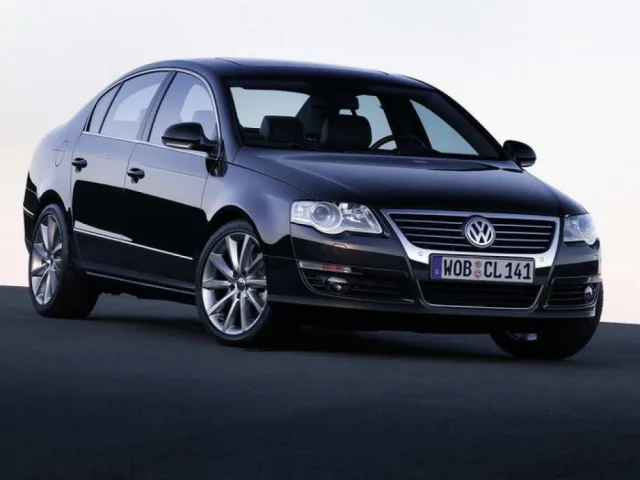
The Passat B6 was built on an extended A1 platform. The chassis, body, and powertrain were arranged in a new way.
The engine lineup expanded significantly: 1.6 (102 hp), 1.4 TSI (122 hp), 1.8 TSI (152–160 hp), and 2.0 TSI (200 hp) with direct injection, as well as 1.6 FSI (115 hp) and 2.0 FSI (150 hp). Eight-cylinder engines were abandoned. For high-performance versions, 6-cylinder engines 3.2 (250 hp) and 3.6 (300 hp) were used.
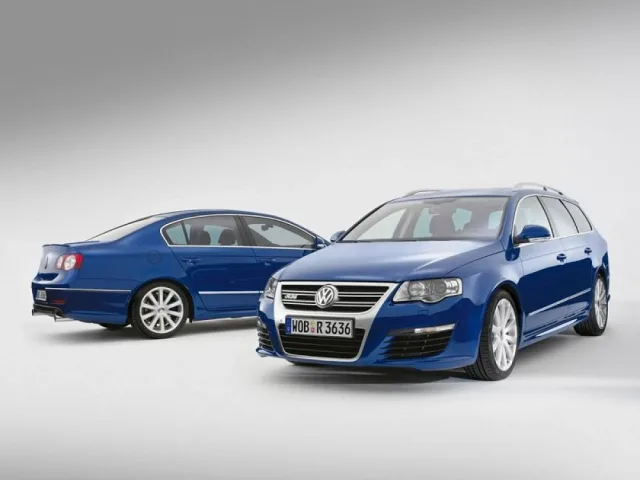
In addition to 6-speed manuals and automatics, dual-clutch robotic gearboxes DSG appeared.
Despite high prices, the car was popular: during the production of the sixth generation, 2,035,500 units were sold.
The Volkswagen Passat B7 was first shown at the Paris Motor Show in 2010. In China, the model is known as the Volkswagen Magotan.
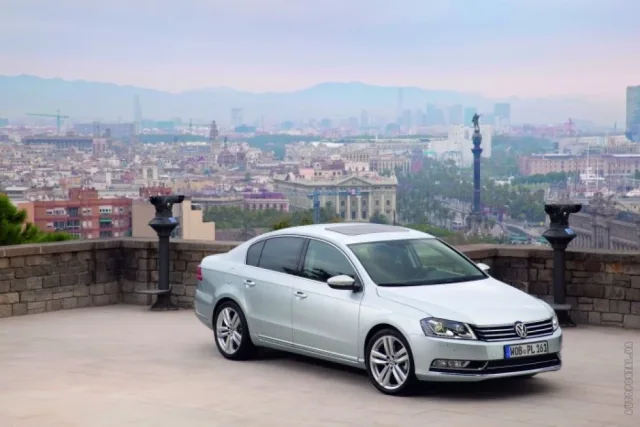
For the North American and South Korean markets, a separate model Volkswagen Passat (NMS) was offered, unrelated to the Passat B7.
Exterior
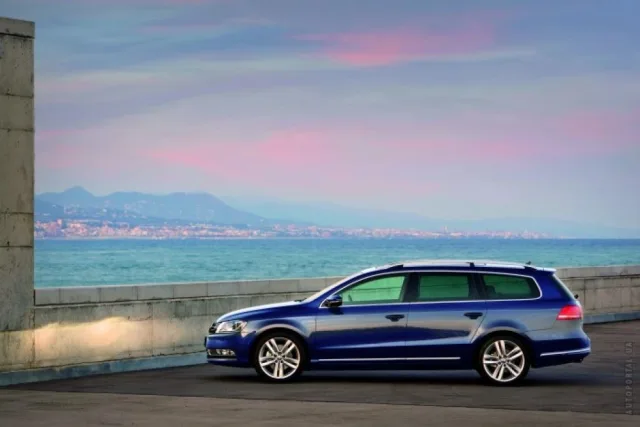
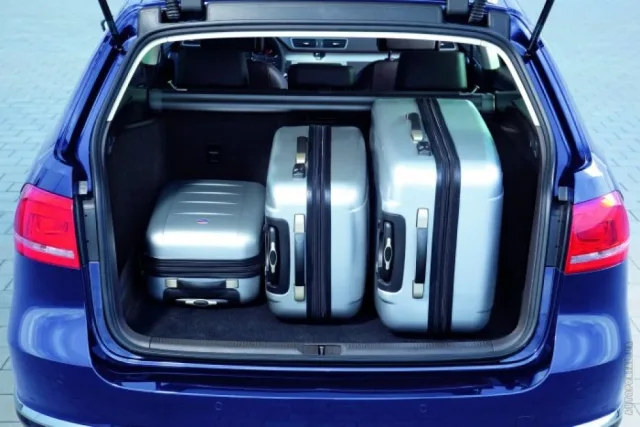
The Passat B7 completely changed the front and rear lighting. The length of the seventh-generation sedan increased to 4769 mm, height to 1474 mm, width remained the same at 1820 mm. The Variant station wagon became longer to 4770 mm and higher to 1521 mm. With the rear seats folded, the trunk volume of the station wagon is 600 liters.
Interior
In the interior of the seventh Passat, the instrument panel and door cards changed. New comfortable seats are installed, optionally available with built-in massagers, ventilation, and heating. Decorative interior lighting and analog clock are also provided.
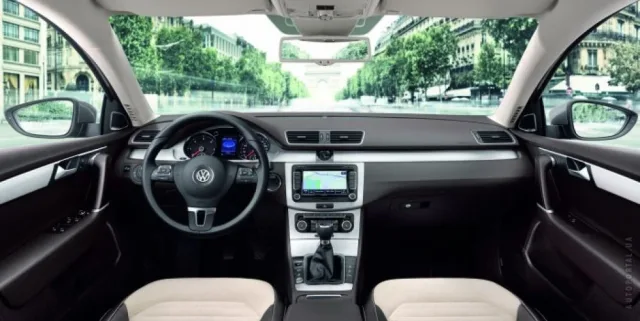
The interior is strict, functional, and ergonomic. The front seats are comfortable in any trim, with plenty of adjustments.
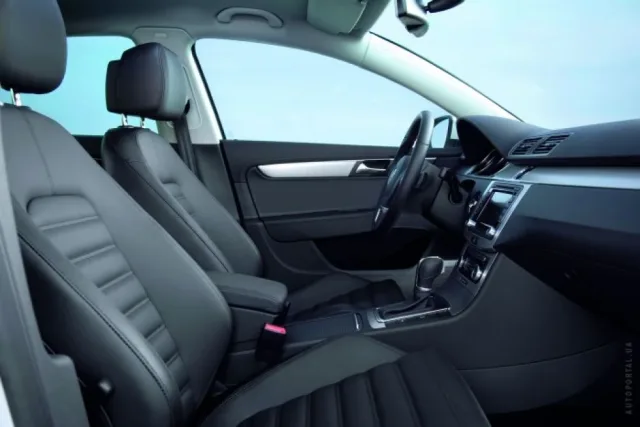
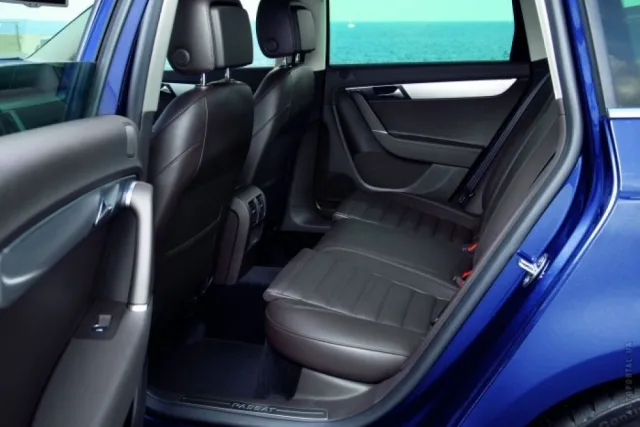
The rear bench is made with typical German quality. Sitting is comfortable, with enough space in any trim and for any height. Three people can sit comfortably in the back.
The sedan's trunk, although limited in height by the body design, is one of the best in its class in terms of volume. The rear seats fold down. For transporting large items, it is better to choose the Passat B7 Variant.
Engine and transmission
The buyer can choose a Passat with one of five petrol engines: 1.4 TSI (122 hp), 1.4 TSI (150 hp, on natural gas), 1.8 TSI (160 hp), 2.0 TSI (211 hp), 3.6 V6 (300 hp).
Three diesel engines are also available: 1.6 TDI (105 hp), 2.0 BlueTDI (140 hp), and 2.0 TDI (170 hp).
Transmissions are of three types: 6-speed manual, 6-speed DSG, and 7-speed DSG.
Safety
The Euro NCAP crash test of the Volkswagen Passat B7 showed excellent results. In a frontal impact, the car received five stars out of five — one of the best in its class.
In percentage terms, the safety level is as follows: in a frontal impact, driver and passengers are protected at 91%, children in seats at 77%, pedestrians at 54%. In a side impact, protection for the driver and front passenger is 91%.
Features
The handling of the Passat can be considered exemplary in its segment. The car is obedient and responds clearly to the driver's actions in any conditions. During sharp maneuvers, it is predictable. The Passat B7 confidently holds its trajectory on uneven surfaces both in corners and on straight lines. The suspension may seem a bit stiff, but its energy capacity is not criticized.
Good sound insulation of the cabin and engine is noted. At high speeds, the driver and passengers can communicate without raising their voices.
Popularity in Ukraine
Despite the high cost, the Passat sells well in its class on the Ukrainian market. Buyers more often choose the sedan.
When choosing a Passat, the customer gets not only a modern but also a reliable car, which also has a low percentage of value loss upon resale.
According to the sales rating of new business-class cars, the Passat is among the top five bestsellers.
Our verdict
The buyer of a Volkswagen Passat is a person who wants a car with history, using the latest technical solutions, safe, environmentally friendly, and reliable. The Passat is a good choice for those who are willing to pay for comfort and quality.
Volkswagen has a wide network of dealerships and service stations in Ukraine and Europe. The car warranty is 2 years without mileage limitation. The Volkswagen Assistance technical support service operates throughout Ukraine.