On average, over the specified period, 4.2 breakdowns were recorded per thousand electric vehicles, while for petrol and diesel cars this figure reached 10.4. The dynamics are noteworthy: in 2020, electric cars averaged 8.5 faults per 1000 units, and two years later, in 2022, this figure dropped to 1.7. This looks more convincing not only against the background of internal combustion engines (5.4), but also as a general trend — it seems that a new quality benchmark is being established before our eyes.
However, the electric vehicle market is not so homogeneous. The Hyundai Ioniq 5, despite its futuristic design, became the most unreliable electric car of 2021–2022. In 2022, this model demonstrated 22.4 faults per 1000 cars. The exact reasons are not disclosed, but experts tend to believe that the problem lies in electronic systems and software.
On the other hand, the true leader turned out to be the Tesla Model Y. In 2022, it showed only 0.9 faults per 1000 cars — almost ten times less than the Hyundai. This result indicates not only high assembly quality, but also a well-balanced design of the electric vehicle as a single system.
Even the budget Dacia Spring outperformed the Korean manufacturer: 2.9 faults — a very decent indicator for a car that costs less than half the price of the Ioniq 5. Sometimes a simpler design really gives an advantage.
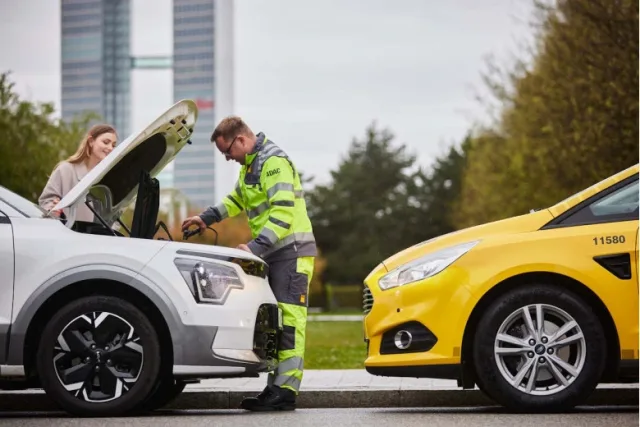
Another detail: in the case of electric vehicles, technical assistance is most often called not due to problems with the battery or motor, but due to the ordinary 12-volt battery. That is, we are talking about the same difficulties as in traditional cars with internal combustion engines.