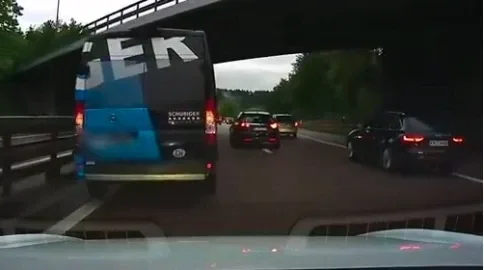
As reported, the Tesla Model S autopilot failed to recognize a van that had stopped in the left lane, which caused the collision. The owner of the electric car, who was behind the wheel at the time, said that the adaptive cruise control did not slow down as usual, the emergency braking system was silent, and the warning about a possible frontal collision came too late.
Immediately after the accident, the driver contacted the European representative office of Tesla, but they could not explain what happened, stating that all systems were operating normally. "I could have reacted earlier, but when the car smoothly brakes itself a thousand times, you start to rely on it," the man added.
A Tesla representative in a conversation with Tech Insider explained that the Model S electronics are designed to enhance safety, not to replace the driver. According to him, the systems do not make the car fully autonomous, but only help avoid accidents, so responsibility for the situation on the road always lies with the person, not with the auxiliary functions.
It is worth noting that to date, Tesla electric vehicles have collectively traveled more than 160 million kilometers with the autonomous driving system enabled.