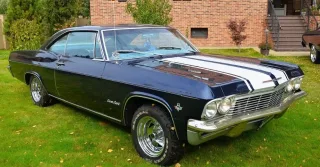
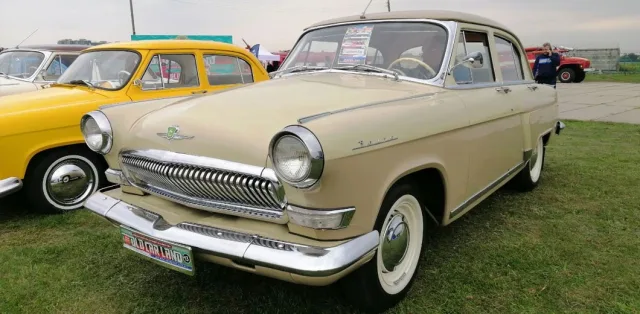
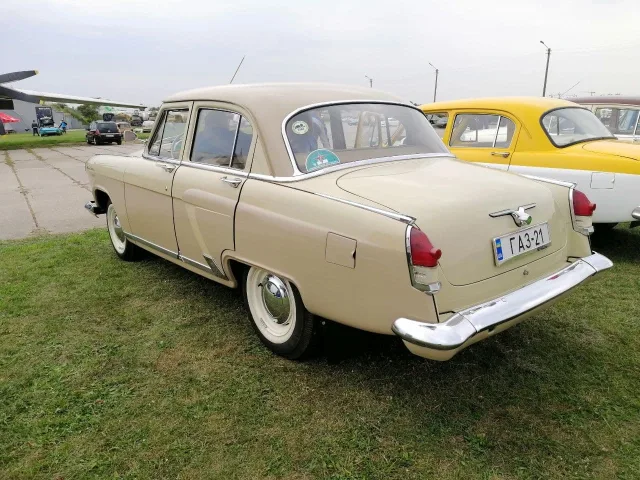
Externally, the electric Volga stands out in no way – it's a perfectly ordinary "twenty-first" (except for the "eco-friendly" green logo instead of the original red one). But that's until you look inside.
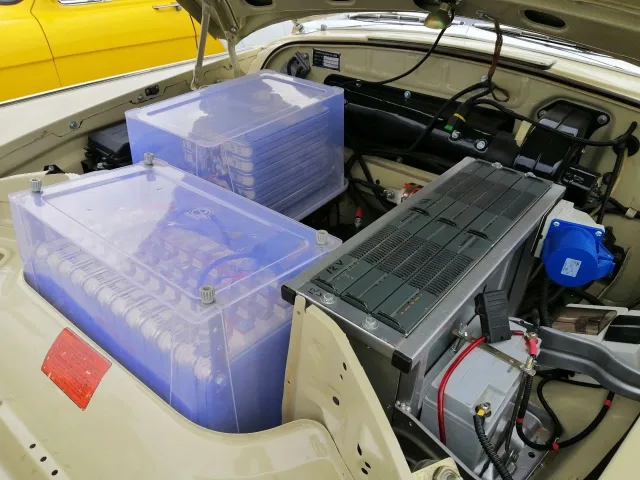
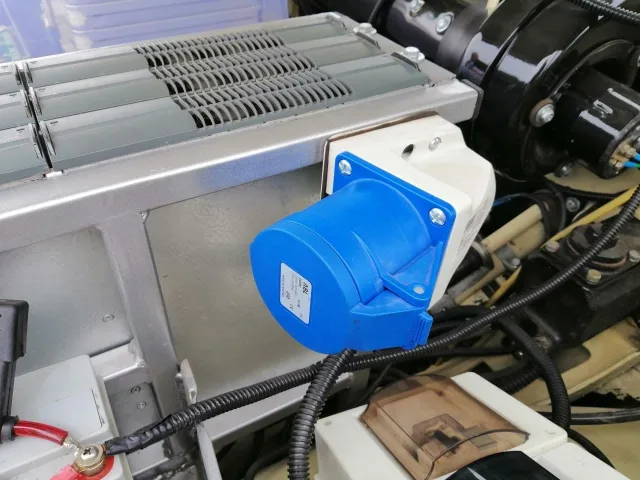
Under the hood, the key components are hidden. These are an electric motor (an ordinary industrial one that was and is still used on factory machines), a cooling fan, a heater (the housing is original, but the internals are from a modern Volkswagen), a converter (homemade), batteries (which, by the way, are protected unusually – with plastic food containers; also, some of the battery elements are placed in the trunk) and a 220V socket for connecting to the grid.

As the creator told, the batteries were taken from a Nissan Leaf (apparently first generation). They have a small capacity – only 21 Ah. As a result, the electric Volga travels only 50 km on a single charge. However, the owner finds this sufficient – according to him, the main goal was to preserve the original mass of the car, not to create an electric vehicle with a long range. Nevertheless, the sedan still has enough room to "add" additional battery packs and thus increase the range.
The acceleration dynamics were not measured, but the top speed is known – 88 km/h. Theoretically, more could be squeezed out, but the developer says that "there is no need for that."
In the car's interior, two pedals catch the eye – gas and brake. Nevertheless, the Volga retains its original 3-speed manual transmission. Also, on the dashboard there is a smartphone holder, and it's there for a reason. Oleh's son (Yevhen) created a special mobile app called ElVolga that shows energy consumption, range, charging process, and other important indicators.
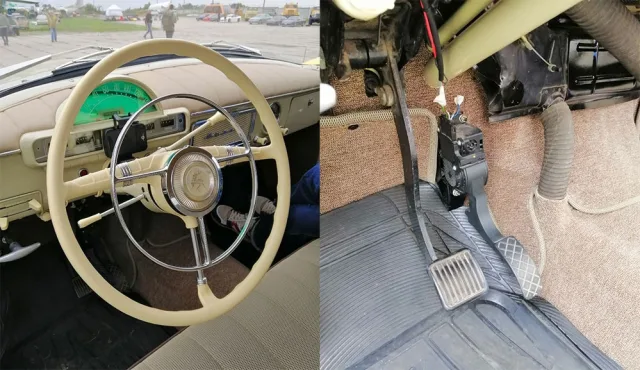
Finally, another feature of the car is LED headlights and LED interior lighting.
By the way, the Volga was produced in 1968.
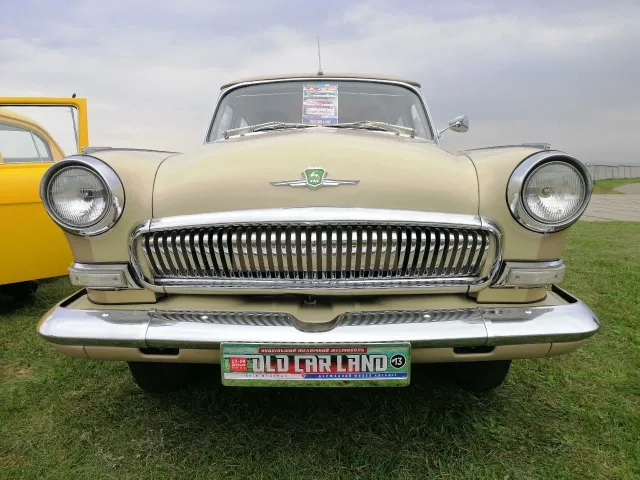
It should be noted that the OldCarLand festival takes place on September 17-19 in Kyiv at the O.K. Antonov Aviation Museum.