Such damage leads to changes in tire parameters, so over time there is a need to buy tires for your car. What causes tire cracking, which damage is dangerous, and which is acceptable?
Main causes of cracks
There are several reasons why cracks appear on the tire surface:
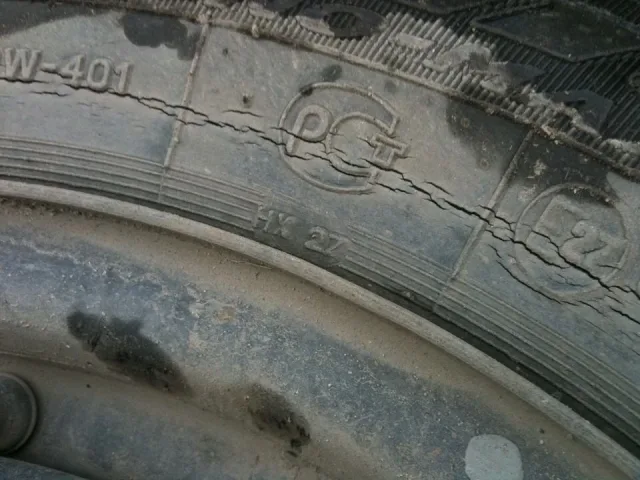
- A network of microcracks 1–2 mm, resembling a spider web, is a consequence of improper tire storage. Probably, the tires were exposed to direct sunlight for a long time or the products were subjected to sharp temperature changes.
- Small cracks in the tread grooves occur due to the negative impact of chemicals used in the production of asphalt concrete mixtures, or sand-salt solutions used for sprinkling roads during icy conditions.
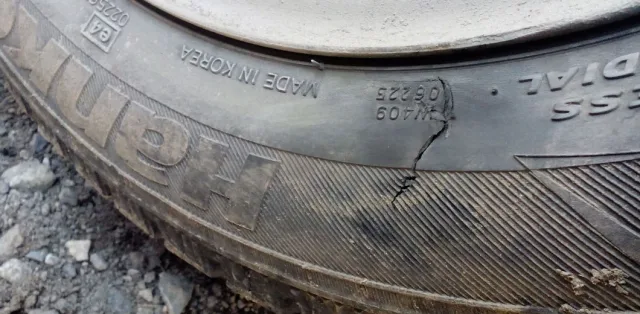
- Relatively large cracks (over 3 mm) indicate severe wear of the tires due to prolonged use. Over time, the elasticity of the rubber decreases as the oil and resin used in tire manufacturing gradually evaporate.
- Another common cause of tire cracking is careless wheel mounting. If technicians lack experience or use low-quality tools, the cord can be damaged.
Can you drive on cracked tires?
The presence of shallow microcracks on summer tires is considered a cosmetic defect that poses no danger. However, in this case, operation is allowed with strict compliance with the following requirements:
- driving at moderate speeds up to 85–90 km/h is allowed;
- sudden braking and wheel spin are prohibited;
- a calm driving style is used (especially important in urban cycles).
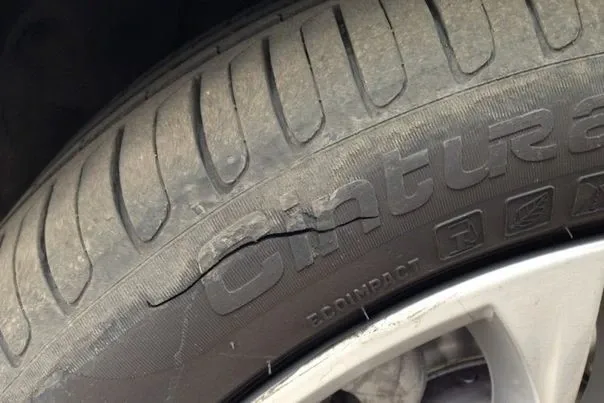
If deep longitudinal or transverse defects are observed, there is a threat to driving safety, since dirt, moisture, and chemicals can get inside the recesses, leading to sudden tire blowouts and the risk of serious accidents. Therefore, with such damage, worn tires should be replaced as soon as possible.
Repairability of cracked tires
Even with not very severe wear, many motorists decide to simply throw away damaged tires, whether they are Japanese Nitto tires, Toyo tires, or other brands. But it should be noted that sometimes repair of the products is possible. If there are recesses in the tread grooves, you can contact a car service or auto repair shop, whose specialists can melt the defects using special equipment. To eliminate the "spider web" of microcracks, the tire surface can be coated with silicone compounds that slow down rubber aging.
Deep cracks cannot be eliminated, so if the tires are severely damaged, they should be sent for recycling and new tires should be installed.