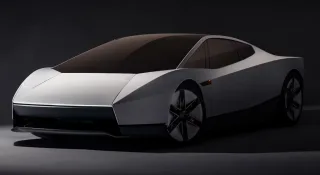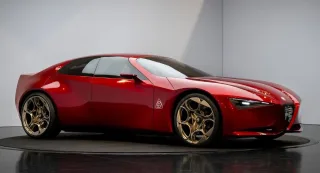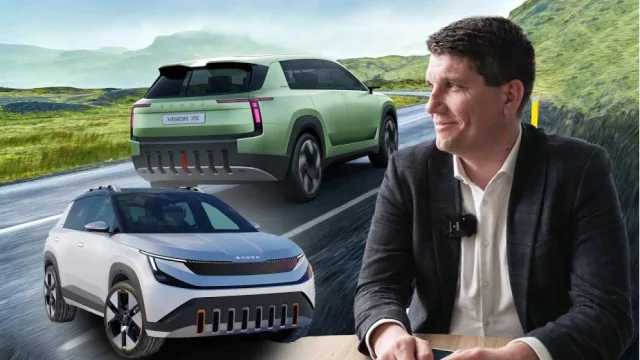
Skoda CEO Klaus Zellmer is already whetting buyers' appetites: "The Octavia concept will showcase our vision of next-level design. It will generate significant response and plenty of discussion." As the top manager noted, the new model will be a bold step forward in styling: expect glossy black radiator grilles with built-in sensors for driver assistance systems and striking sculpted body shapes accentuated by the signature "tornado line."
Engineers have paid considerable attention to practical qualities. The electric Octavia is planned as a station wagon, preserving the model's core idea — a spacious interior and functionality. This is fundamentally important for Skoda, as many manufacturers focus only on crossovers or hatchbacks in their electric cars.
The technical component is also highly intriguing. The electric Octavia concept will be based on Volkswagen Group's new SSP architecture, which is set to replace several existing platforms: the widespread MEB (used by Volkswagen ID.3, Cupra Tavascan) and the premium PPE (Audi A6 e-tron, Porsche Macan Electric). SSP promises greater range, faster charging, and an expanded set of electronic assistants.
Notably, the SSP platform is designed for an extremely wide model range — from the affordable Volkswagen ID.1 to luxury Bentley and Lamborghini models. Thus, the future Octavia will also receive technologies that just a few years ago seemed like science fiction. Along with it, a new virtual instrument panel, advanced autonomous driving systems, and online services will become commonplace.
The electric Skoda Octavia, like the next Volkswagen Golf, will be one of the first production models on the SSP architecture. This is a strategic step that demonstrates: even in the mass segment, Skoda is preparing a true electric breakthrough.
The concept will be unveiled this autumn, with the production version expected by 2026.