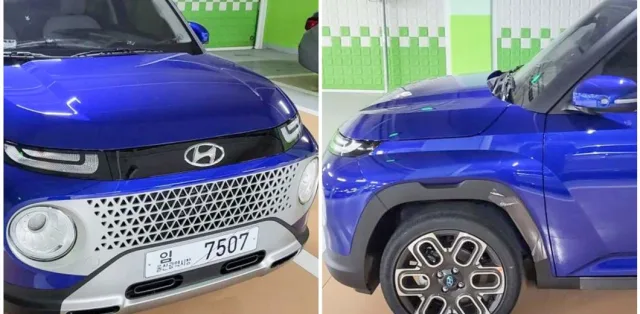
Objectively speaking, in person the Hyundai Casper looks better than in the presentation photos. Since this is a completely new car in the manufacturer's lineup, it has received a distinctive design. Several solutions immediately catch the eye. First, there is the two-tier front lighting with round headlights and “mesh” taillights spanning the full width of the tailgate lid. Moreover, part of the optics (the same DRLs) is fully LED. Second, there is a honeycomb radiator grille of an unusual shape, onto the “mask” of which a large bumper lip extends. Third, there are widened fenders that give the angular body a muscular look. Finally, fourth, there are massive central and rear pillars, as well as deliberately disproportionate side windows.
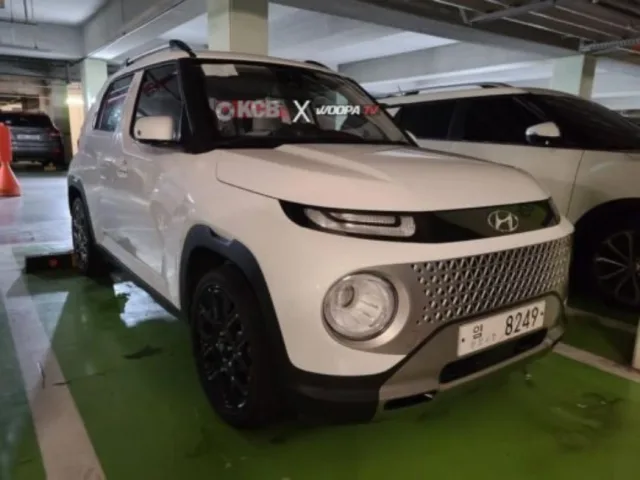
Special mention should be made of the ground clearance – it is quite substantial for the car. Combined with a short wheelbase and small overhangs, this will definitely ensure good off-road capability.

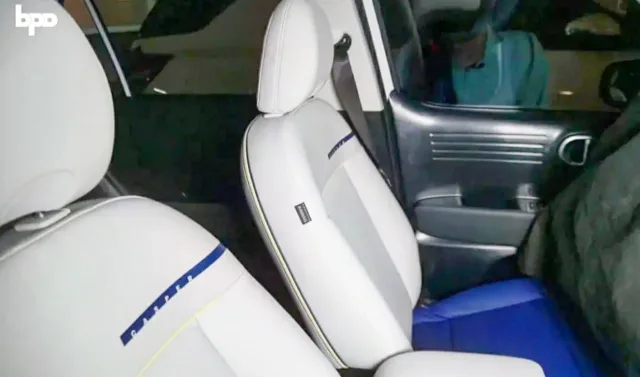
But inside, not everything is so clear-cut. Judging by the images, the trim materials are clearly budget. The cheap glossy plastic is especially “noticeable.” Although stylistically, the interior is hard to fault.
The Hyundai Casper belongs to the subcompact SUV class, its dimensions are 3595 x 1595 x 1575 mm, and the wheelbase is 2400 mm. Despite such small dimensions, the Koreans claim that the car can accommodate four adults, even those up to 1.9 m tall.
The lineup includes two petrol engines – a naturally aspirated 1.0 MPI with 76 hp and a turbocharged 1.0 T-GDI with 99 hp. Both work only with a 4-speed automatic transmission, and the drive is exclusively front-wheel.
Production of the Hyundai Casper starts this month. Initially, the crossover will be sold on the local market, and later it should appear in Western European countries and India.