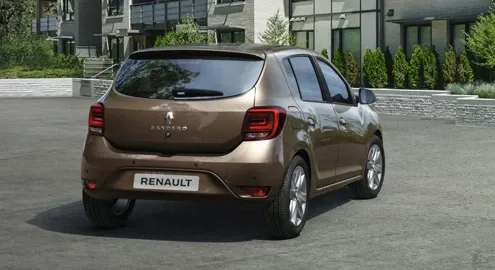
The new generation of the model will be built on a different platform, will borrow the range of engines from the Renault Clio, will become richer in equipment, safer and better in interior trim quality. The debut of the Sandero will most likely take place at the Paris Motor Show in 2020.
When developing the budget Dacia line, the Renault-Nissan alliance was forced to change the architecture to meet European environmental standards and ensure a decent level of passive safety in crash tests. The new Sandero will lose the B0 platform — it will be based on a simplified version of the modular CMF-B architecture, which is familiar from the fifth-generation Clio hatchback and the Nissan Juke crossover.
According to preliminary data, the engine range will include three-cylinder petrol units with a displacement of one liter and output of 75 and 100 horsepower. A more powerful turbocharged engine with a displacement of 1.3 liters is not provided for the Sandero. The diesel line will be reduced to one engine 1.5 dCi with a power of 85 horsepower. The flagship version of the Sandero Stepway will turn into a full-fledged crossover and will receive a mild hybrid E-Tech unit with a total power of 140 horsepower, including a naturally aspirated engine with a displacement of 1.6 liters and an electric addition.
The premiere of the European version of the Sandero is expected in the fall, and sales are scheduled to start in the fourth quarter of 2020. With the change of generations, the hatchback will rise in price slightly — by about 200–300 euros.