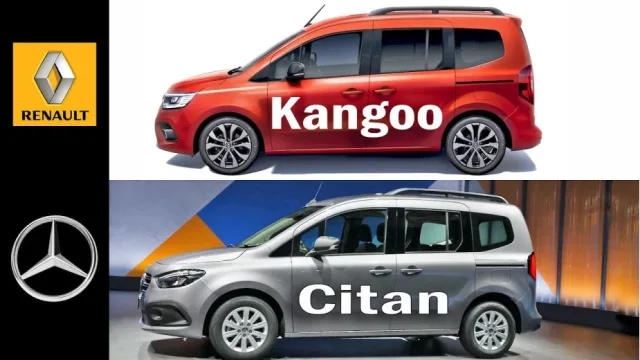
Last year's figures were not encouraging: only 5,117 T-Class/EQT cars (-30.6%) and 23,351 Citan/eCitan (-3.2%) were sold. With such volumes, profitability is out of the question, especially when it comes to a wide range of versions — from cargo to passenger, with petrol and diesel engines, electric versions, and even camper modifications.
Already in mid-2026, production of the entire model range will be stopped, and Mercedes-Benz does not provide replacements for these cars. The manufacturer will finally leave the niche of compact commercial vans, focusing on larger models.
Last year's sales of Sprinter/eSprinter amounted to 219,127 units (-7.7%), Vito/eVito — 101,205 (-14.9%), and V-Class/EQV — 56,809 (-5.3%). Overall, the Mercedes-Benz Vans division lost 9.4% of volumes, with electric vehicles among them accounting for only 19,516 units.
In 2026, the commercial division of Mercedes-Benz will begin a new stage: electric vans on the VAN.EA architecture and fresh models with internal combustion engines on the VAN.CA platform will hit the market. This will also finally put an end to the partnership with the Renault-Nissan alliance, just as the projects with the X-Class pickup (built on the basis of the Nissan Navara) and the compact smart forfour (a clone of the Renault Twingo) ended in their time.