Will not need refueling and will outlive its owner
Every car owner wants their car to stay fresh as long as possible and consume a minimum of fuel. American designer Loren Kulesus asked himself: why not combine these two dreams? Thus was born his concept, designed for a century of service without a single drop of fuel.
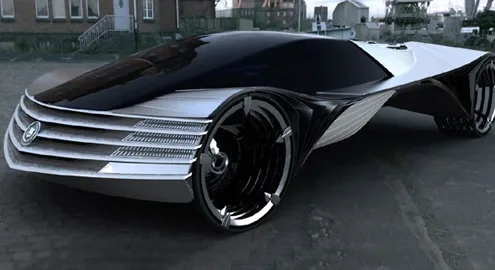
Cadillac World Thorium Fuel, abbreviated as Cadillac WTF, currently exists only as a virtual project on a computer. The basis of the "eternal" car is thorium — in other words, radioactive batteries. Such a Cadillac would need to visit the service center once every five years, but there would be no need to replace consumables at all. If you are not afraid of the prospect of sitting in a radioactive car, you can save a lot and leave the car as an inheritance to your grandchildren.
Can fly
Flying vehicles from science fiction are no longer a fantasy. The first production flying car in history — Terrafugia — has already made its debut flight, successfully completing it with a landing. To transform from a car into an airplane, Terrafugia needs only half a minute. There is one powerplant here — a motor running on regular unleaded gasoline. On the highway it accelerates the car to 104 km/h, and in the sky — to 185 km/h.
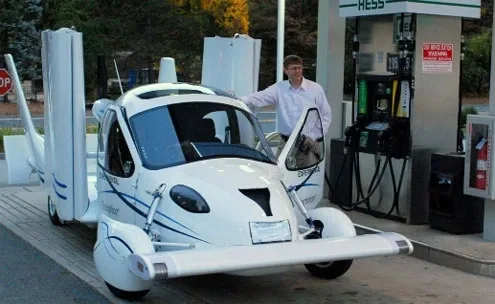
The cost of Terrafugia is 194,000 dollars. True, the two-seat vehicle can only take off and land on runways, for example, at airports. Piloting will require a sport pilot license. Moreover, the fuel supply will only last for 270 km of travel.
The idea of flying cars haunts many minds. For example, at a recent Audi competition, Turkish designer Kazim Doku won with his Shark project.
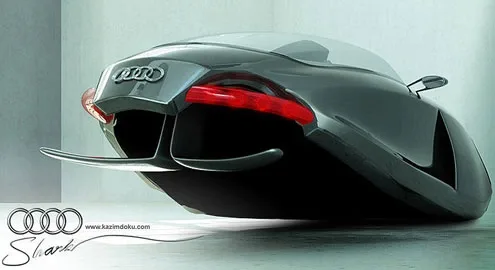
Audi Shark indeed resembles a shark with a tail in appearance. It has no wheels at all — instead, there are wings and a folding canopy. True, this is still just a fantasy, while the less elegant-looking Terrafugia already flies in real life.
Can swim
The creators of Rinspeed SQuba were apparently big fans of the Bond films — so much so that they decided to build a real car capable of moving underwater. And they succeeded. SQuba moves on land, stays afloat, and dives to depths of up to 10 meters.
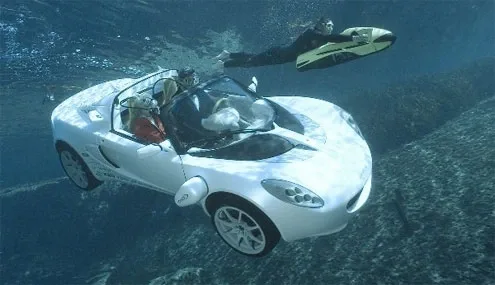
Under the hood of this amphibious car are 73 horsepower, which allow it to accelerate to 120 km/h on the road, up to 6 km/h on water, and up to 3 km/h underwater. The only nuance: when diving, the driver and passengers will have to get wet and breathe through oxygen masks.
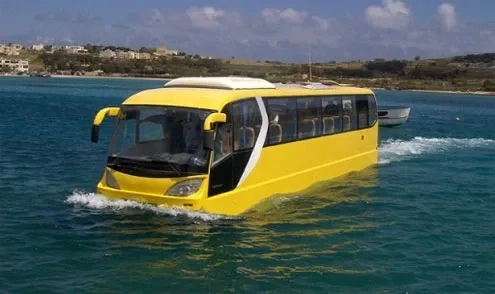
Don't want to get wet, but the idea is tempting? Then you can go on a cruise on a bus: the British recently presented the world's first amphibious bus AmphiCoach GTS-1. It is based on the Italian Irisbus chassis and is equipped with an Iveco diesel. The hydrobus fully complies with technical standards. It will go into production this year, in both right-hand and left-hand drive versions. The price is considerable — over $400 thousand.
Almost alive
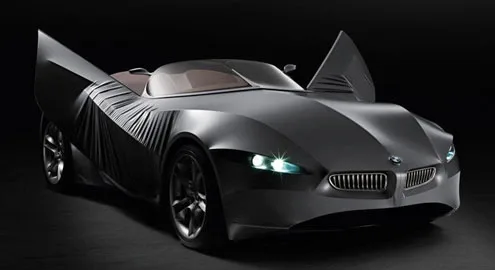
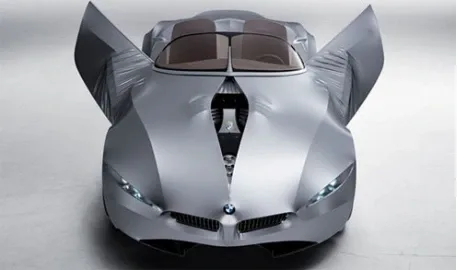
A car does not have to be rigid to the touch — so decided BMW's chief designer Chris Bangle, presenting the Gina concept. The car's body is covered with elastic synthetic fabric, under which hides a frame of aluminum and composites. Gina resembles a living creature with a skeleton and skin. The shape of the car can change at the owner's will. Need to open the hood — it "slides apart" from the center; turn on the headlights — Gina's "eyes open"; improve aerodynamics — the concept grows a tail-spoiler.
The most eco-friendly
The environmental theme seriously worries the world. Every year cars become more compact and economical — it seems that soon they will turn into enclosed bicycles. Manufacturers fiercely compete for the title of "the greenest" and amaze us with their eco-developments.
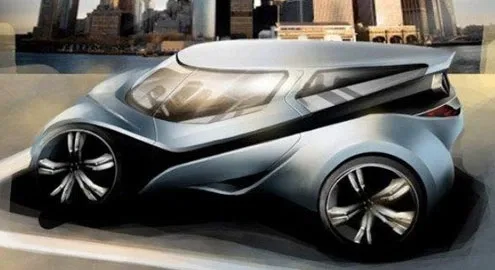
For example, the eco-car Green Apple not only does not pollute the air, but on the contrary, cleans it! Its air intakes have small turbines that generate electricity during movement, and at the outlet there are filters that filter out urban dirt from the air.
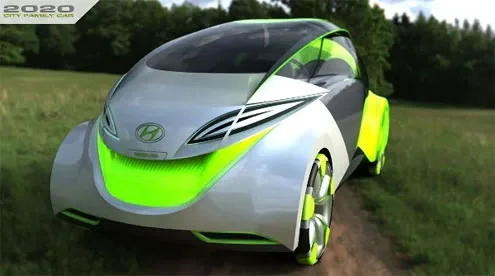
The Korean Hyundai City Car also did not stand aside. The body of this electric car, created by designer Nicholas Stone, is assembled from photocells. They capture solar energy and charge the batteries. In addition, the Hyundai City Car has a water reservoir where electricity splits H2O into hydrogen and oxygen. Oxygen is simply thrown into the exhaust pipe, while hydrogen is stored and then converted back into electricity to power the car's systems. This process was called artificial photosynthesis by Daniel Nocera, a professor at the Massachusetts Institute of Technology.
Most of these unusual concepts, alas, are destined to remain just ideas. But some of them will influence the appearance of future cars. Judging by current projects, a lot of interesting things await us ahead.