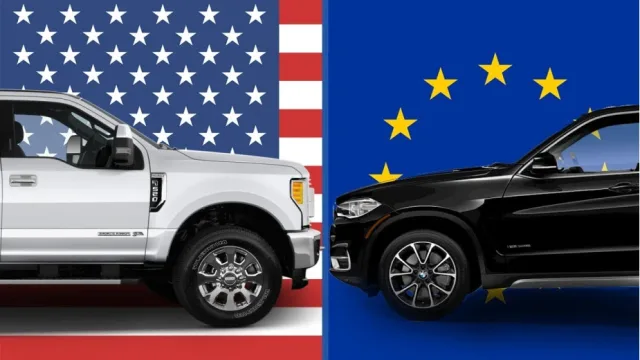
Negotiations are ongoing amid constant accusations from Donald Trump. The US President has repeatedly emphasized that the European Union was created to 'take advantage of America' and has not forgotten to mention the trade imbalance, which reached $235 billion last year. European governments consider the current agreement the 'lesser evil,' as the alternative would involve tariffs of 30% on almost all goods from the EU.
The package of proposals from Brussels concerns not only industrial goods but also the agricultural sector. It involves zeroing import duties on potatoes, reducing tariffs on tomatoes, and introducing new quotas with minimal rates for pork, cocoa, and even pizza. At the same time, beef, poultry meat, rice, and ethanol are not included in the agreement — this is a clear compromise aimed at maintaining balance in Europe's domestic agricultural market.
Despite loud statements in the media, analysts note that eliminating tariffs on most American industrial products is unlikely to radically change the situation, as a significant portion of these goods were not taxed before. The exception is metals, on which a 50% tariff remains. The real benefit for the EU could come from the automotive industry. Reducing rates on passenger cars opens new prospects for European manufacturers in the American market, where they have long sought to strengthen their positions.
The final decision has not yet been made: the document must be approved by all 27 member states, as well as the European Parliament. This could take several weeks, but it is already clear that the main bet is placed on the leading sector of the European economy — automotive manufacturing.