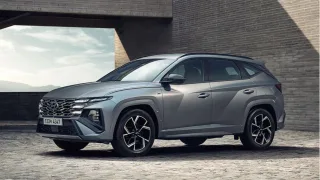
For example, let's take Toyota, which announced the start of development of a compact crossover. Among the competitors of the future new product is the Nissan Juke, whose length is 4135 mm. Many may think that this car is very small, but in fact it is not much smaller than the first-generation 3-door Toyota RAV4!
Over the past two decades, according to the consulting agency Edmunds, the average car length has grown by 150-250 mm, and weight has increased by 170-250 kg. Many laugh at the size of the Smart (2695 mm), not considering it a full-fledged car. At the same time, its classmate Fiat 500 from 1957, which was the most popular in Italy half a century ago, is 240 mm lower and 4 mm longer than the two-seater Smart!
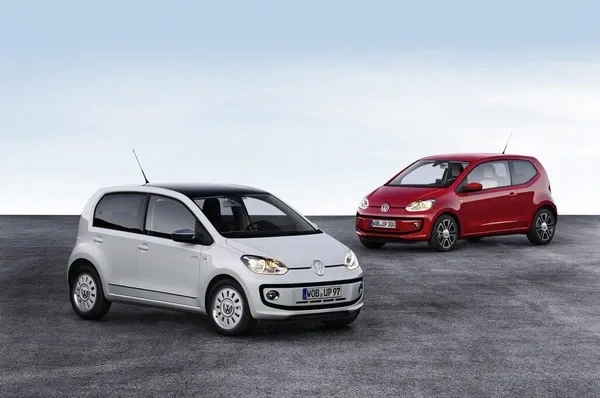
The modern city car Volkswagen Up! is even bigger – its length is as much as 3541 mm, so the Fiat 500 could easily fit inside it.
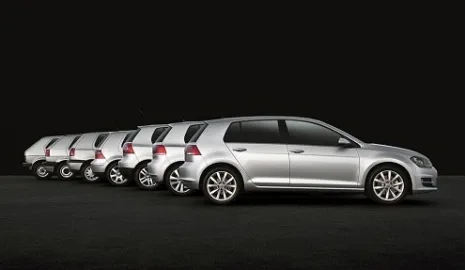
What is the increase in dimensions associated with? There are plenty of theories. Some experts believe that all this is a consequence of the introduction of the latest systems and the race for safety. Others believe that the only reason is improved comfort. Like, in this way, it is easier to show and prove to the buyer that, for example, by switching from a VW Golf V to a VW Golf VI, he will get more legroom for rear passengers and an increased trunk size.
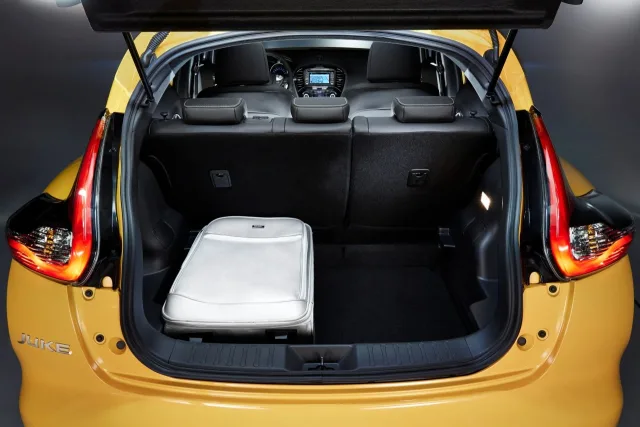
One example of marketers' trick can be considered the Nissan Juke 2014. The manufacturer stated that it improved the luggage compartment capacity by 40%. Although in fact, this was achieved simply because the designers removed the shelf! But in advertising brochures, everyone will see a quite decent volume that can actually be achieved in the predecessor as well, by throwing out the shelf that divides the trunk into two parts.
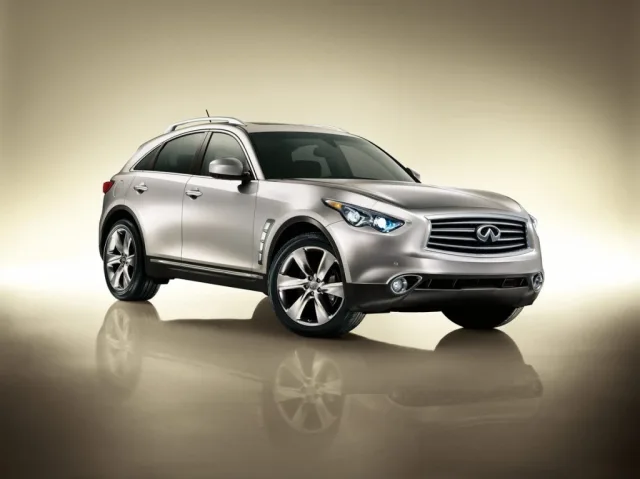
Another important point is design. Some models look much bigger than they really are. They may also have a huge hood, where in fact 40% of the space is "wasted". Why all this? Remember, say, the Infiniti FX (QX70). From the outside, this car seems big and brutal, but this is all an illusion and a tribute to image. In reality, there is not much space there. In fact, the buyer pays for "inflated emptiness". But as the joke goes, "first of all, doctor, it's beautiful".
If we talk about specific numbers, we recommend assessing the degree of increase in modern cars according to the generally accepted classification:
B-class
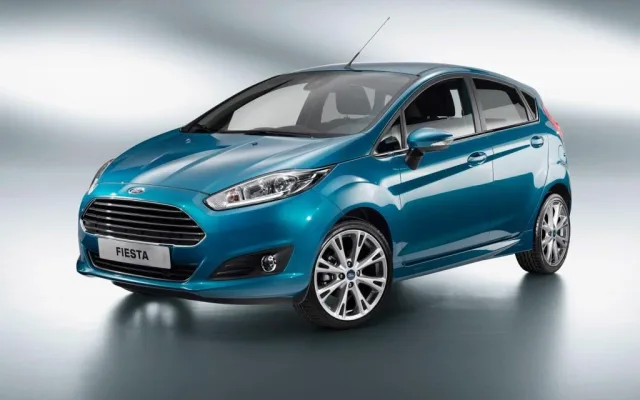
In 1976, the Ford Fiesta had a length of 3650 mm, width - 1570 mm, height - 1310 mm. The latest generation of the car, compared to the very first one, has added 300 mm in length, 152 mm in width, and 171 mm in height.
The Opel Corsa, which first appeared in 1982, has become 40 mm longer, 197 mm wider, and 128 mm taller over 32 years. Finally, the three-door Volkswagen Polo has become 370 mm longer, 122 mm wider, and 122 mm taller.
Average indicators: +237 mm in length, +157 mm in width, +140 mm in height.
C-class
The latest generation of the Volkswagen Golf has "overtaken" its ancestor by 435 mm in length, 189 mm in width, and 42 mm in height.
The Toyota Corolla has added 670 mm in length, 265 mm in width, and 85 mm in height over 42 years.
But the most surprising is the Honda Civic, which over the same period has become 755 mm (!) longer, 264 mm wider, and 111 mm taller.
Average indicators: +620 mm in length, +240 mm in width, +80 mm in height.
Business class
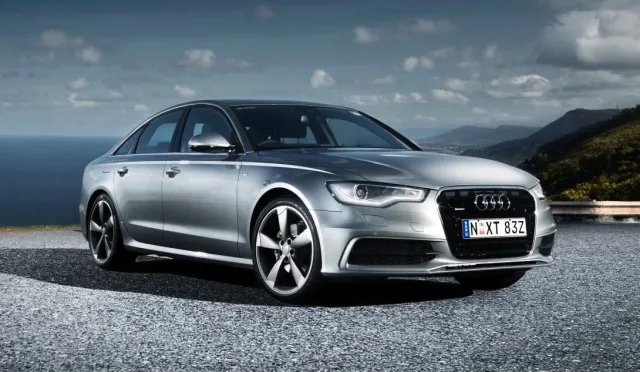
The Audi 100, which appeared in 1968, had a length of 4580 mm, width of 1730 mm, and height of 1420 mm. The latest A6, released in 2012, has become 260 mm longer, 168 mm wider, and 92 mm taller than its predecessor.
The E-class W115, released in 1965, was 180 mm shorter, 84 mm narrower, and 31 mm lower than the W212 of 2012.
As for the BMW 5 Series, its dimensions have increased by 279, 170, and 44 mm, respectively.
Average indicators: +240 mm in length, +140 mm in width, +55 mm in height.
Flagship sedans
The Mercedes-Benz S-Class (the most popular car in this class) has increased over more than 40 years by 286 mm in length, 30 mm in width, and 76 mm in height.

Similar indicators are for the BMW 7 Series (in the standard, not long-wheelbase version): 219, 102, and 41 mm, respectively; for the Audi A8 – 103, 69, and 20 mm.
Average indicators: +202 mm in length, +67 mm in width, +46 mm in height.
Crossovers
In this category, we will consider two crossovers – the Toyota RAV4 and Honda CR-V. The first has grown in length by 740 mm, in width by 120 mm, and in height by 3 mm.
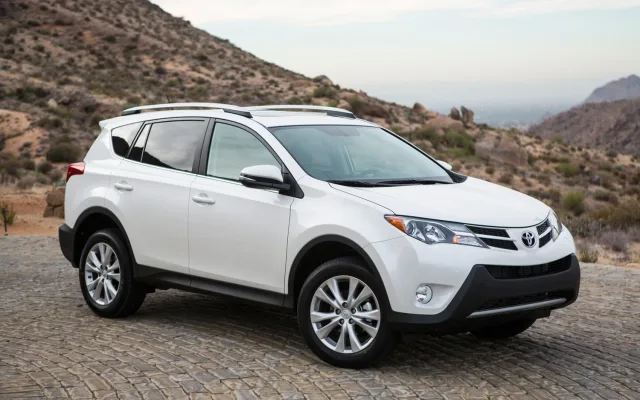
The second has become 9 mm longer, 69 mm wider, but 56 mm shorter (however, the wheelbase has increased). It should be noted that these two crossovers are the most popular in their segment on the Ukrainian market.
Average indicators: +375 mm in length, +95 mm in width, -13 mm in height.
Mid-size SUVs
Ford Explorer and Toyota Highlander. The "American" has added 476 mm in length, 214 mm in width, and 3 mm in height, while the "Japanese" has become 375 mm longer, 235 mm wider, but 15 mm lower.
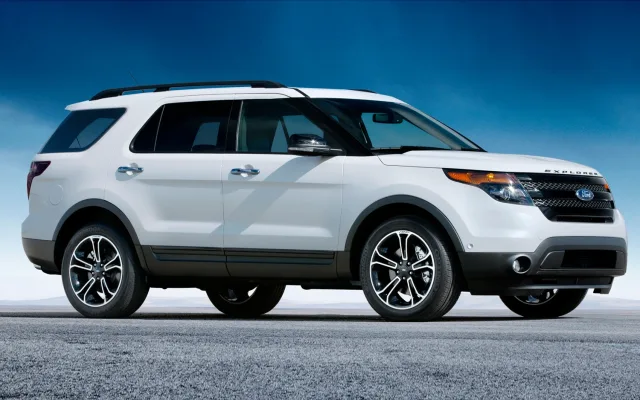
Average indicators: +425 mm in length, +225 mm in width, -6 mm in height.
Full-size SUVs
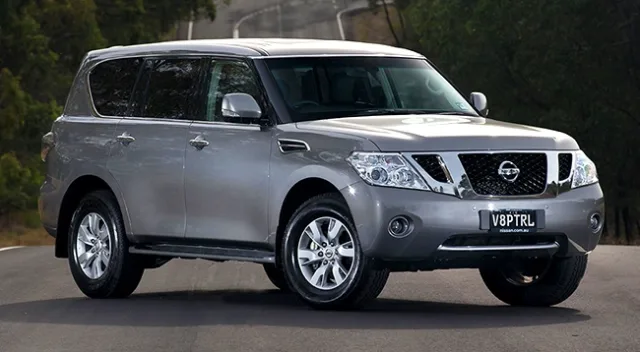
The first Nissan Patrol (5-door) had a length of 4690 mm, width of 1689 mm, and height of 1980 mm. The latest generation has grown to 5140 mm in length, 1995 mm in width, and 1938 mm in height.
One of the most popular "off-roaders" in Ukraine, the Toyota Land Cruiser, in the distant 60s had a length of 4675 mm, width of 1735 mm, and height of 1865 mm. The latest "Cruiser" 200 has grown to 4950 mm in length, 1970 mm in width, and 1950 mm in height.
Average indicators: +240 mm in length, +130 mm in width, -7 mm in height
What to expect?
From all the above, we can conclude that C-class cars are most susceptible to growth in length and width, B-segment models in width, and SUVs and crossovers either decrease or almost do not change in height.