Итак, вас остановили сотрудники ГАИ, выписали штраф, выдали на руки протокол и постановление.
В постановлении вписана сумма штрафа (на фото - 425 грн.) и двойная сумма, которую будет взимать исполнительная служба в случае несвоевременной оплаты (на фото - 850 грн.).
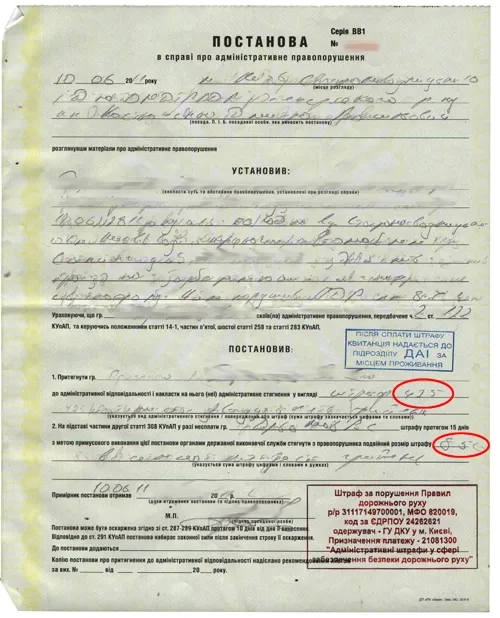
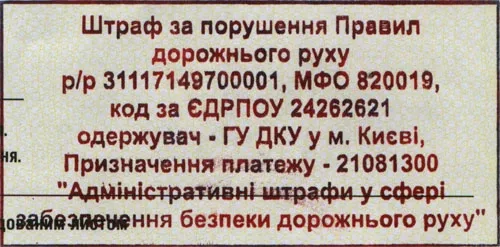
Следует отметить, что на постановлении присутствуют также и два важных штампа: реквизиты для оплаты штрафа
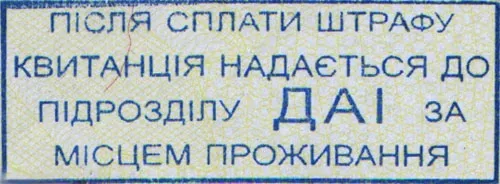
и напоминание о том, что после оплаты штрафа квитанцию следует предоставить в ГАИ по месту жительства
В соответствии со статьей 307 Кодекса Украины об административных правонарушениях, штраф должен быть добровольно уплачен в течение 15 календарных дней с момента вручения постановления. На обжалование штрафа дается 10 дней с момента вынесения постановления.
Во времена, когда были популярны «письма счастья», моменты вынесения и вручения постановления могли сильно не совпадать, что ограничивало возможности для его обжалования (приходилось доказывать, что срок подачи обжалования пропущен по уважительным причинам). Теперь же постановление выдается на руки сразу.
Дальше - все просто: с постановлением идем в банк, в банке по реквизитам, указанным в постановлении, - оплачиваем, а затем едем в подразделение ГАИ по месту жительства для аннулирования штрафа. О важности этой поездки в ГАИ мы скажем чуть позже.
И все-таки, если штраф не платить
Если штраф не уплачен вовремя (в течение 15 дней) - материалы по административному правонарушению из ГАИ (на протяжении 3-х месяцев) передаются в исполнительную службу. Кроме того, штраф удваивается.
Исполнительная служба в течение 3-х дней обязана вынести постановление про исполнительное производство. Постановление отправляется сторонам этого производства (нарушителю и ГАИ) с предложением нарушителю добровольно уплатить штраф в 7-дневный термин.
В случае отсутствия сведений о месте жительства или местонахождения должника, исполнительная служба обратится в суд с представлением о розыске.
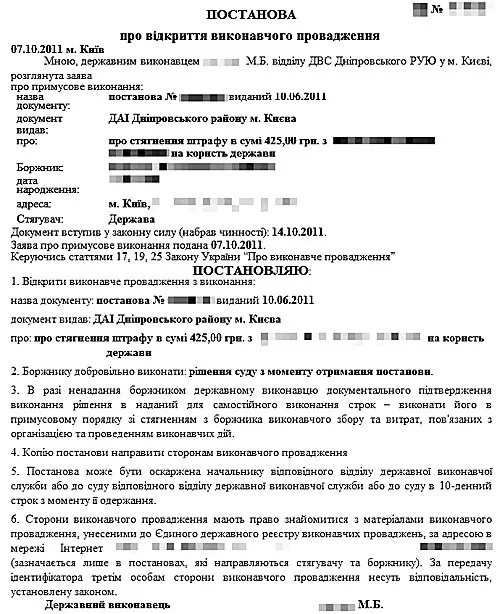
Обратите внимание - на постановлении на фото ниже - срок добровольной уплаты не указан, но и сумма штрафа не удвоилась:
С самого начала исполнительного производства, в сумму долга уже будет включен исполнительный сбор в сумме 10% от штрафа.
В случае если нарушитель не уплатит штраф и в 7-дневный термин (опротестовать можно в течение 10 дней) будут начаты исполнительные действия - взимание части зарплаты, опись и продажа имущества и т.д. Это - уже очень серьезно.
За препятствование работы государственного исполнителя предусмотрена уголовная ответственность - поэтому выгнать исполнителя из дома, когда он придет описывать имущество, не получится (чревато ОМОНом).
Кроме того, отдельным постановлением будут взысканы расходы органов государственной исполнительной службы, связанные с организацией и проведением исполнительных действий - если исполнителям пришлось искать должника, описывать, перевозить имущество и т.п.
Сумма расходов на проведение исполнительных действий может многократно превысить сумму штрафа
В ходе исполнительного производства на должника могут наложить еще и дополнительные штрафы, исполнительный сбор будет рассчитываться уже не от суммы штрафа, а от всей суммы долга...
То есть со временем, даже если государственный исполнитель не посетил должника, ограничившись письмами, штраф с изначальных 255 грн. может вырасти до тысяч.
А если сумма долга превысит 10 минимальных зарплат (с 1 декабря это 10 040 грн.), взыскание может быть наложено даже на жилье или земельный участок.
Перспектива нешуточная...
Истечение срока давности
Что же получается? Не пристегнув ремни, можно остаться без квартиры? И да, и нет.
Здесь стоит процитировать «Кодекс Украины об административных правонарушениях»:
Статья 303. Давность исполнения постановлений о наложении административных взысканий
Не подлежит исполнению постановление о наложении административного взыскания, если оно не было обращено к исполнению в течение трех месяцев со дня вынесения. В случае обжалования или опротестования постановления в соответствии со статьей 291 настоящего Кодекса течение срока давности приостанавливается до рассмотрения жалобы или протеста. В случае отсрочки исполнения постановления в соответствии со статьей 301 настоящего Кодекса течение срока давности приостанавливается до истечения срока отсрочки.
Законами Украины могут быть установлены и другие, более длительные сроки для исполнения постановлений по делам об отдельных видах административных правонарушений.
Иными словами, если в течение 3-х месяцев с даты вынесения постановления о нарушении, исполнительное производство не открыто - его уже не могут открыть.
Тем не менее - посмотрите на «постанову про відкриття провадження» в начале статьи - производство все-таки было открыто - через 4 месяца, что является поводом для его обжалования и отмены в суде (если, конечно, есть желание связываться с судом).
Кроме того, никто не может дать гарантию того, что производство открыто не было - вы просто можете не знать об этом.
И еще: в базе «штрафников» ГАИ остаются сведения о нарушении, и эта информация «вылезет боком» при регистрации-перерегистрации авто.
А как на практике?
- сотрудники ГАИ могут потерять бланк протокола о нарушении;
- могут не внести это нарушение в базу данных;
- из-за нехватки кадров, большой загруженности и др., сотрудники ГАИ могут не передать материалы по административному правонарушению в исполнительную службу;
- из-за нехватки кадров, большой загруженности и др., сотрудники исполнительной службы могут не начать исполнительное производство.
Все это ведет к тому, что выписанный штраф вполне может обойтись без последствий для нарушителя.
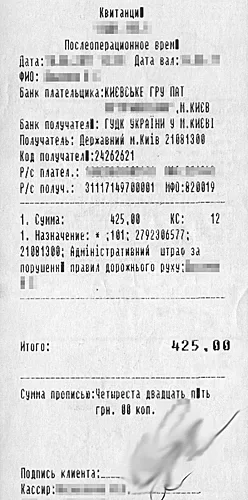
Есть еще одна нестыковка, с которой довелось столкнуться автору этим летом: ГАИ не имеет возможности проверить оплатил ли нарушитель штраф (получателем штрафов является иная организация - Государственное Казначейство) - поэтому так важно предъявить чек, и аннулировать штраф в ГАИ по месту жительства.
Иначе - запустится в действие Государственная исполнительная служба. Эту ситуацию прокомментировал юрист компании «Рыбин и партнеры» Виталий Савчук:
Комментарий юриста
Виталий Савчук, юрист ООО «Рыбин и партнеры»
Если вы оплатили штраф, но пришло письмо из исполнительной службы, сперва следует тщательно все перепроверить - правильно ли был оплачен штраф (реквизиты, сумма, дата оплаты). Возможно, уплаченная сумма просто не дошла до бюджета. Согласно статье 307 Кодекса Украины об административных правонарушениях штраф должен быть добровольно оплачен на протяжении 15 дней с момента получения постановления о его наложении. После этого он подлежит принудительному взысканию. При этом принудительно взимается уже двойной размер штрафа, а также плата в пользу исполнительной службы.
Таким образом, если штраф был оплачен правильно и в срок, то платить его повторно вы не обязаны. Помочь в этой ситуации может обращение в исполнительную службу в таком порядке:
- Сперва следует позвонить государственному исполнителю, телефон которого обычно указывается на предписании. У него можно выяснить, действительно ли заведено исполнительное дело, на каком основании и нет ли ошибки.
- Далее имеет смысл предоставить исполнителю копию квитанции об оплате. Это можно сделать либо лично, либо в письме. Обращаем внимание на то, что во избежание проблем обязательно должны существовать несколько экземпляров квитанции. Нужно также приложить заявление об окончании производства в связи со своевременной уплатой штрафа (п. 8 ст. 49 Закона Украины «Об исполнительном производстве»).
Если вы получили сразу требование исполнителя о принудительном исполнении постановления, и до этого вам не направлялось постановление об открытии исполнительного производства, то в этом усматривается нарушение со стороны исполнителя, поскольку такой документ Вы должны были получить на следующий же день после его вынесения (ст.25 Закона). В таком случае возможно обращение в суд с жалобой на действия исполнителя. При этом, при таких нарушениях, отсутствует основание для уплаты вами всяческих исполнительных сборов.

Справка
Кодекс Украины об административных правонарушениях
Статья 38. Сроки наложения административного взыскания
Административное взыскание может быть наложено не позднее двух месяцев со дня совершения правонарушения, а при длящемся правонарушении - не позднее чем через два месяца со дня его обнаружения, за исключением случаев, когда дела об административных правонарушениях в соответствии с настоящим Кодексом подведомственны суду (судье).
Если дела об административных правонарушениях в соответствии с настоящим Кодексом или другими законами подведомственны суду (судье), взыскание может быть наложено не позднее чем через три месяца со дня совершения правонарушения, а при длящемся правонарушении - не позднее чем через три месяца со дня обнаружения, кроме дел об административных правонарушениях, указанных в части третьей настоящей статьи.
Статья 289. Срок обжалования постановления по делу об административном правонарушении
Обжалование постановления по делу об административном правонарушении может быть подано в течение десяти дней со дня вынесения постановления. В случае пропуска указанного срока по уважительным причинам этот срок по заявлению лица, в отношении которого вынесено постановление, может быть увеличен органом (должностным лицом), правомочным рассматривать жалобу.
Статья 307. Сроки и порядок исполнения постановления о наложении штрафа
Штраф должен быть уплачен нарушителем не позднее пятнадцати дней со дня вручения ему постановления о наложении штрафа, а в случае обжалования или опротестования такого постановления - не позднее пятнадцати дней со дня уведомления об оставлении жалобы или протеста без удовлетворения.
При отсутствии самостоятельного заработка у лиц в возрасте от шестнадцати до восемнадцати лет, совершивших административное правонарушение, штраф взыскивается с родителей или лиц, их заменяющих.
Штраф, наложенный за совершение административного правонарушения, вносится нарушителем в учреждение банка Украины, за исключением штрафа, взимаемого на месте совершения правонарушения, если иное не установлено законодательством Украины.
Статья 308. Принудительное исполнение постановления о взыскании штрафа
В случае неуплаты правонарушителем штрафа в срок, установленный частью первой статьи 307 настоящего Кодекса, постановление о наложении штрафа направляется для принудительного исполнения в отдел государственной исполнительной службы по месту проживания нарушителя, работы или по местонахождению его имущества в порядке, установленном законом.
В порядке принудительного исполнения постановления о взыскании штрафа за совершение административного правонарушения с правонарушителя взимается:
- двойной размер штрафа, определенный в соответствующей статье настоящего Кодекса и указанный в постановлении о взыскании штрафа;
- расходы на учет указанных правонарушений. Размер расходов на учет правонарушений определяется Кабинетом Министров Украины.
Итог
Неуплаченный штраф, даже по истечении длительного времени, может оказаться бомбой замедленного действия: может быть, о нем уже все забыли, и он «не сработает», а может быть - уже готовится постановление об изъятии жилья.
Если вы вовремя оплатили штраф - сразу предъявите чек в ГАИ по месту жительства, и аннулируйте штраф - иначе к вам может нагрянуть исполнительная служба.
Если начато исполнительное производство (пришло письмо) - нельзя откладывать свои действия в долгий ящик! Иначе за копеечное нарушение можно нажить «кучу проблем».
Если вы оплатили штраф добровольно, но уже после напоминания исполнительной службы, - обязательно следует связаться с государственным исполнителем для того, чтобы он закрыл дело (к тому же - следует оплатить 10% исполнительного сбора на счет, который укажет исполнитель).
Исполнительная служба обязана уведомить ГАИ об уплате штрафа. Но не стоит на это надеяться - не поленитесь и предъявите чек в ГАИ по месту жительства, а также проверьте аннулирован ли штраф - иначе к вам вторично может нагрянуть исполнительная служба.
Если даже в течение трех месяцев (прошел срок давности) письмо из исполнительной службы не пришло - расслабляться все равно не стоит: может быть, все это время вас ищут силами Интерпола, после чего выставят счет за все проведенные мероприятия.
По нашему мнению - самым правильным вариантом будет своевременно оплатить штраф (затем завезти чек), или сразу же опротестовать штраф в суде.
Уважаемые читатели! Присылайте свои темы для рубрики «Что будет если...». Мы будем рады разобрать вместе с вами эти вопросы.