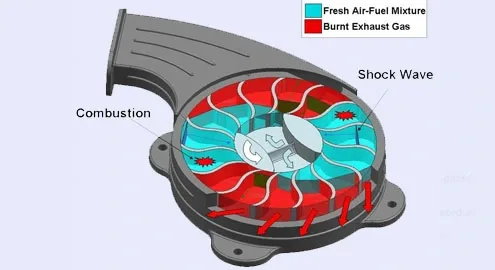
Such an engine consumes five times less fuel, weighs twenty percent less, and costs thirty percent less to produce compared to traditional internal combustion engines. This refers to a modern version of a rotary-wave engine — the first working prototype of this design appeared in the mid-fifties of the last century and replicated the working cycle of a gas turbine unit. The development by specialists from the University of Michigan, as noted by Professor Norbert Müller, who leads the project, could compete not only with classic internal combustion engines but also operate without a cooling system, generator, transmission, and sensors that measure air flow.
Müller claims that this engine will make it possible to create an ultra-efficient hybrid capable of traveling about 800 kilometers on a single tank of fuel. At the same time, the price of such a car will remain acceptable due to the low cost of the power unit, and CO2 emissions will be 95 percent less than those of cars with conventional internal combustion engines.
It is expected that a version of the engine ready for mass production will appear within the next two years.