
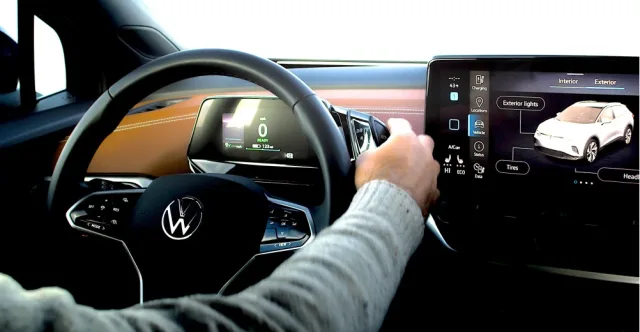
The most difficult situation has developed for owners of Volkswagen ID.4 electric SUVs — it is they who filed a class action lawsuit in the United States. The statement filed with the federal court in New Jersey says that accidental touches on the touch panels could activate various functions, including adaptive cruise control, without the driver's knowledge. Two ID.4 owners said that after such incidents, they began to fear using the car and lost the desire to do so, since even a slight movement of the hand could activate potentially dangerous systems.
The lawsuit also states that Volkswagen knew about this defect long before complaints became widespread. This is confirmed by internal documentation, customer appeals, and data from dealerships. Despite this, the company did not inform owners about the malfunction and did not offer to repair the car for free or replace the steering wheel with a conventional one. The plaintiffs believe that Volkswagen violated warranty terms, deceived consumers, and profited from selling cars with dangerous technology.
In the court demands, the plaintiffs seek damages and recognition that the company violated consumer protection laws in Connecticut and Massachusetts. The manufacturer is accused of fraud, failure to fulfill warranty obligations, and unjust enrichment.
It is worth mentioning that three years ago, Volkswagen admitted that the touch buttons on the steering wheel were a bad decision and promised to gradually abandon them. However, the process of returning to physical switches is slow, and a complete replacement is expected only with the arrival of the new electric hatchback ID.2all. Until then, owners of modern models, including the ID.4, have to put up with the controversial technology or independently seek a steering wheel replacement.
The story with the touch buttons has shown that automakers' desire to create futuristic designs and oversaturate the interior with digital solutions can turn into problems with ergonomics and safety. Tesla has already conducted similar experiments, trying to replace traditional turn signal levers with buttons on the steering wheel, but after criticism, it was forced to partially abandon this idea. In the case of Volkswagen, the situation has gone much further — the matter has reached court, which could affect the brand's reputation and the level of customer trust.