The tests conducted revealed differences in the functioning of active assistance systems among different automakers, and also confirmed that the driver needs to constantly monitor the actions of electronics.
The check involved ten models: Audi A6, BMW 5-Series, DS 7 Crossback, Ford Focus, Hyundai NEXO, Mercedes-Benz C-Class, Nissan LEAF, Tesla Model S, Toyota Corolla, and Volvo V60. Experts assessed the correctness of the adaptive cruise control, lane keeping system, and speed limiter.
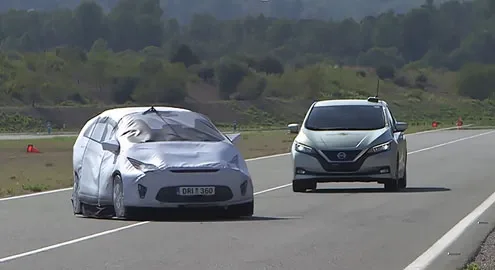
For Euro NCAP, a series of exercises was prepared on a special site, reproducing various road situations. The first scenario simulated a sharp lane change — at a speed of over 60 km/h, a dummy suddenly appeared in front of the test car from the adjacent lane. Also simulated was a situation where, with cruise control active, the car ahead suddenly turned, revealing a stationary vehicle. In such conditions, the electronics had to react in minimal time.
A separate test concerned the lane tracking system, which steers autonomously, keeping the car centered in the lane. It was checked how easily the driver can intervene in control, for example, when avoiding an unexpected obstacle or pothole. According to experts, a quality system should not hinder the actions of the person behind the wheel.
Analysis of the adaptive cruise control operation showed that the least intervention in the control process is observed in BMW and DS — there, control most often remains with the driver. In Tesla, on the contrary, excessive dependence of the person on automation was noted. The other brands demonstrated a reasonable balance between driver participation and the operation of electronic assistants.
When avoiding obstacles with the lane keeping system activated, all cars showed decent results — the electronics did not interfere with turning the steering wheel in time. The exception again was Tesla, whose system actively resisted the driver's attempts to leave the lane.
However, in scenarios with cutting in and a suddenly stopped car ahead, none of the systems could prevent a collision — avoiding an accident was possible only thanks to human reaction.